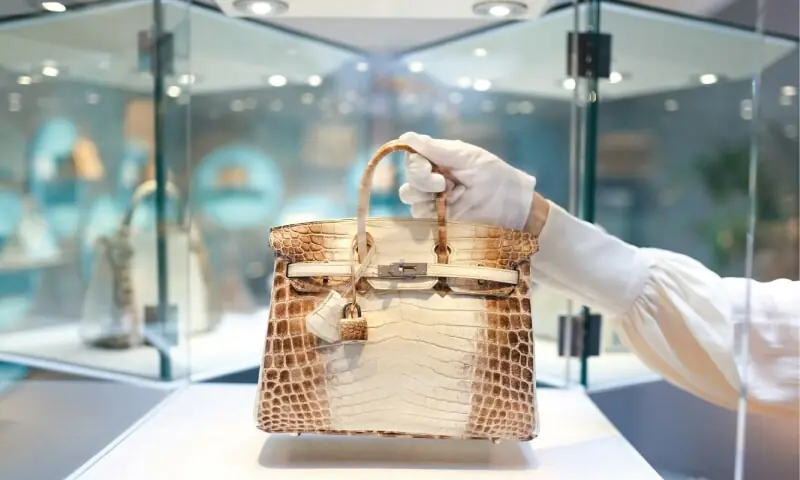
European luxury brands seek to lure America's super-rich
European luxury brands have sharpened their focus on the United States, with a surge of store openings and fashion shows to lure a new crop of wealthy shoppers enriched by the AI and tech boom and offset weak consumer confidence in the rest of the world. After two years of contraction, the luxury goods sector was showing signs of stabilisation until the Iran war that began at the end of February, disrupting travel and denting luxury spending far beyond the Middle East. And China, the biggest source of luxury sales growth for two decades, is still struggling to tackle deflation and the lingering impacts of a property crisis, so the sector needs rich Americans more than usual. “The US high-end consumer has been much more resilient than we are seeing elsewhere, especially in Europe,” said Marcus Morris-Eyton, portfolio manager at AllianceBernstein in London, adding that the continued AI rally and healthy wage growth have boosted this cohort of spenders. Luxury brands, such as LVMH, Moncler and Gucci, have been quick to respond. Dior and Gucci showed their cruise collections in the US last month and Italian brand Zegna is set to present its Summer 2027 collection on Friday in Los Angeles. Even last year, North America for the first time took the top spot for new store openings, according to real estate firm Savills’ global luxury retail report, which has tracked data since 2016. The report found North America accounted for about 27 per cent of global luxury store openings in 2025, compared with 26pc of openings in Europe and 19pc in China. Globally, new luxury store openings fell to their lowest level since 2020. US represents significant potential The US has fewer luxury stores relative to its numbers of super-rich consumers than China, according to Savills research. “Many brands still view the US as unpenetrated relative to the scale of its wealth base,” said Todd Siegel, Chicago-based president of US retail at real estate firm Savills. The investment in stores is focused not just on major East and West Coast cities. It extends to second-tier states and cities where high-net-worth individuals have moved, attracted by lower tax rates than California or New York, Siegel said. Italian luxury outerwear group Moncler, for instance, has said most of its new stores will be in the US this year. It opened a store in the luxury ski resort of Aspen in January and plans to open its largest flagship store globally on New York’s Fifth Avenue in the second half of the year, as well as new locations in California’s Valley Fair and in Dallas, Texas, among other cities. French luxury group Hermes opened its first stores in Nashville, Tennessee and Scottsdale, Arizona, last year. It plans to open in the Plaza del Lago shopping centre in Wilmette, north of Chicago this summer, and in Williamsburg, Brooklyn, in September. US and part of Asia versus everywhere else Consultancy Bain said the luxury sector reflected a “two-speed world” as the United States and parts of Asia grow, while Europe and the Middle East are impacted by weaker tourist spending in the ongoing Iran war . Most luxury brands do not report US figures specifically, but their first-quarter reports show growth in the broader Americas region was much stronger than elsewhere. Cartier owner Richemont’s sales grew 18pc in the Americas from January to March, the group’s ninth consecutive quarter of double-digit sales growth in the region. The strength of the US luxury consumer has also boosted American groups Ralph Lauren and Coach owner Tapestry whose sales have outpaced rivals. “Our core customers are loyal and resilient,” Ralph Lauren Chief Product & Merchandising Officer Halide Alagoz told Reuters . “What we see so far is that their behaviours are not changing. On the contrary, consumers during these turbulent times want to come to brands that they can trust.” Tapestry CEO Joanne Crevoiserat said there was potential to grow in North America. “We’re building emotional connections and bringing new, younger consumers into the market in North America and beyond,” she said. Morgan Stanley analyst Edouard Aubin said upcoming US IPOs could drive spending on high-end watches and jewellery, but cautioned that US nationals account for about 20pc to 22pc of global luxury spend. “It’s nice, it’s helpful, but you need China to get better as well for the sector to really recover,” he said.
Source: Dawn
More from newsGlobal

District Judge Bhuwan Giri also got acquittal from the Supreme Court in the marital rape case.

A single bench of Chief Justice Manoj Kumar Sharma has demanded a reason for including him in the report, stating that an investigation s…
