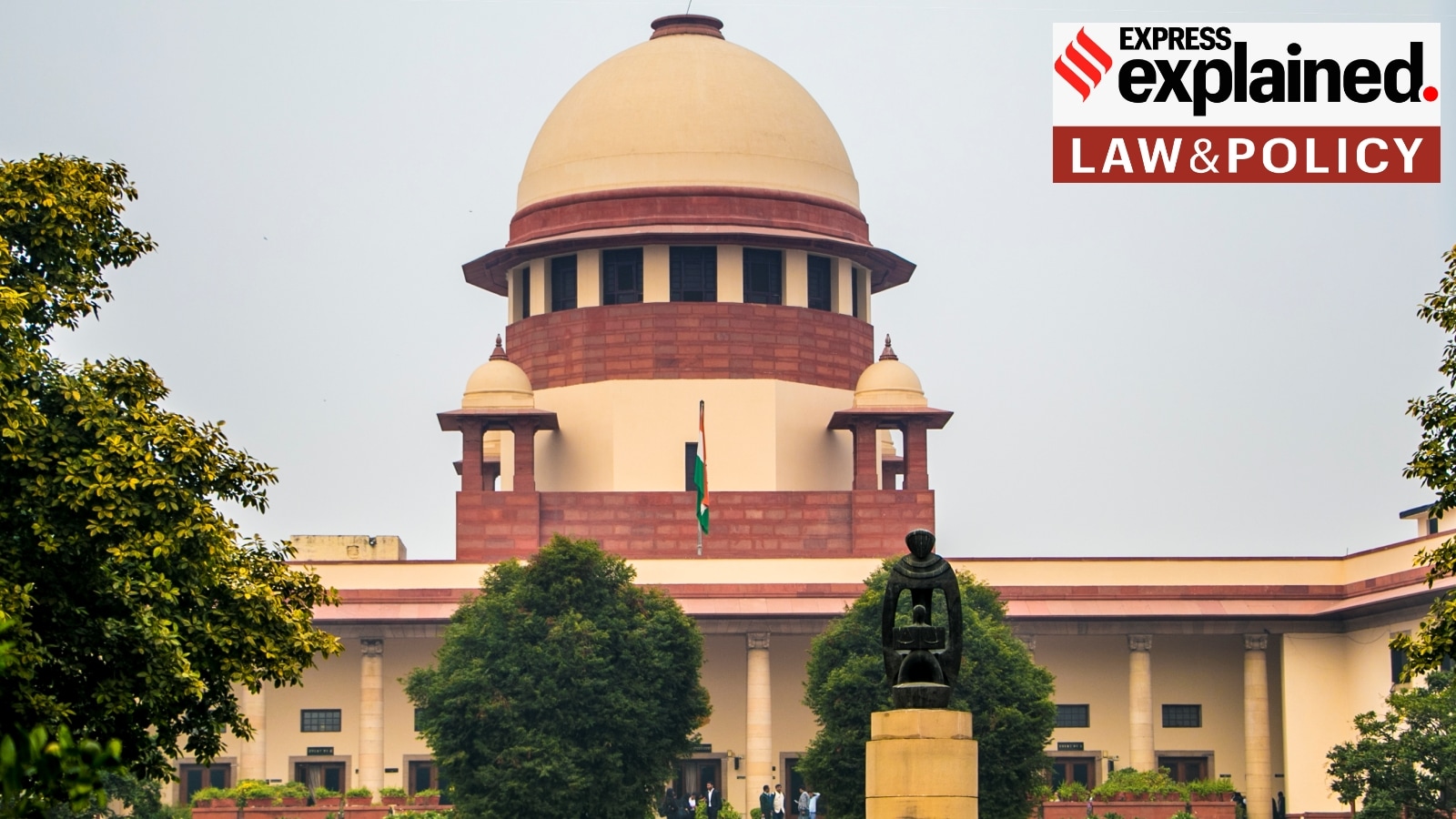
Can insolvency proceedings shield you in a cheque bounce case? The legal conflict, explained
If a person enters insolvency proceedings, can a cheque bounce case against them be put on hold?
The Supreme Court has now set the stage for a clear ruling on this matter. It has referred to a larger bench the question of how the Insolvency and Bankruptcy Code (IBC), which provides a framework to deal with defaulting companies, intersects with Section 138 of the Negotiable Instruments Act, which criminalises cheque bouncing.
On May 27, a bench of Justices JB Pardiwala and KV Viswanathan said a distinction may have to be drawn between the criminal and compensatory aspects of the cheque bounce litigation.
The IBC, they observed, cannot become a route to avoid personal criminal accountability. They also said that allowing the recovery of compensation in a cheque bounce case during insolvency proceedings could undermine the IBC’s objective of ensuring orderly distribution of assets among creditors.
The reference stems from a disagreement in the court’s own jurisprudence — whether a cheque bounce case is a fundamentally criminal prosecution or what an earlier Supreme Court judgment famously described as a “civil sheep in criminal wolf’s clothing”.
What the IBC says
When a person is undergoing personal insolvency proceedings under the IBC, a moratorium on legal action or proceedings in respect of any debt kicks in under Sections 96 and 101.
Section 96 provides for an interim moratorium from the date when the application for insolvency is filed, and Section 101 stipulates that a statutory moratorium should kick in once the court officially accepts the insolvency application.
Story continues below this ad
The current case, Dineshchand Surana v. UCO Bank case, pertained to whether a cheque bounce case qualifies as a proceeding that can be paused by the insolvency process.
If so, this would change the calculus for creditors, accused persons and directors of companies who are simultaneously facing insolvency and Negotiable Instruments Act proceedings.
What Section 138 says
Section 138 makes dishonouring a cheque a criminal offence punishable by imprisonment, a fine or both. The criminal deterrent is meant to enhance people’s faith in cheques as a mode of payment.
Story continues below this ad
Over time, courts placed emphasis on the compensatory aspect of Section 138 proceedings. A convicted accused can be directed to pay compensation to the complainant.
The offence is compoundable, which means that the parties can settle, and the case ends. A complainant can simultaneously file a civil suit for the same amount. These features have led courts to treat Section 138 proceedings as serving a dual purpose: punishment and restitution.
It is this dual character that makes the interaction with insolvency law complicated.
Story continues below this ad
The IBC moratorium is designed to prevent actions that deplete a debtor’s assets while a restructuring is underway. If a compensatory part of a Section 138 proceeding does exactly that, taking money out of the debtor’s estate in favour of the creditor, it may fall within the moratorium’s reach. But if the offence is primarily criminal, the moratorium has no business touching it.
The conflict in legal precedent
The conflict in precedent goes back to a 2021 three-judge bench ruling in P Mohanraj v. Shah Bros Ispat, which dealt with the corporate insolvency moratorium under Section 14 of the IBC and analysed personal insolvency provisions.
That bench described Section 138 of the Negotiable Instruments Act as “a civil sheep in criminal wolf’s clothing”. This meant that despite the criminal form of the section, its real purpose was to recover money.
Under that reading, a moratorium on legal action in respect of any debt would logically extend to a complaint under Section 138.
Story continues below this ad
But in 2025, a two-judge bench (Rakesh Bhanot v. Gurdas Agro) held that allowing accused persons to invoke a moratorium to avoid prosecution under Section 138 would undermine the very purpose of the Negotiable Instruments Act. The bench said that the moratorium was meant to postpone civil actions to recover debt, not to stall criminal prosecution.
The bench in 2026 noted that Rakesh Bhanot had not engaged with the analysis in the P Mohanraj case on personal insolvency and that the latter had not fully analysed the criminal dimensions of Section 138. Neither ruling resolved the conflict cleanly.
What the bench suggested
While referring to the latest matter, the Supreme Court bench offered a preliminary view.
It distinguished between what it called the criminal aspect of Section 138 proceedings — trial, conviction, imprisonment, penal fine — and the compensatory aspect, which is the court’s discretionary power to direct payment to the complainant.
Story continues below this ad
On the criminal aspect, it said that the moratorium cannot apply as the IBC itself excludes liability to pay a fine imposed by a court from the definition of debt. Insolvency cannot be a shield against personal criminal accountability.
On the compensatory aspect, however, it said that the moratorium should apply since recovering compensation from an insolvent person’s assets during the restructuring period would disadvantage other creditors and cut against the logic of the IBC.
The matter has been placed before the Chief Justice of India for the constitution of an appropriate bench.
View original source — Indian Express ↗
More from newsGlobal

Tulsa, a single woman, came to the limelight by commenting on current affairs on TikTok. She was also promoting her jewelry-related busin…
What is the 'formula' that MP Mahabir Pun drew the attention of Prime Minister Balendra Shah to?