Malviya Nagar fire rescue puts spotlight on CPR: What it is and when to use it
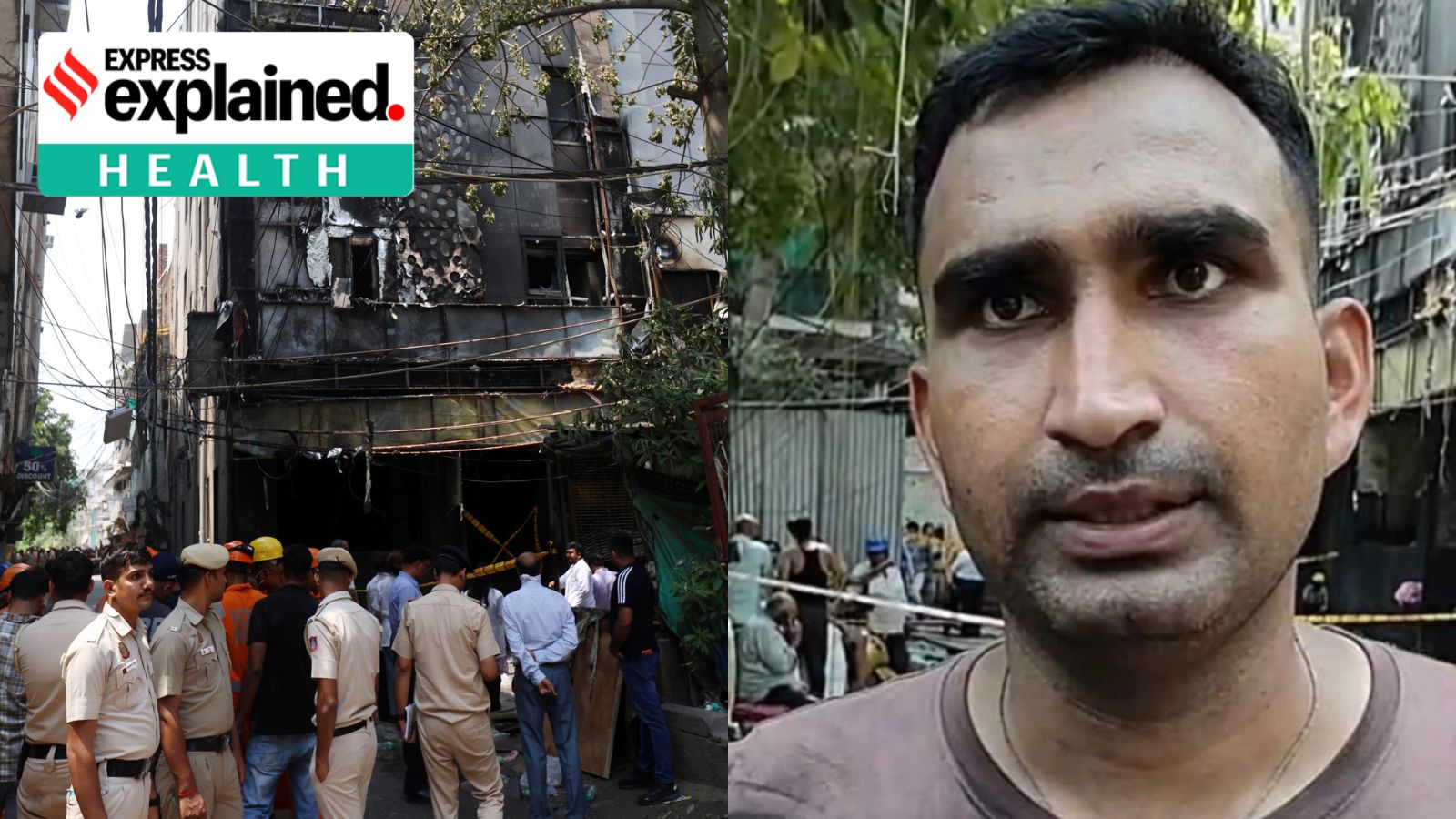
A fire at the Flourish Stay B&B in South Delhi’s Malviya Nagar on Wednesday (June 3) claimed the lives of at least 21 people, including 12 foreign nationals, prompting a city-wide fire safety audit.
According to senior police officers, the hotel was operating 26 rooms in the establishment, more than four times the maximum permissible number of six. Almost all the rooms were occupied, and the building only had a single point of entry and exit.
The fire reportedly started at around 8.30 am in the hotel’s kitchen in the basement of the building, and climbed rapidly to the upper floors. The ground, first, and second floors were affected by the heat and dense black smoke.
Local residents acted promptly, rushing to the spot and rescuing dozens of people trapped in the burning building, well before the emergency team arrived.
Among them was Hauz Rani resident Wasim Raza, who cut through a window grill to reach trapped guests and administered CPR to victims who had stopped breathing. He helped to rescue seven people who were trapped inside the building, The Indian Express reported.
What is CPR?
CPR, or Cardiopulmonary Resuscitation, is an emergency procedure performed during cardiac arrest to sustain blood circulation and oxygen delivery to essential organs until normal heart function can be restored.
Story continues below this ad
It includes chest compressions, which manually pump blood through the heart, and rescue breaths that push oxygen into the lungs. It is one of the few interventions a bystander can do before professional help arrives.
When should CPR be performed?
CPR is performed when someone is unresponsive, is not breathing or is only gasping, and has no detectable pulse. It is used when the heart has stopped beating or is beating too ineffectively to circulate blood to vital organs.
If you are not trained but can access a phone, call the emergency number 112 or 108 for an ambulance first, then start CPR. Medical experts emphasise that attempting CPR imperfectly is almost always better than doing nothing at all.
How to perform CPR?
CPR steps (Magnific)
Before starting CPR, check whether the environment is safe and whether the person is conscious. If the person is unresponsive, tap or shake their shoulder and ask loudly whether they are OK. If there is no reaction, lay them on their back on a firm, flat surface.
Story continues below this ad
Place the lower palm of your hand on the middle of the person’s chest, on the lower half to lower third of the breastbone, slightly below a horizontal line drawn from nipple to nipple.
Place your other hand on top, keep your elbows straight, and position your shoulders directly above your hands.
Push straight down at least 2 inches (5 cm) but no more than 2.4 inches (6 cm), using your full body weight, not just your arms. Push hard and fast at 100 to 120 compressions per minute and let the chest fully spring back after each push. The American Heart Association suggests doing this to the beat of Stayin’ Alive or another song with a tempo of 100 to 120 beats per minute.
After 30 chest compressions, open the airway using the head-tilt, chin-lift manoeuvre; do not do this if there is a possible neck injury.
Story continues below this ad
Place your palm on the person’s forehead, gently tilt the head back, and with the other hand, lift the chin forward. Pinch the nostrils shut, cover the person’s mouth with yours to create a seal, and give the first rescue breath for one second, watching to see whether the chest rises. If it does, give a second breath.
Continue this pattern of 30 compressions to 2 rescue breaths until the person shows signs of movement or emergency help takes over. If you are untrained or uncomfortable with rescue breaths, hands-only CPR: pushing hard and fast in the centre of the chest at 100 to 120 times a minute is still an effective option.
Where can you learn CPR?
To ensure your training is nationally or internationally recognised, learn only from authorised centres like the Indian Red Cross Society (IRCS), American Heart Association (AHA)-certified training centres, the Indian Resuscitation Council (IRC), or certified corporate providers.
Many of these offer short, affordable courses, often just a few hours, that can make the difference between life and death in an emergency like the one in Malviya Nagar.
The author is an intern with The Indian Express
View original source — Indian Express ↗
More from newsGlobal

Tulsa, a single woman, came to the limelight by commenting on current affairs on TikTok. She was also promoting her jewelry-related busin…
What is the 'formula' that MP Mahabir Pun drew the attention of Prime Minister Balendra Shah to?