Touted as Maharashtra poll ‘game changer’, why Ladki Bahin turns into Mahayuti’s big challenge
The Maharashtra government’s flagship Majhi Ladki Bahin scheme, widely credited with helping the ruling Mahayuti alliance secure a sweeping victory in the 2024 Assembly elections, is increasingly turning into a political flashpoint as the number of its beneficiaries continues to decline, which has led to the Opposition Maha Vikas Aghadi (MVA) sharpening its attack on the government.
The scheme, which provides eligible women with a monthly assistance of Rs 1,500, had enrolled around 2.47 crore beneficiaries when it was launched ahead of the Assembly polls. By March 2026, that number had come down to 1.66 crore, prompting the Opposition to accuse the government of allegedly trying to roll back the welfare programme after reaping its electoral benefits.
Maintaining that nearly 80 lakh women have been dropped from the scheme,the Opposition parties allege that the government is attempting to gradually phase it out. The Mahayuti, however, maintains that the reduction in the number of beneficiaries is the result of “verification and scrutiny, not a policy retreat”.
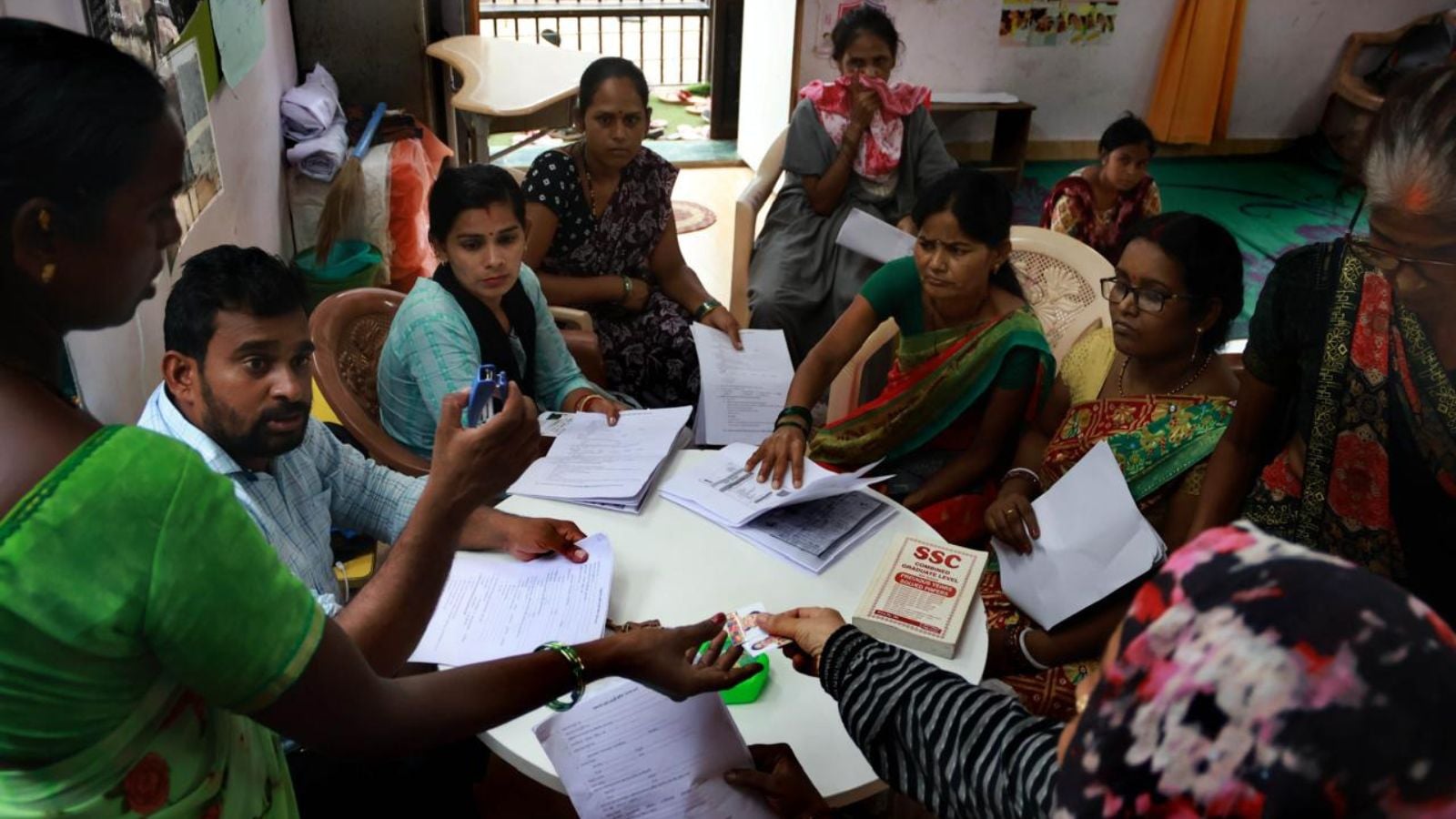
State Women and Child Development Minister Aditi Tatkare said the current figure appears large primarily because nearly 62 lakh beneficiaries failed to complete the mandatory e-KYC process. Another 10 lakh women who completed verification were found ineligible under the scheme’s norms.
“There are 10 lakh beneficiaries who completed their e-KYC but do not meet the criteria. Of these, 2.5 lakh were disqualified for exceeding the age limit, while around two lakh women admitted to owning a vehicle and were therefore found ineligible,” Tatkare said.
The government’s defence, however, is complicated by the scheme’s own political history.
When the then Eknath Shinde-led Mahayuti government launched Ladki Bahin scheme ahead of the 2024 elections, the focus was on rapid enrolment rather than rigorous verification. Documentation requirements were kept minimal, resulting in a surge in registrations. The scheme’s political impact was significant, with the Mahayuti winning more than 230 of Maharashtra’s 288 Assembly seats. Political observers have often cited the programme as a key factor behind the alliance’s poll success.
Now, as beneficiaries are being removed, the Opposition argues that the government is attempting to reduce the financial burden of a scheme that has become difficult to sustain.
“After achieving its political objective, the government has realised that the treasury cannot sustain the expenditure and is now trying to reduce the number of beneficiaries to save money,” Maharashtra Congress president Harshavardhan Sapkal said.
Opposition leaders have also accused the government of treating women as a vote bank, arguing that beneficiaries were enrolled enthusiastically before the election but are now being excluded through stricter scrutiny.
Rejecting the criticism, Tatkare said the scheme was intended to promote women’s economic and social empowerment rather than serve electoral interests. She pointed out that more than 50 lakh new bank accounts had been opened because of the scheme and claimed that it had contributed positively to several social indicators linked to women’s welfare.
The controversy has also revived concerns over Maharashtra’s fiscal position. During the election campaign, the Mahayuti had promised to raise the monthly assistance from Rs 1,500 to Rs 2,100. With rising debt levels and mounting expenditure commitments, fulfilling that promise appears difficult for the government in the near term.
Officials acknowledge that reducing the number of beneficiaries through verification lowers the scheme’s overall cost and could create fiscal space if the government eventually decides to enhance the payout.
Complicating matters further is the transition in leadership. While the scheme was launched under Shinde, it is now being administered by the Chief Minister Devendra Fadnavis-led government. The identification of alleged fraudulent and ineligible beneficiaries has inevitably raised questions about the manner in which the programme was implemented in its initial phase.
According to Tatkare, investigations revealed that around 16,000 men had received benefits under the scheme. “They have been disqualified and the funds will be recovered,” she said, adding that the government expects savings of Rs 12,000 crore to Rs 14,000 crore through the removal of ineligible beneficiaries.
However, the verification exercise itself has generated controversy. A poorly worded Marathi question during e-KYC reportedly led to more than 24 lakh beneficiaries being “incorrectly identified” as government employees or members of government employee households, resulting in a temporary halt in payments.
The question — “Tumchya gharatle koni sarkari nokrit nahi na? (Nobody in your family works for the government, right?)” — is said to have confused many respondents, who selected “yes” when they should have answered “no”.
Subsequent scrutiny found nearly 20 lakh of those beneficiaries to be genuine, while verification of the remaining cases is still underway.
Fadnavis’s stand
Defending the exercise, Fadnavis said the eligibility criteria had remained unchanged since the scheme’s launch. “If a woman could provide self-certification, she should also be able to complete KYC. The state government is not downsizing the scheme. The eligibility parameters were clearly announced from the beginning,” he said.
The CM added that around 14,000 men who had fraudulently availed of the benefits had been disqualified and recovery proceedings would follow. “Women who did not qualify have been removed. During scrutiny, it was found that around five lakh beneficiaries were government employees. Some women also had vehicles registered in their names,” he said.
View original source — Indian Express ↗
More from newsGlobal

Tulsa, a single woman, came to the limelight by commenting on current affairs on TikTok. She was also promoting her jewelry-related busin…
What is the 'formula' that MP Mahabir Pun drew the attention of Prime Minister Balendra Shah to?