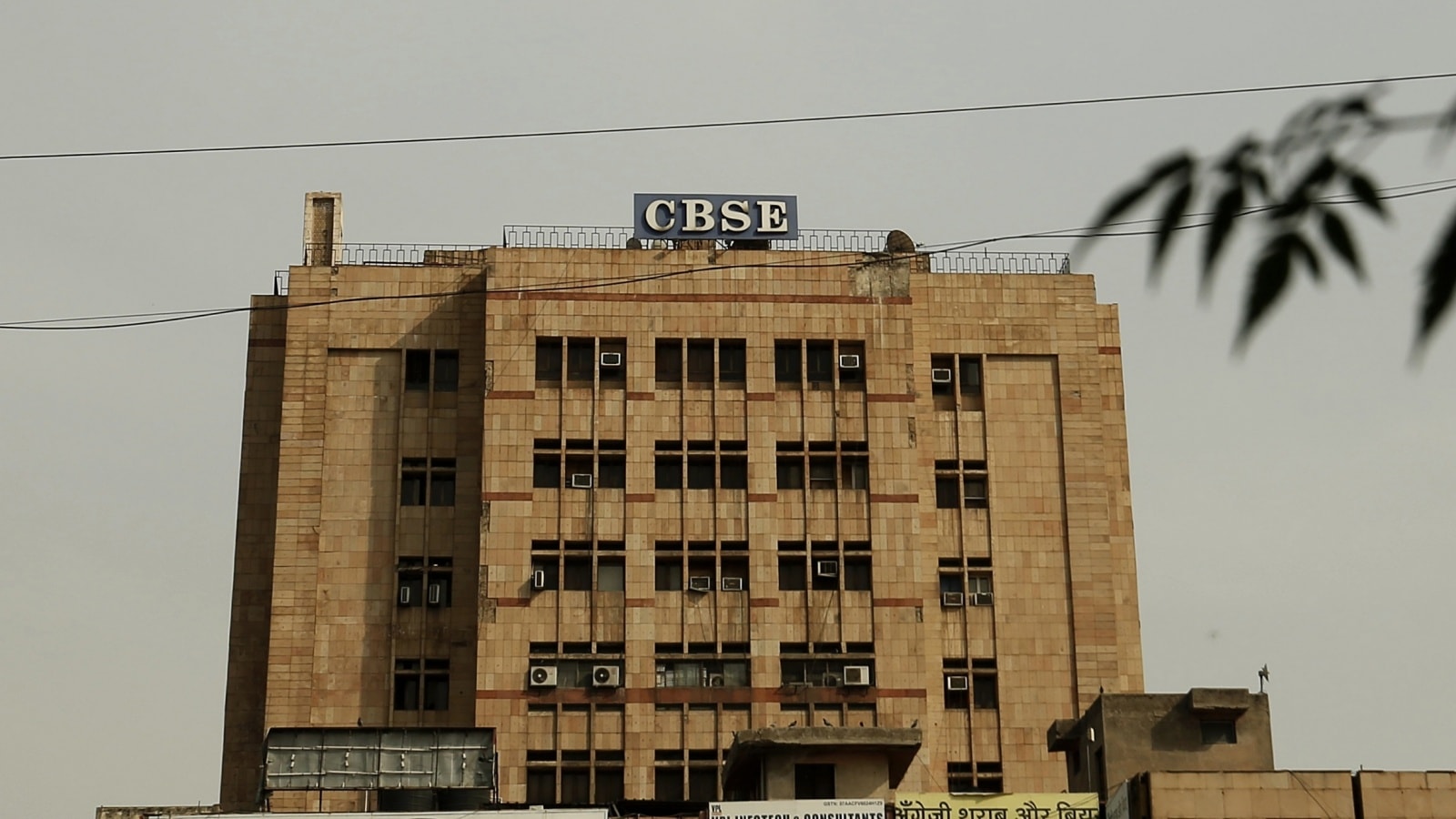
Re-evaluation: CBSE delayed login after experts flagged gaps
3 min readNew DelhiJun 5, 2026 04:23 AM IST
Around midnight on June 1, after a fourth round of testing found no more significant vulnerabilities, final configuration changes were carried out and the portal was opened around 4 am on June 2.
The Central Board of Secondary Education (CBSE) was forced to delay opening its Post-Result Activities (PRA) portal after an IIT-led review found major cybersecurity vulnerabilities in the Board’s digital systems, senior officials associated with the exercise told The Indian Express.
The PRA portal, the CBSE’s official online platform to help students navigate post-examination procedures, was expected to go live on June 1, but it was not launched until the early hours of June 2. The delay set off fresh questions about the CBSE’s handling of this year’s Class 12 examination.
The portal is now active. However, it is learned that the re-evaluation exercise – the process that is supposed to kick in after a student who suspects errors in the marking of their paper registers a challenge on the portal – is yet to begin.
Sources said the Board has decided not to use the Coempt Edu Teck platform, which powered the On-Screen Marking (OSM) system used during evaluation of the Class 12 papers, for the re-evaluation.
Student and examination data held by Coempt has been migrated to digital infrastructure directly controlled by CBSE, and the re-evaluation workflow will now run through the Board’s own portal.
The cybersecurity review carried out by expert teams from IIT Madras and IIT Kanpur identified at least four vulnerabilities that were classified as “critical” or of “high severity”, an official closely associated with the exercise told The Indian Express.
In addition, at least seven medium- and low-severity issues were identified during the review, the official said.
Story continues below this ad
On May 24, amid mounting complaints over CBSE’s digital evaluation system and technical glitches, Education Minister Dharmendra Pradhan had asked expert teams from the two IITs to assist the Board.
According to the official, the launch of CBSE’s PRA portal was postponed after a third round of cybersecurity testing uncovered the vulnerabilities.
The CBSE did not respond to requests from The Indian Express for a comment.
The audit employed the well-known “red team-blue team” method of testing, in which the “blue” team – comprising the CBSE’s original developers, experts from IIT Madras and the Digital India Corporation (DIC) – was responsible for fixing vulnerabilities, while the “red” team of IIT Kanpur experts tried to break into the system and identify weaknesses.
Story continues below this ad
Four rounds of testing were carried out. After the second round on June 1, officials believed all major issues had been resolved and began preparations to launch the portal. However, a red team exercise conducted later that afternoon uncovered major vulnerabilities again, the official said.
One of the vulnerabilities, according to the official, was a sophisticated access-control flaw that could potentially allow a user logged in with one account to gain access to answer scripts belonging to other students.
Following the discovery, the blue team scrambled to carry out repairs and, after working through the evening, managed to fix the problem.
Around midnight on June 1, after a fourth round of testing found no more significant vulnerabilities, final configuration changes were carried out and the portal was opened around 4 am on June 2.
Story continues below this ad
However, the portal is currently only collecting requests from students, and storing their submissions within the CBSE system. Once the examiner-facing platform is cleared for use, examiners will be assigned answer scripts electronically, the official said.
© The Indian Express Pvt Ltd
Vidheesha Kuntamalla is a Senior Correspondent at The Indian Express, based in New Delhi. She is known for her investigative reporting on higher education policy, international student immigration, and academic freedom on university campuses. Her work consistently connects policy decisions with lived realities, foregrounding how administrative actions, political pressure, and global shifts affect students, faculty, and institutions.
Professional Profile
Core Beat: Vidheesha covers education in Delhi and nationally, reporting on major public institutions including the University of Delhi (DU), Jawaharlal Nehru University (JNU), Jamia Millia Islamia, the IITs, and the IIMs. She also reports extensively on private and government schools in the National Capital Region.
Prior to joining The Indian Express, she worked as a freelance journalist in Telangana and Andhra Pradesh for over a year, covering politics, rural issues, women-centric issues, and social justice.
Specialisation: She has developed a strong niche in reporting on the Indian student diaspora, particularly the challenges faced by Indian students and H-1B holders in the United States. Her work examines how geopolitical shifts, immigration policy changes, and campus politics impact global education mobility.
She has also reported widely on:
* Mental health crises and student suicides at IITs
* Policy responses to campus mental health
* Academic freedom and institutional clampdowns at JNU, South Asian University (SAU), and Delhi University
* Curriculum and syllabus changes under the National Education Policy
Her recent reporting has included deeply reported human stories on policy changes during the Trump administration and their consequences for Indian students and researchers in the US.
Reporting Style
Vidheesha is recognised for a human-centric approach to policy reporting, combining investigative depth with intimate storytelling. Her work often highlights the anxieties of students and faculty navigating bureaucratic uncertainty, legal precarity, and institutional pressure. She regularly works with court records, internal documents, official data, and disciplinary frameworks to expose structural challenges to academic freedom.
Recent Notable Articles (Late 2024 & 2025)
1. Express Investigation Series
JNU’s fault lines move from campus to court: University fights students and faculty (November 2025)
An Indian Express investigation found that since 2011, JNU has appeared in over 600 cases before the Delhi High Court, filed by the administration, faculty, staff, students, and contractual workers across the tenures of three Vice-Chancellors.
JNU’s legal wars with students and faculty pile up under 3 V-Cs | Rs 30-lakh fines chill campus dissent (November 2025)
The report traced how steep monetary penalties — now codified in the Chief Proctor’s Office Manual — are reshaping dissent and disciplinary action on campus.
2. International Education & Immigration
‘Free for a day. Then came ICE’: Acquitted after 43 years, Indian-origin man faces deportation — to a country he has never known (October 2025)
H-1B $100,000 entry fee explained: Who pays, who’s exempt, and what’s still unclear? (September 2025)
Khammam to Dallas, Jhansi to Seattle — audacious journeys in pursuit of the American dream after H-1B visa fee hike (September 2025)
What a proposed 15% cap on foreign admissions in the US could mean for Indian students (October 2025)
Anxiety on campus after Trump says visas of pro-Palestinian protesters will be cancelled (January 2025)
‘I couldn’t believe it’: F-1 status of some Indian students restored after US reverses abrupt visa terminations (April 2025)
3. Academic Freedom & Policy
Exclusive: South Asian University fires professor for ‘inciting students’ during stipend protests (September 2025)
Exclusive: Ministry seeks explanation from JNU V-C for skipping Centre’s meet, views absence ‘seriously’ (July 2025)
SAU rows after Noam Chomsky mentions PM Modi, Lankan scholar resigns, PhD student exits SAU
A series of five stories examining shrinking academic freedom at South Asian University after global scholar Noam Chomsky referenced Prime Minister Narendra Modi during an academic interaction, triggering administrative unease and renewed debate over political speech, surveillance, and institutional autonomy on Indian campuses.
4. Mental Health on Campuses
In post-pandemic years, counselling rooms at IITs are busier than ever; IIT-wise data shows why (August 2025)
Campus suicides: IIT-Delhi panel flags toxic competition, caste bias, burnout (April 2025)
5. Delhi Schools
These Delhi government school grads are now success stories. Here’s what worked — and what didn’t (February 2025)
‘Ma’am… may I share something?’ Growing up online and alone, why Delhi’s teens are reaching out (December 2025) ... Read More
Tags:
CBSE
View original source — Indian Express ↗
More from newsGlobal
He was taken into custody by the Valley Crime Investigation Office, Teku, on the orders of the Office of the Prime Minister and Council o…
A high-ranking source at the Ministry of Home Affairs has confirmed that he was taken into custody by the Valley Crime Investigation Offi…