Indian Express
Indian Express··4 min read
Why rural women are meeting police every Sunday in UP’s villages
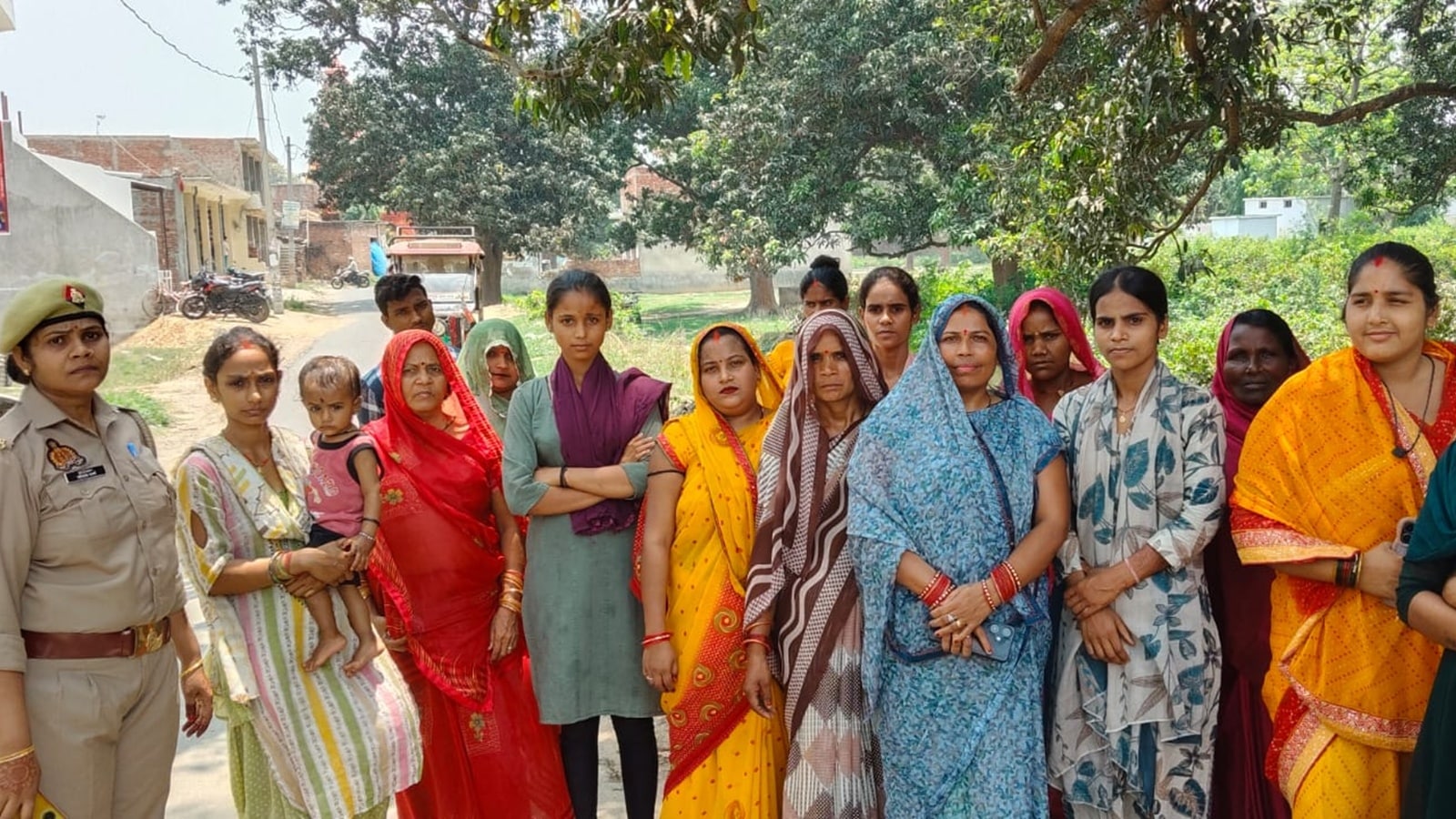
Every Sunday, in the villages of eastern Uttar Pradesh’s Gorakhpur, an unusual meeting takes place. Under a tree in a school courtyard, inside a panchayat building, or in an open field lined with chairs, women and teenagers gather in large numbers.
There is no FIR being written, no crime being investigated in real time. Yet, the conversations often sound like those that precede police complaints: domestic violence, dowry harassment, alcoholism at home, financial control.
This is the Bahu-Beti Sammelan, a preventive policing initiative that’s attempting to reach women before distress takes the shape of a crime.
It initially focused mainly on newly married women facing domestic pressure and dowry-related harassment. But over time, police officers realised that adolescent girls were also facing similar vulnerabilities like early marriage, relationship pressures, and lack of safe spaces to speak.
“It was initially started as a Bahu Sammelan, not Bahu-Beti Sammelan,” said ADG, Gorakhpur Zone, Mutha Ashok Jain.
“We see a large number of dowry deaths in the zone, around 300 annually. These young daughters-in-law often do not have access to any help. Even if they face harassment within the family, they have nobody to talk to.”
He explained that the expansion to include “beti” came after officials noticed how frequently young girls were getting involved in cases of elopement or early relationships without guidance or support systems.
Story continues below this ad
Jain added that the initiative was conceptualised through zone-level directions under the Gorakhpur Police leadership, and has since been integrated into the Mission Shakti framework for wider implementation.
Women-only safe space
The structure of the meetings is simple: no men are allowed in the interaction space. Only women police personnel and female participants from the village take part.
“In villages, women often do not have a safe space to say anything. The idea is to create an environment where they can interact, learn, grow and think for themselves without male interference,” said Jain.
Implementation happens at the field level through officers like Deputy SP Saroj Sharma in Sant Kabir Nagar district, adjacent to Gorakhpur.
Story continues below this ad
“The process begins with coordination at the village level. Police teams work with the gram pradhan to identify a suitable public place where women can gather easily. The pradhan helps arrange seating and basic logistics,” said Sharma.
During the sammelan, women are informed about government schemes, legal rights, and available support systems. ASHA and anganwadi workers also participate to connect women with health and welfare services.
“If someone has a banking issue or a scheme-related problem, we guide them to the department concerned. Applications are written and forwarded,” she said.
Complaints raised during these meetings are documented in Mission Shakti registers at police stations and followed up by local police teams. In many cases, they are also forwarded to relevant departments such as health, women and child development, or local administration for coordinated action.
Story continues below this ad
Challenges
Officials said the biggest challenge remains that rural women often fear speaking due to potential domestic backlash, making trust-building a central part of the intervention.
Sharma explained how tough it was at first. “People didn’t show up. They said that only officers would come, give a speech, and then leave without making any real change.”
Slowly, more women started stepping forward to share their stories. Many of the issues discussed were serious ones — from domestic violence to dowry demands — to issues like not being allowed to have a phone or go out.
“Women often talk about financial dependence and how they can’t make decisions in their own houses,” Sharma added.
Story continues below this ad
Sub-inspector Sangeeta Vishvakarma interacting with community members in Mehdupur village of Sant Kabir Nagar. (Express Photo)
In cases involving alcoholism, police try a different approach. “We bring in the husbands too and do some counseling,” Sharma said. If officers follow up repeatedly, they sometimes see behaviour improve, she added.
Initially piloted in four districts — Maharajganj, Sant Kabir Nagar, Balrampur and Siddharthnaga — the model is now being scaled across Gorakhpur Zone.
According to officials, the next step is shifting from village-level meetings to block-level expansion, with trained personnel and “master trainers” who can replicate the model across districts.
Each Sunday, different villages are selected.
In Sant Kabir Nagar district alone, police have organised over 1,000 Bahu-Beti Sammelans.
Story continues below this ad
Officials said the initiative is an attempt to shift policing from reaction to prevention.
To sustain this momentum, a formal block-level action plan and blueprint is being actively prepared under the guidance of the Inspector General/ADG of the Gorakhpur Zone.
This plan will mandate permanent inter-departmental coordination, ensuring that police, health, and local community workers continue to host these sammelans collectively.
(Shruti Gupta is an intern with The Indian Express)
View original source — Indian Express ↗
More from newsGlobal

Straits Times
PoliticsJun 5, 2026 · 1 min
Outcry over judicial missteps linked to missing girl prompts French government reckoning
Straits Times

OnlineKhabar
PoliticsJun 5, 2026 · 1 min
World Environment Day being marked today
OnlineKhabar

Straits Times
PoliticsJun 5, 2026 · 1 min
US criticises 'two-tiered policing' over UK murder case
Straits Times