Indian Express
Maharashtra hit by heatwave in May, delayed monsoon arrival; state-wide dam water level drops to 27%
4 min readMumbaiUpdated: Jun 5, 2026 05:01 PM IST
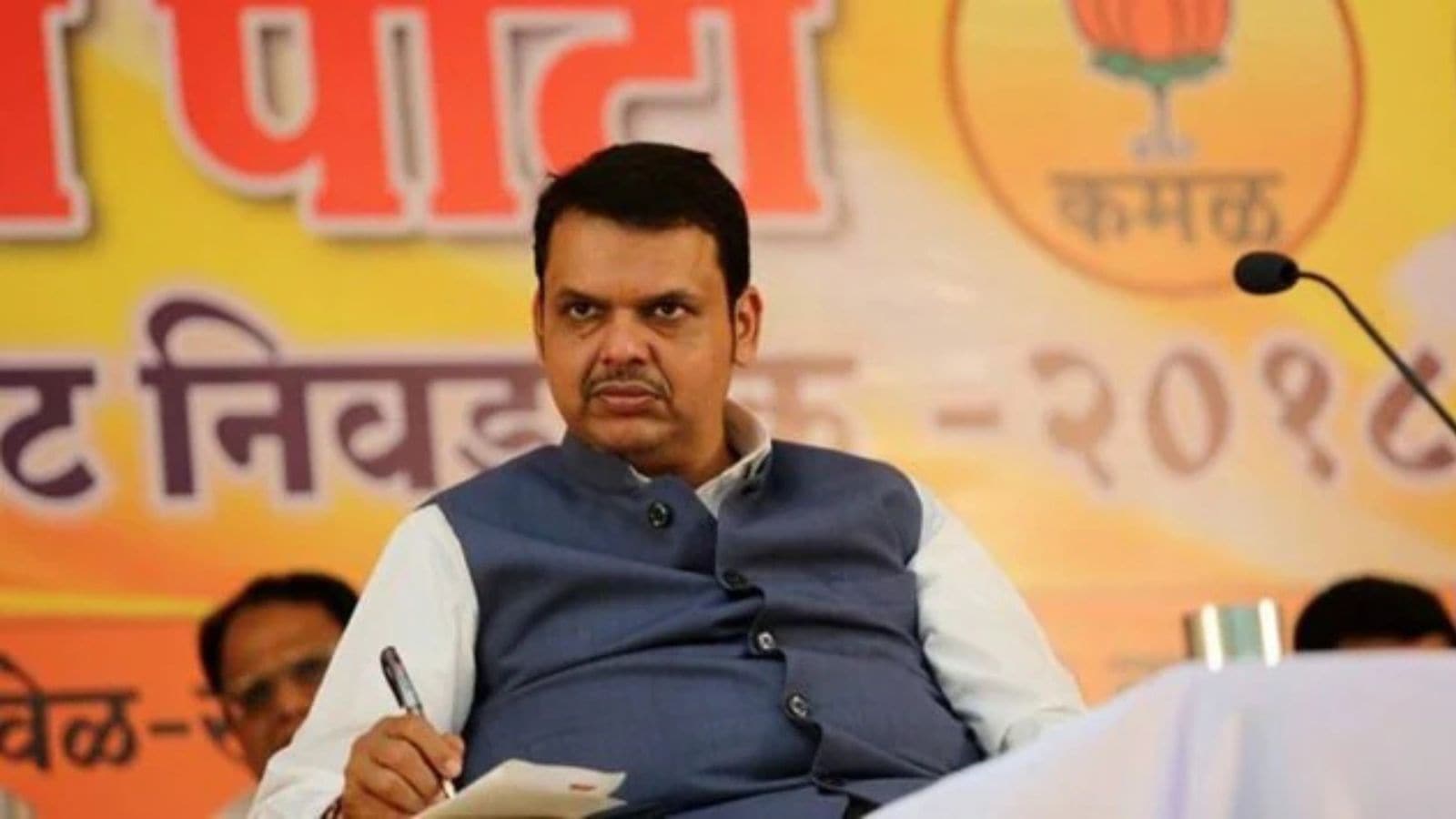
Chief Minister Devendra Fadnavis is learnt to have urged the agriculture department to issue regular alerts warning farmers against hasty sowing. (File Photo)
The water level in Maharashtra dams has dropped to 27 per cent on Thursday, a little below last year’s reading of 30 per cent for the corresponding date (June 4). Against the maximum live water capacity of 40,847.90 TMC in 3,028 dams across Maharashtra, the current water level is 11,078.55 TMC.
The shrinking water level, coupled with the delayed monsoon, has alarmed the state government, which has directed district collectors and authorities to quickly adopt water conservation schemes.
Highly placed sources in the Water Resources Department (WRD) said, “Until April, the water levels in dams compared to last year for the same period were better. But in the month of May, which witnessed an intense heat wave across Maharashtra, the dam water shrank rapidly. Evaporation of water is cited as one of the reasons.”
With deficit rainfall predicted this year owing to El Niño, the delay in the arrival of the monsoon has further compounded the crisis. Monsoon in Maharashtra generally arrives in the first week of June. But this year it is expected after June 10.
A senior officer in the WRD said, “We hope when it rains it is intense and continuous so that water levels in dams rise fast. Or else, we will have to revise our schedule and prioritise domestic consumption. With kharif sowing commencing this month, there will be greater demand for water necessary to irrigate agricultural land. Though the majority of kharif sowing is rain-fed, farmers, especially in drought-prone districts of Marathwada and Vidarbha, look for alternative water sourced through dams to sustain their crops.”
Division-wise break-up
The Pune division (Western Maharashtra), which houses 724 dams, is the worst-hit. Dam water storage in the region is 17.49 per cent, much below the 25.58 per cent recorded during this time last year. Interestingly, Western Maharashtra has recently shown water deficit trends. The region, known as the sugar belt, is perceived as economically prosperous, with extremely good soil health conditions. According to sources in the administration, the shortfall in stored water can be an outcome of climatic changes coupled with a lack of water conservation schemes. The excess use of water for the high-water-intensive sugarcane crop could be another reason, they added.
Except for the Nagpur division, where 387 dams show water storage level of 38.08 per cent, higher than last year’s 33.18 per cent, and Amravati, where water storage at 39.73 per cent is marginally better compared to last year’s 38.5 per cent, the rest of Maharashtra is reeling under a water crisis.
Story continues below this ad
In the Nashik division (North Maharashtra), which has 539 dams, the dam water level has come down to 28.25 per cent from last year’s 32.47 per cent. Similarly, the Konkan region, with 173 dams, shows water storage at 27.12 per cent as against 30.26 per cent recorded during the same time last year.
Interestingly, Chhatrapati Sambhajinagar division in Marathwada, which is a drought-prone area, shows water storage of 29.53 per cent on June 4, a marginal dip compared to 29.58 per cent recorded on the corresponding date last year.
Sources in the Vidarbha Irrigation Development Corporation (VIDC) said, “The reason for dams in Nagpur and Amravati holding higher water compared to last year could be unseasonal rain and hailstorm.”
Chief Minister Devendra Fadnavis is learnt to have urged the agriculture department to issue regular alerts warning farmers against hasty sowing. The krishi kendras have been directed to hold meetings with farmers and ask them to defer sowing till the full-fledged arrival of the monsoon.
View original source — Indian Express ↗
More from Technology

BBC
TechnologyJun 5, 2026 · 1 min
Raspberry Pi raises profit forecast as AI demand grows
BBC

Engadget
TechnologyJun 5, 2026 · 1 min
OpenAI will let the US government review its AI models before release
Engadget

TechRadar
TechnologyJun 5, 2026 · 1 min
'They want to build a moat': Anthropic's scary warnings about rapid AI 'self-improvement' and 'temporarily' pausing…
TechRadar