Indian Express
Indian Express··5 min read
Delhi court flags economic abuse as man pays no child support for 10 years, orders maintenance
5 min readNew DelhiJun 6, 2026 11:00 AM IST
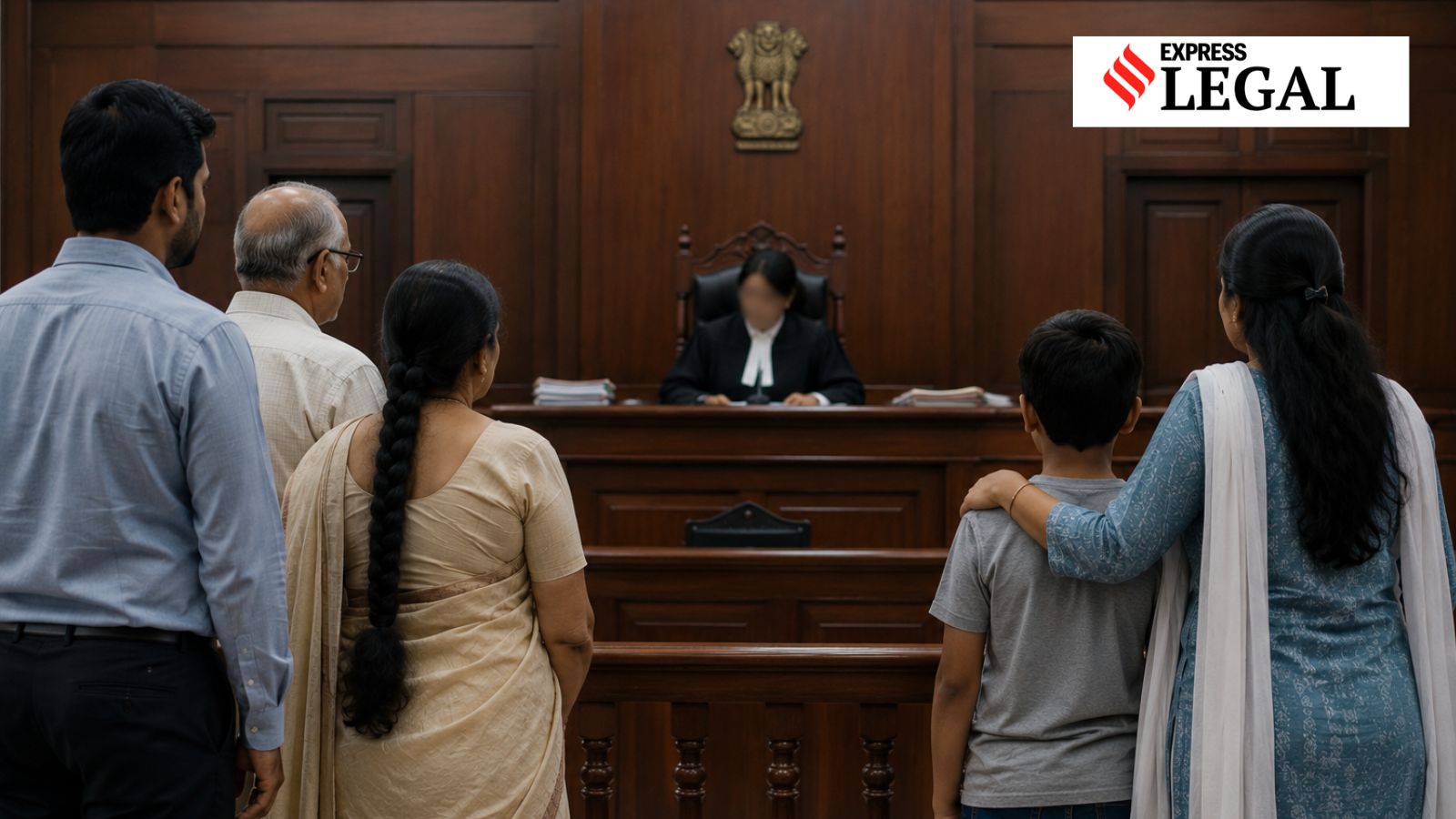
The Saket Court found that minor son had been living with his mother since 2015 and that no maintenance had been paid towards his upbringing. (AI-generated image)
A Delhi court recently directed a man to pay Rs 6,000 per month as maintenance to his minor son, holding that a husband cannot evade his legal obligation to support his child merely by claiming unemployment or citing other financial responsibilities.
Additional Sessions Judge Sheetal Chaudhary Pradhan of Saket Court noted that the minor son had been living with his mother since 2015 and that no maintenance had been paid towards his upbringing, amounting to “economic abuse” under the circumstances.
“It is for the respondent/ husband to manage his expenses and merely giving the excuse that he is jobless or that he has other responsibilities and not placing on record details of expenses by him and the ground that he has the responsibility of his mother, does not absolve him from maintaining his legally wedded wife and the minor son,” the June 2 order read.
Additional Sessions Judge Sheetal Chaudhary Pradhan held that maintenance is intended to prevent vagrancy and destitution of an aggrieved woman and child.
The court was hearing an appeal filed by the wife challenging a September 2025 order of the trial court, which had dismissed her complaint against her husband under the Protection of Women from Domestic Violence Act, 2005.
‘Capability to earn, actual earning different’
The court observed that maintenance is intended to prevent vagrancy and destitution of an aggrieved woman and child.
Rejecting the husband’s contention that the wife was educated and capable of earning, the court held that mere educational qualifications cannot be a ground to deny maintenance.
It emphasised that the capability to earn and actual earning are two distinct concepts.
The court noted that while the husband claimed to be unemployed, he was an able-bodied person and had failed to place any financial documents or income affidavit on record.
On the other hand, the wife maintained that although she was educated, she was presently unemployed and solely caring for the minor child.
The court noted that the wife has claimed her expenses of Rs 20,000 to Rs 30,000 per month, and has placed on record the documents of the school fees of the minor child.
The court held that the husband is capable of paying a maintenance amount of Rs 6,000 to the minor son till he attains the age of majority.
The court further held that the trial court had failed to adequately consider the fact that both parents share responsibility for maintaining their child, and that the husband could not avoid this obligation.
Accordingly, it found that the denial of monetary relief to the wife and child suffered from illegality, perversity and material irregularity, warranting interference by the appellate court.
Marriage that lasted few months
It was claimed by the wife that she got married in February 2013 in accordance with Hindu rites and customs with great pomp and show and her parents had spent more than Rs 10 lakh in the marriage and gave handsome gifts, costly articles, jewellery, household articles to her husband.
The wife alleged that soon after the marriage, she was subjected to dowry-related harassment, physical and mental cruelty at the hands of her husband and his parents and was repeatedly forced out of her matrimonial home. She later filed complaints before the crime against women cell (CAW Cell) in October 2013, which were later referred to the police station concerned for registration of an FIR.
Subsequently, the couple had a son in November 2013. In April 2015, the parties entered into a settlement before the family court and agreed to reside separately from the husband’s family in a rented accommodation. However, according to the wife, the arrangement lasted only a few months before the husband again abandoned her and the child in July 2015.
Story continues below this ad
The wife stated that she thereafter raised the child alone and, following the death of her father in October 2018, continued residing with her son at her parental home with limited financial support.
While the trial court ultimately dismissed her domestic violence complaint in September 2025, she challenged the decision before this court, leading to the present order.
Arguments
The wife’s counsel argued that the trial court had failed to appreciate the fact that the wife successfully proved the acts of domestic violence committed by her husband and his parents against her and was entitled to the reliefs claimed in the complaint case.
It was added that the trial court’s order was illegal, arbitrary and liable to be set aside, as it failed to appreciate and overlooked as husband did not give a single penny to her and economically abused her despite having sufficient means and did not disclose his true income in his affidavit.
Story continues below this ad
On the other hand, the husband’s counsel argued that the wife has not approached this court with clean hands and has deliberately suppressed and concealed several material facts, which are crucial for proper adjudication of this present appeal.
It was further argued that the present appeal is misconceived both in law and on facts and is liable to be dismissed at the threshold.
It was further argued that the wife admitted that no dowry demand was made before marriage ceremonies and that no immediate complaint was lodged regarding alleged harassment.
Richa Sahay is a Legal Correspondent for The Indian Express, where she focuses on simplifying the complexities of the Indian judicial system. A law postgraduate, she leverages her advanced legal education to bridge the gap between technical court rulings and public understanding, ensuring that readers stay informed about the rapidly evolving legal landscape.
Expertise
Advanced Legal Education: As a law postgraduate, Richa possesses the academic depth required to interpret intricate statutes and constitutional nuances. Her background allows her to provide more than just summaries; she offers context-driven analysis of how legal changes impact the average citizen.
Specialized Beat: She operates at the intersection of law and public policy, focusing on:
Judicial Updates: Providing timely reports on orders from the Supreme Court of India and various High Courts.
Legal Simplification: Translating dense "legalese" into accessible, engaging narratives without sacrificing factual accuracy.
Legislative Changes: Monitoring new bills, amendments, and regulatory shifts that shape Indian society. ... Read More
Tags:
Delhi court
View original source — Indian Express ↗
More from newsGlobal

Times of Israel
PoliticsJun 6, 2026 · 1 min
Bucking boycotts, prizewinning Israeli astrophysicist finds ‘Zen-like’ perspective in space
Times of Israel

Dawn
PoliticsJun 6, 2026 · 1 min
'I thought I would perish': Everest survivor recounts ordeal
Dawn

Rio Times
PoliticsJun 6, 2026 · 1 min
Latin American Pulse for Saturday, June 6, 2026
Rio Times