Indian Express
Inspired by Rahul Gandhi’s dive, explore these 5 scuba diving spots in the Andamans
4 min readNew DelhiJun 6, 2026 09:00 PM IST
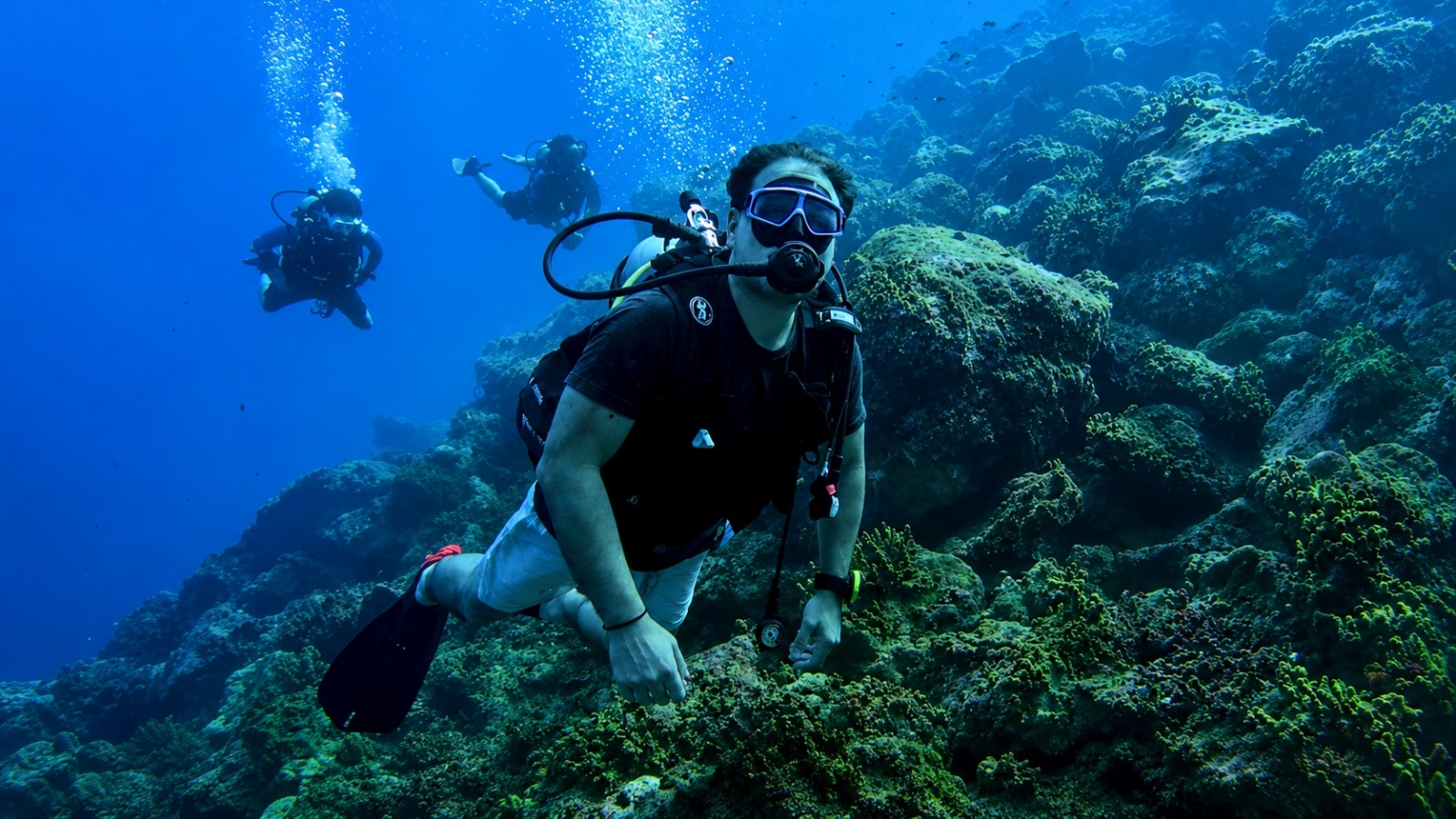
Screengrab of Rahul Gandhi scuba diving in Andaman & Nicobar (Photo X/@RahulGandhi)
Congress leader Rahul Gandhi was recently seen scuba diving in the Andaman and Nicobar Islands during his visit to the Union Territory. As a certified scuba diver himself, on World Environment Day, Gandhi shared a glimpse of his experience on X, saying, “I stand for ecologically balanced development. These islands can be the most extraordinary sustainable destination the world has ever seen.”
His remarks have once again drawn attention to the remarkable marine ecosystems that make the Andaman and Nicobar Islands one of India’s premier scuba diving destinations. Home to coral reefs, tropical fish, sea turtles and diverse underwater landscapes, the archipelago offers opportunities for both first-time divers and experienced enthusiasts.
For travellers inspired to explore the islands responsibly, here are five of the most popular scuba diving locations and what it takes to become a diver.
1. Swaraj Dweep (Havelock Island)
Often hailed as India’s scuba diving capital, Swaraj Dweep offers excellent visibility, thriving coral gardens and a wide variety of marine species. Dive sites such as Lighthouse, Aquarium and Nemo Reef attract both beginners and certified divers. Divers may encounter clownfish, butterflyfish, reef sharks, rays and sea turtles while exploring these waters.
2. Shaheed Dweep (Neil Island)
Known for its calmer waters and colourful coral formations, Shaheed Dweep is ideal for those seeking a quieter diving experience. Sites around the island feature healthy reef systems and abundant marine life. The relatively gentle conditions also make it suitable for introductory dives.
3. North Bay Island
Located close to Port Blair, North Bay is among the most accessible diving spots in the islands. The shallow reefs are perfect for beginners and offer a chance to observe coral ecosystems without venturing too deep. Many travellers choose North Bay for their first-ever scuba experience.
4. Cinque Island
For experienced divers, Cinque Island offer beautiful underwater topography, and some of the best visibility in the Andamans. The island’s relatively untouched reefs support a rich diversity of marine life. Because of its remote location, access is often dependent on weather and permits.
Story continues below this ad
5. Rutland Island
Less crowded than the more famous diving hubs, Rutland Island appeals to travellers looking for a more offbeat underwater adventure. The reefs here are known for their biodiversity and natural beauty, making them a favourite among dive operators seeking quieter sites.
I visited the southernmost tip of India.
I stood at Indira Point. I walked under trees that have stood for centuries. I dove into coral reefs among the most vibrant on earth.
And I sat with the people who live there. Tribal communities, whose land is being taken away by… pic.twitter.com/RLNtT6L0U4
— Rahul Gandhi (@RahulGandhi) June 5, 2026
What does it take to become a scuba diver?
According to Professional Association of Diving Instructors, one of the world’s largest scuba diver training organisations, aspiring divers do not need prior diving experience to begin learning.
For the entry-level Open Water Diver certification, PADI states that participants must:
Be at least 10 years old
Have adequate swimming skills
Be in good physical health
Complete knowledge development, confined water training and open-water dives under professional supervision.
For those not ready to pursue certification, many dive centres in the Andamans offer Discover Scuba Diving programmes, which allow beginners to experience scuba diving under the guidance of certified instructors.
Diving responsibly in fragile marine ecosystems
As highlighted by Gandhi, the Andaman and Nicobar Islands are home to ecologically sensitive coral reef systems. Responsible diving practices play a crucial role in protecting these habitats.
Divers are encouraged to:
Story continues below this ad
Avoid touching or standing on corals.
Maintain proper buoyancy control.
Refrain from feeding marine animals.
Avoid collecting shells or marine souvenirs.
Choose certified operators that follow sustainable diving practices.
View original source — Indian Express ↗
More from Entertainment

The Hollywood Reporter
EntertainmentJun 6, 2026 · 1 min
Tagging Along With the Viral Anti-Trump Street Artists Turning L.A. Into Their Canvas
The Hollywood Reporter

The Hollywood Reporter
EntertainmentJun 6, 2026 · 1 min
‘Ghostbusters: Night Shift’: Netflix and Sony Animation Reveal Title, Logo for New Series
The Hollywood Reporter

Deadline
EntertainmentJun 6, 2026 · 1 min
‘Backrooms’ Becoming A24’s Highest Grossing Movie Ever Worldwide, Besting Timothée Chalamet’s $191M+ ‘Marty Supreme’
Deadline