Indian Express
Indian Express··4 min read
The proof of the pudding is…
The conclusion exposes the hollowness of the ECI’s claims and the inaccuracy, unreliability and lack of credibility of the SIR exercise. After ECI’s blessings, will democracy survive?
As a lawyer, I understand that if two honourable judges speak for the Court, it is the Supreme Court of India (SC) which speaks. The Supreme Court is a Constitutional court, it is also the final appellate court, it has original jurisdiction in some matters, it has superintendence over all courts, it can review and overrule its own judgments, it can take up a cause suo motu, it has the power to constitute a Special Investigation Team (SIT) or a Commission, it has the power to refer a matter for investigation to a police agency, it can refer a civil or commercial dispute to mediation or arbitration, it can transfer a matter from the jurisdiction of a High Court to the jurisdiction of another High Court, it can pronounce a man and a woman divorced, it has the power to punish a person for contempt of court, its interpretation of the Constitution of India is the final word, and it has the power to pass any order to “do complete justice”. It is said that the SC is the most powerful court in the world.
Universal adult suffrage
Among its vast powers, one stands out. In State of Madras vs V G Row, the Supreme Court described itself as the sentinel qui vive—a watchful guardian of the Constitution. What does the Constitution say about elections?
l Article 324 vests in the Election Commission of India (ECI) the superintendence, direction and control of the preparation of the electoral rolls for,…and the conduct of all elections to, Parliament and the Legislature of every State.
lArticle 326 prescribes that elections to the House of the People and the Legislative Assemblies of States shall be on the basis of adult suffrage (“The right to vote is a constitutional right.” — SC).
There is no conflict between the two Articles. The ECI is constitutionally obligated to prepare the electoral rolls including every adult in India. Obviously, there are other other qualifications, like citizenship and residence, imposed by the Constitution, the Citizenship Act, 1955 and the Representation of the People Act, 1950. Each of the laws prescribes an authority and a procedure to determine whether a person satisfies the qualifications under the law.
The fundamental basis of universal adult franchise is inclusion. Exclusion from the electoral rolls is an exception and must follow a laid-down procedure and a decision in writing that is subject to judicial review.
Interesting observations
In the course of the judgment in Association for Democratic Reforms vs Election Commission dated May 27, 2026 (in the context of the SIR exercise in Bihar), the Supreme Court observed:
The commission decided to treat the 2003 electoral roll, with 01-01-2003 as the qualifying date, as probative evidence of eligibility, unless rebutted. Any person not included in the 2003 roll must produce one or more prescribed documents to establish his/her eligibility as an elector [In Inderjit Barua (1985) and Lal Babu Hussein (1995) the SC had affirmed that names included in the electoral roll are entitled to the presumption of citizenship].
Upon scrutiny, where the eligibility of any person is found to be doubtful, the ERO/AERO is mandated to issue a show-cause notice setting out the grounds for the proposed exclusion and rendering a reasoned and speaking order. Any person aggrieved by a decision of the ERO shall be entitled to prefer an appeal before the District Magistrate under S.24(a) of the RP Act, 1969. A second appeal may be filed under S. 24(b) before the Chief Electoral Officer (CEO) of the state.
The Commission, in the course of preparing or revising electoral rolls, is undoubtedly empowered to examine questions bearing upon citizenship (“a limited enquiry”—SC)…Importantly, the entirety of this exercise remains amenable to judicial review.
The judgment noted that the outcome of the SIR exercise in Bihar was the net deletion of approximately 47,00,000 names from the electoral roll of 2003. Six persons out of every 100 adults in Bihar were excluded from the final electoral roll.
Proof of the pudding
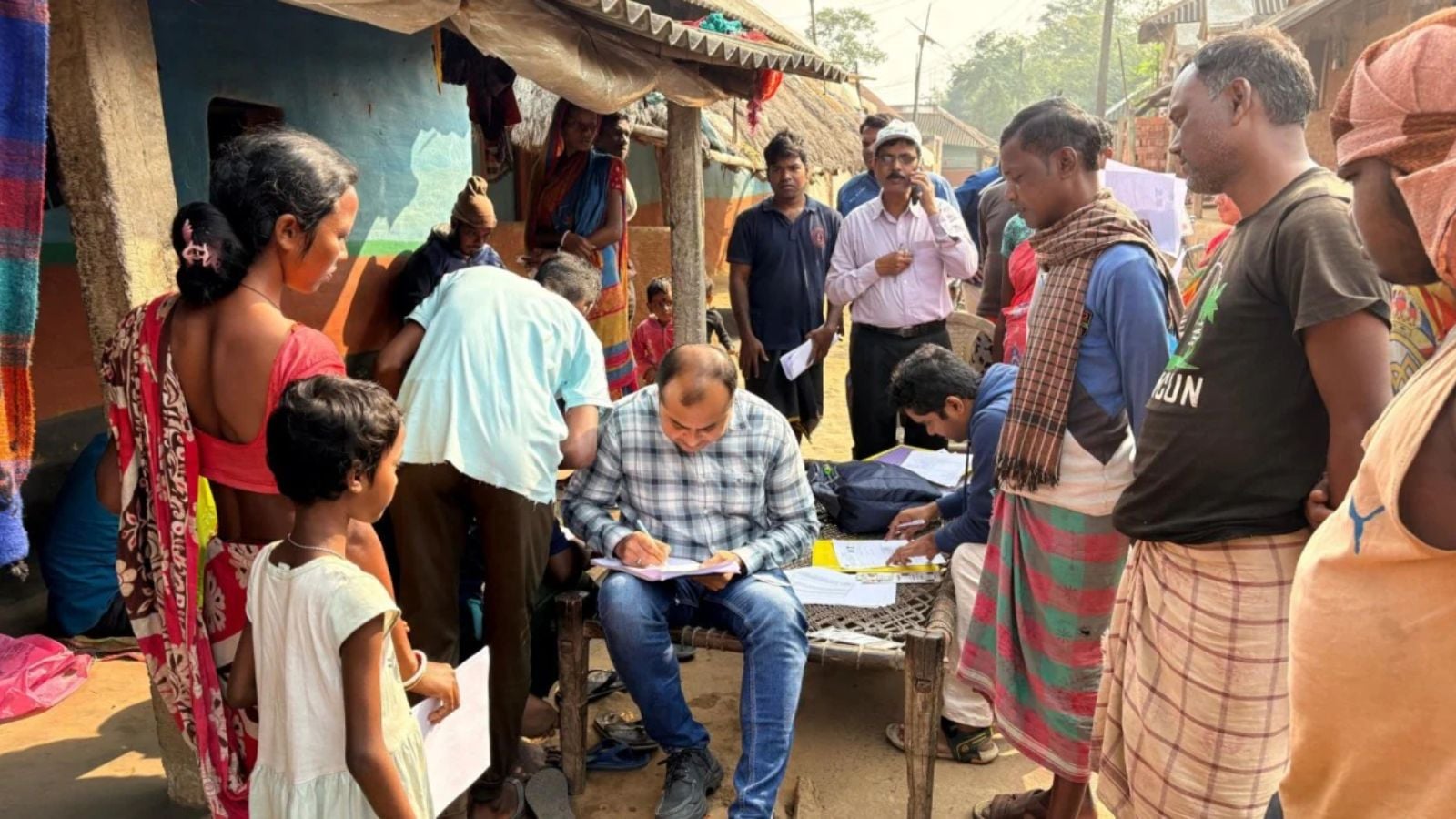
Even before the judgment was delivered in the Bihar SIR case, the SIR exercise was started and completed in West Bengal. Many lakh names were deleted. There was an SC-mandated judicial review by ad hoc judicial officers. According to the data released by the ECI and reports based on official figures from the West Bengal SIR exercise were:
First phase: removed on account of death, duplicate entries, shifted, absent, etc.
63.66 lakh
Deleted after summary review mainly
on account of ‘logical discrepancies’:
27.16 lakh
Total deletions: 90.83 lakh
Appeals filed to ad hoc judicial officers:
25 lakh (approx)
Appeals heard and disposed of (until May 14, 2026): 6,581
Appeals accepted and names reinstated in the rolls: 4,043
Percentage of success 61.43%
West Bengal was the only state where an SC-mandated process of judicial review of the deletions was undertaken. Not in Bihar. Juxtapose the judgment and the results of the judicial review. If we apply the success rate of the West Bengal sample (61.43 per cent) to the deleted names in Bihar (47,00,000), it is a fair conclusion that approximately 28,87,210 persons — who did not vote — would be entitled to be reinstated in the Bihar electoral roll.
The conclusion exposes the hollowness of the ECI’s claims and the inaccuracy, unreliability and lack of credibility of the SIR exercise. After ECI’s blessings, will democracy survive?
View original source — Indian Express ↗
More from newsGlobal

Dawn
PoliticsJun 7, 2026 · 1 min
Israeli strike kills three soldiers in south Lebanon
Dawn
Dawn
PoliticsJun 7, 2026 · 1 min
Naqvi takes CDF’s message to Tehran amid stalemate
Dawn

Times of India
PoliticsJun 7, 2026 · 1 min
Is Israel spying on US? Iran talks come under spotlight as espionage concerns grow
Times of India