Indian Express
Indian Express··4 min read
In 2018, close to 400 women from 17 panchayats assembled outside the Bodhgaya block office, with a demand
In 2018, close to 400 women from 17 panchayats assembled outside the Bodhgaya block office, with a demand: give us work, or unemployment allowance. The block development officer locked his room and slipped out through a back door. He could not get far. The women surrounded the building and sloganeered. Two days later, the women got work.
One of them was Anju. She tells the story with a laugh—the BDO locking his door and the look on the faces of men who had never seen 400 women arrive with demands and a will to stay until those were met. The laugh signifies the satisfaction of someone who was told, for most of her life, that she had no power but found out otherwise.
Anju was born in 1978 in rural Bihar. Her father did not let her go to school. His reason: if she went, a witch would eat her. So the school years passed, and she grew up unable to read or write. At 15, she was married. Her husband drank and beat her. For eight hours of farm work, she was paid one and a half kilograms of rice, not money. She stayed in the marriage. She thought, “I am not educated; what else can I do?”
Then, in 2006, Jeevika came. A self-help group was forming in her village. She would have to save five rupees a week. She did not have five rupees. Another woman told her, “Take out a fistful from the rice you cook each day and save it. That will be enough.”
She started going to the group. She started talking. Slowly and gradually, the group became a safe space for her, a solace from the daily beatings. She took a loan of Rs 4,000 when her daughter needed money for school admission. She brought the money home. Her husband went quiet. “He felt that I, too, could do something,” she says. “That I can bring money.” The beatings stopped, not because he reformed, but because his idea of her as powerless had been broken.
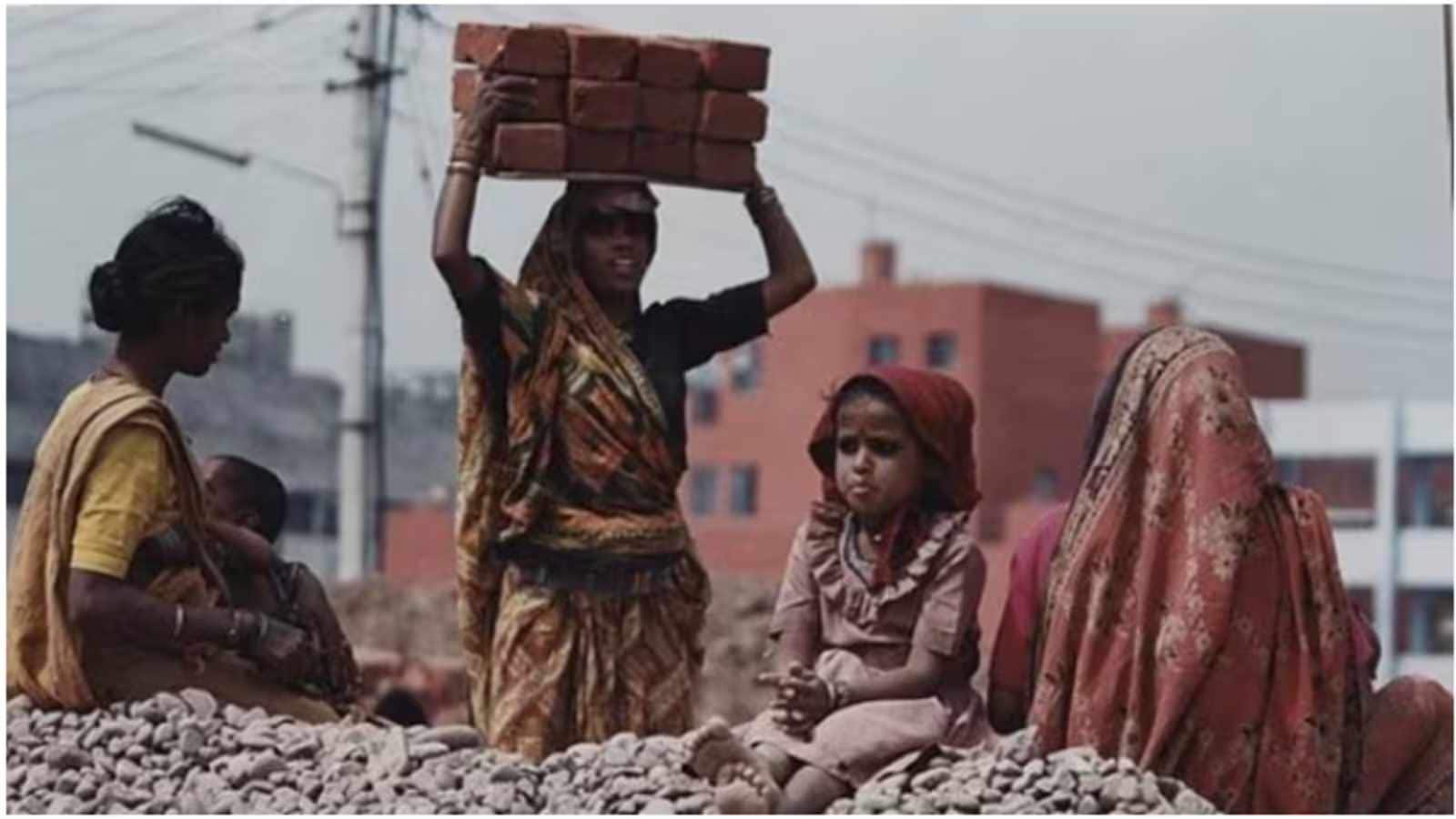
MGNREGA came to her in 2015. The contrast with casual farm labour was stark. Three hours of work in the morning, ranging from soil cutting and tree planting, with the payment done in cash, not kind, with a group of forty women who laughed and divided tasks and made the work feel less of a chore. “We worked,” she says, “even without being educated”.
For a woman who had spent years believing that the lack of education explained everything, this experience was a recalibration. She learned something else, too: she had rights. If work was not provided within 15 days of a demand, she was entitled to an unemployment allowance. That the state could owe her something was new information, and she filed it carefully in her mind.
In 2018, when the work stopped coming, she used it. Four hundred women, seventeen panchayats, one courtyard, one demand. The BDO ran. The work came back. “I felt proud,” she says. This is what pride looks like when it has been earned. The pride of a woman who was told a witch would eat her if she went to school, who saved five rupees and a fistful of rice at a time, who stood in a government courtyard with hundreds of others, watching the men run.
Anju now works at a Haldiram’s factory. Twelve hours a day, making a meagre Rs 400. She does not know about the Union Budget this year, or the proposal to replace MGNREGA with the VB-G RAM G, or the debate about shifting the programme from demand-driven to supply-driven. She has not had time to meet anyone or get information since she started at the factory. When told that MGNREGA had been effectively discontinued, she went quiet.
This is the silence policymakers should sit with and deconstruct. The shift from a demand-driven to a supply-driven employment is, in the language of policy, a technical adjustment. On the ground, it means that women like Anju, who learned slowly and at great cost that they had the right to demand work, no longer have that right. The legal entitlement that gave her the language for the gherao, the grounds to stand in that courtyard and shout, is quietly being retired.
MGNREGA was not perfect. But for Anju, it was three hours in the morning, cash in hand, forty women laughing in a field, and the knowledge that if the work didn’t come, the state owed her an answer.
Aarushee Shukla is PhD scholar at JNU
Editor (Planning & Projects) Shalini Langer curates the fortnightly ‘She Said’ column
View original source — Indian Express ↗
More from newsGlobal

Dawn
PoliticsJun 7, 2026 · 1 min
Israeli strike kills three soldiers in south Lebanon
Dawn
Dawn
PoliticsJun 7, 2026 · 1 min
Naqvi takes CDF’s message to Tehran amid stalemate
Dawn

Times of India
PoliticsJun 7, 2026 · 1 min
Is Israel spying on US? Iran talks come under spotlight as espionage concerns grow
Times of India