Indian Express
Indian Express··3 min read
Rs 39,437 cr, single firm, 30 years: Karnataka reviews Bengaluru garbage deals cleared despite warnings
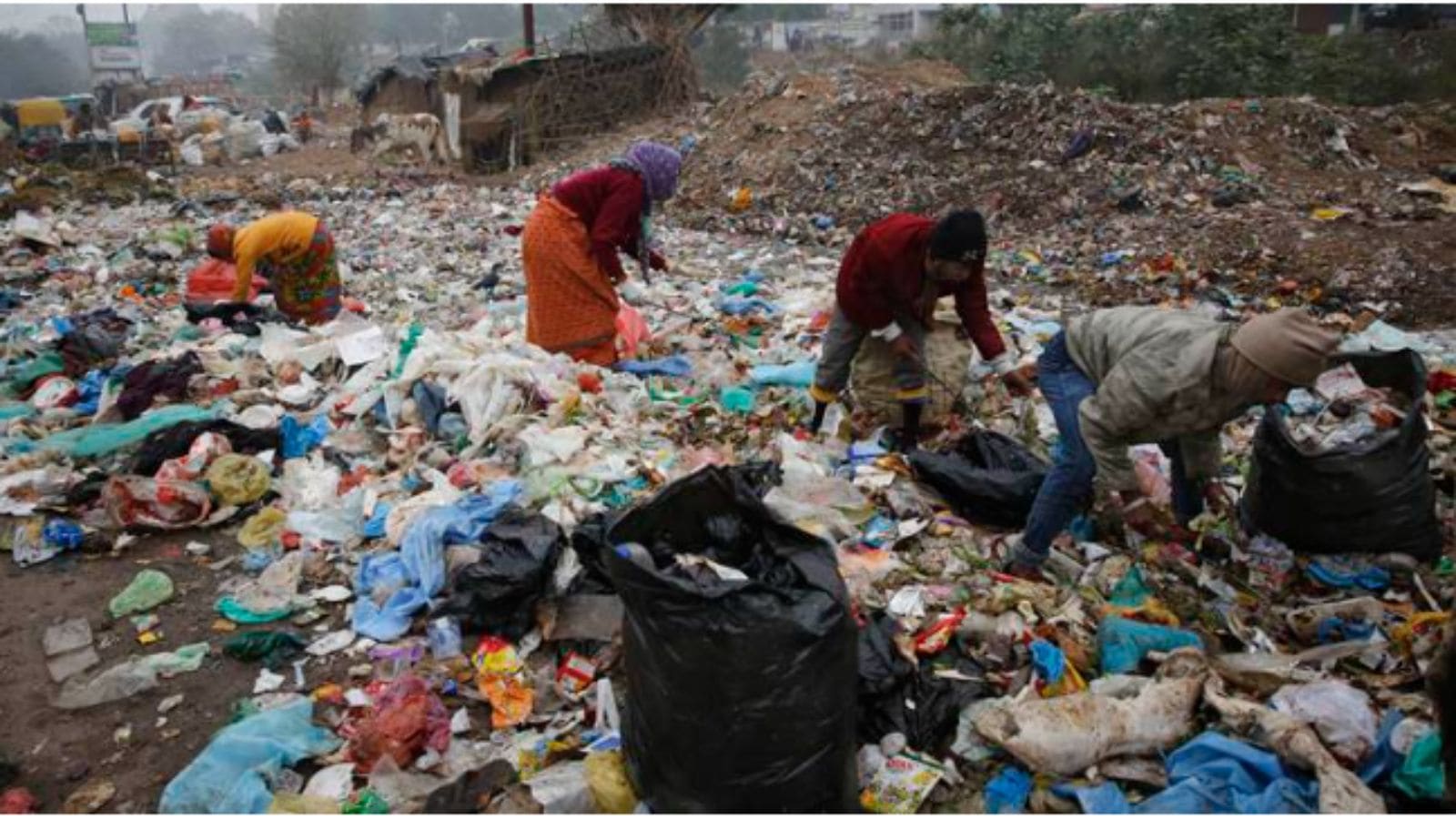
The contract is to process and dispose of 5,200 tonnes of waste daily in Bengaluru. (Representational image)
On June 4, a day after D K Shivakumar was sworn in as the Karnataka CM, the government constituted a panel to look into the contracts awarded towards the end of Siddaramaiah’s tenure.
The Karnataka government has ordered a relook at the two large-scale solid waste management contracts for Bengaluru, valued at Rs 39,437 crore, that were awarded towards the end of Siddaramaiah’s chief ministerial tenure despite warnings from the finance department.
On June 4, a day after D K Shivakumar was sworn in as the chief minister, the government constituted a panel comprising Anjum Parvez, Additional Chief Secretary, Forest, Environment and Ecology; P C Jaffer, Secretary, Finance Department; M Maheshwar Rao, Chief Commissioner of the Greater Bengaluru Authority (GBA); and a GBA chief engineer, to inquire into the matter and submit a report within seven days of the order.
5,200 tonnes of waste daily
The Bengaluru Solid Waste Management Limited (BSWML) recently proposed awarding a tender to process and dispose of 5,200 tonnes of waste daily to Delhi MSW Solutions Ltd, a subsidiary of the Hyderabad-based Ramky Group. For the first time in the city’s history, the agreement spans 30 years, raising concerns about long-term accountability and competition.
Government documents obtained by indianexpress.com show the finance department had formally recorded four objections when the urban development department placed the matter before the Cabinet. The finance department also called for an independent expert panel to evaluate the contracts before any decision was made.
Rs 6,389-crore cost overrun
One of the central grievances was the wide divergence between the government’s cost projections and the figures quoted by the bidder. In the north zone—encompassing Yelahanka, Dasarahalli, East and West—authorities originally estimated the cost to be Rs 17,982.90 crore, but the bidder’s price of Rs 21,444 crore surpassed it by Rs 3,461 crore.
In the south, covering the RR Nagar, Mahadevapura, South and Bommanahalli zones, the government’s baseline estimate stood at Rs 15,065 crore. But the project cost climbed to Rs 17,993.33 crore —about Rs 2,928 crore beyond the original budget. Taken together, the two contracts have already overshot their combined estimates by nearly Rs 6,389 crore before any work has commenced.
Story continues below this ad
“It should be noted that both packages are with the same vendor and there is a risk of vendor lock-in covering a very large proportion of Bengaluru for an extended period of time. Given these concerns, it is advisable that the duration of the tender be reduced to a more reasonable time frame, say about 10 years, if we are to accept a high premium,” a finance department note read.
Adding to the financial concern is a clause that allows costs to rise by five per cent every year, compounded across the full 30-year period. The department cautioned that by the time the contracts expire, the rate being paid would roughly spike up to 430 per cent of the agreement.
The Ramky group was blacklisted by the erstwhile Bruhat Bengaluru Mahanagara Palike (BBMP) after the firm failed to perform its work at the Mavallipura solid waste management plant.
Union minister and BJP leader Shobha Karandlaje has raised the matter. In a letter to Chief Secretary Shalini Rajaneesh, she said, “The repeated tender process itself raises serious questions. The first tender was cancelled under questionable circumstances. The second tender saw technical disqualification of all participating bidders. Astonishingly, the very same entities which were earlier found technically disqualified were subsequently treated as technically qualified in the third tender process without any transparent disclosure of material change in eligibility criteria. Such an unexplained reversal creates a strong apprehension of manipulation in technical evaluation to suit predetermined private interests. Further, the third tender notification was allegedly not published in newspapers as mandated under Chapter III of the Karnataka Transparency in Public Procurements Rules, thereby striking at the root of transparency and rendering the process legally suspect.”
View original source — Indian Express ↗
More from newsGlobal
CNA
PoliticsJun 7, 2026 · 1 min
Mountbatten pavement art removed by SMRT raises larger questions on public spaces and expression: MP Gho Sze Kee
CNA

TASS
PoliticsJun 7, 2026 · 1 min
French intel services help Armenia block pre-election criticism on the web — JDD
TASS

South China Morning Post
PoliticsJun 7, 2026 · 1 min
Will ‘Trump-class’ battleship be a sitting duck for Chinese carrier-killer missiles?
South China Morning Post