Indian Express
Indian Express··4 min read
A stray tigress finds a new home, giving a struggling Chhattisgarh reserve hope of revival
4 min readRaipurJun 8, 2026 05:35 AM IST
he tigress's decision to remain in the reserve through the harshest season of the year, when water and prey become scarce, is being seen as a sign that the habitat may once again be capable of sustaining a breeding tiger population.
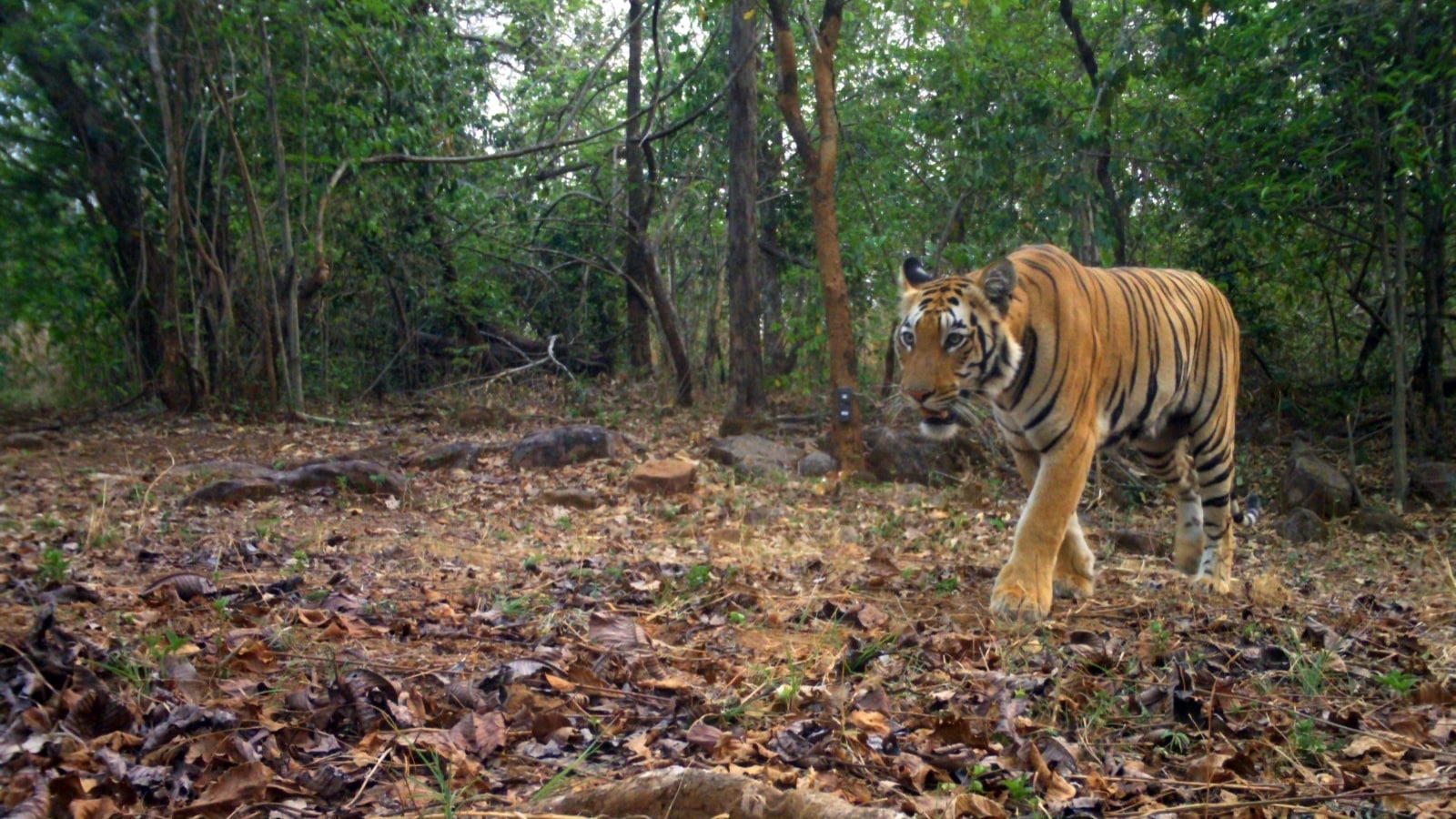
A four-year-old tigress that wandered into Chhattisgarh’s Udanti-Sitanadi Tiger Reserve (USTR) earlier this year and stayed through the scorching summer months has kindled fresh hopes for a reserve that has watched its tiger population vanish over the past three decades.
For forest officials, the tigress’s decision to remain in the reserve through the harshest season of the year, when water and prey become scarce, is being seen as a sign that the habitat may once again be capable of sustaining a breeding tiger population.
The optimism stems partly from a success story elsewhere in Chhattisgarh. At Achanakmar Tiger Reserve, a tigress named Jhumri played a key role in reviving the big cat population after years of decline. Its arrival and subsequent breeding helped boost tiger numbers in the reserve, offering conservationists a rare example of natural recovery in the state.
Udanti-Sitanadi, however, has had a far more troubled trajectory.
In 1998, the then Udanti Wildlife Sanctuary was home to 18 tigers. By 2006, that number had fallen to just three. During the same period, the population of wild buffaloes — Chhattisgarh’s state animal — crashed from around 80 to seven. Today, only one wild buffalo survives in the reserve.
The decline was not limited to tigers and buffalo. Populations of panthers, gaur, sambar, nilgai, spotted deer and wild boar also dwindled over the years.
In 2009, the state government merged the Udanti and Sitanadi sanctuaries, spread across 1,842.54 sq km, and notified them as a tiger reserve. Tiger numbers briefly rose to eight, but the gains proved short-lived. By 2023, no resident tiger remained in the reserve, which had effectively become a transit landscape for dispersing big cats.
Story continues below this ad
Against this backdrop, the arrival of the tigress in January has emerged as a rare bright spot.
Because the animal does not match any tiger officially recorded in India by the Wildlife Institute of India (WII), forest officials have named it “Paheli” (riddle).
Officials say Paheli has not only endured the summer but has also been involved in territorial encounters, including with elephant herds moving through the landscape.
Asked about measures being taken to encourage the tigress to settle permanently in the reserve, USTR Deputy Director Varun Jain said, “Regular foot patrolling, camera trapping and use of thermal drones are being undertaken. We are planning to radio-collar her so that monitoring can continue if she moves into Odisha or other districts of Chhattisgarh and faces danger.”
Story continues below this ad
The reserve is also undergoing habitat improvement works in anticipation of future tiger translocations. More than 500 hectares of grassland are being developed, and water bodies are being created to improve water availability for wildlife.
Officials said that over the last three to four years, nearly 956 hectares of encroached land have been cleared from the core and buffer areas of the reserve, despite the presence of more than 100 villages within its boundaries.
Anti-poaching efforts have also intensified. During the same period, authorities carried out 15 inter-state operations with assistance from the Directorate of Revenue Intelligence (DRI), leading to the arrest of more than 100 alleged poachers involved in leopard and pangolin trafficking. Investigators also busted illegal country-made firearm manufacturing units.
After receiving approval from the National Tiger Conservation Authority (NTCA) to translocate one male and two female tigers from neighbouring Madhya Pradesh, forest officials have focused on improving prey availability — a key condition flagged by the NTCA for the reserve’s revival.
Story continues below this ad
Alongside efforts to restore tiger numbers, authorities are also attempting to revive the wild buffalo population. Three female wild buffaloes have been brought from Assam and are expected to be released into the reserve soon.
© The Indian Express Pvt Ltd
Jayprakash S Naidu is a Principal Correspondent for The Indian Express, currently serving as the state correspondent for Chhattisgarh. With an extensive career in frontline journalism, he reports on the political, security, and humanitarian landscape of Central India.
Expertise and Experience
Specialized Conflict Reporting: Jayprakash is a leading voice on the Maoist/Naxalite conflict in the Bastar region. His reporting provides a critical, ground-level view of:
Internal Security: Tracking high-stakes encounters, surrender programs for senior Maoist leaders, and the establishment of security camps in formerly inaccessible "heartland" villages.
Tribal Rights & Displacement: Investigative reporting on the identity and land struggles of thousands of displaced tribals fleeing conflict zones for neighboring states.
Governance & Bureaucratic Analysis: He consistently monitors the evolution of Chhattisgarh as it marks 25 years of statehood, covering:
Electoral Politics: Analyzing the shift in power between the BJP and Congress and the impact of regional tribal movements.
Public Policy: Reporting on landmark infrastructure projects (e.g., mobile connectivity in remote zones) and judicial interventions, such as High Court rulings on civil and family law.
Diverse Investigative Background: Prior to his current focus on Chhattisgarh, Jayprakash held reported from Maharashtra, where he specialized in:
Crisis & Disaster Management: Notable for his extensive coverage of the Cyclone Tauktae barge tragedy (P-305) and the COVID-19 pandemic’s impact on frontline personnel.
Legal & Human Rights: Investigative pieces for platforms like Article-14, focusing on police accountability and custodial deaths across India.
Environmental & Social Justice: Authoritative reporting on the Hasdeo Aranya forest protests and the approval of major tiger reserves, highlighting the tension between industrial mining and environmental preservation. ... Read More
Stay updated with the latest - Click here to follow us on Instagram
Tags:
tiger population
View original source — Indian Express ↗