Indian Express
No need to worry about US Section 301, we will tackle it… confident of a good trade deal: Piyush Goyal
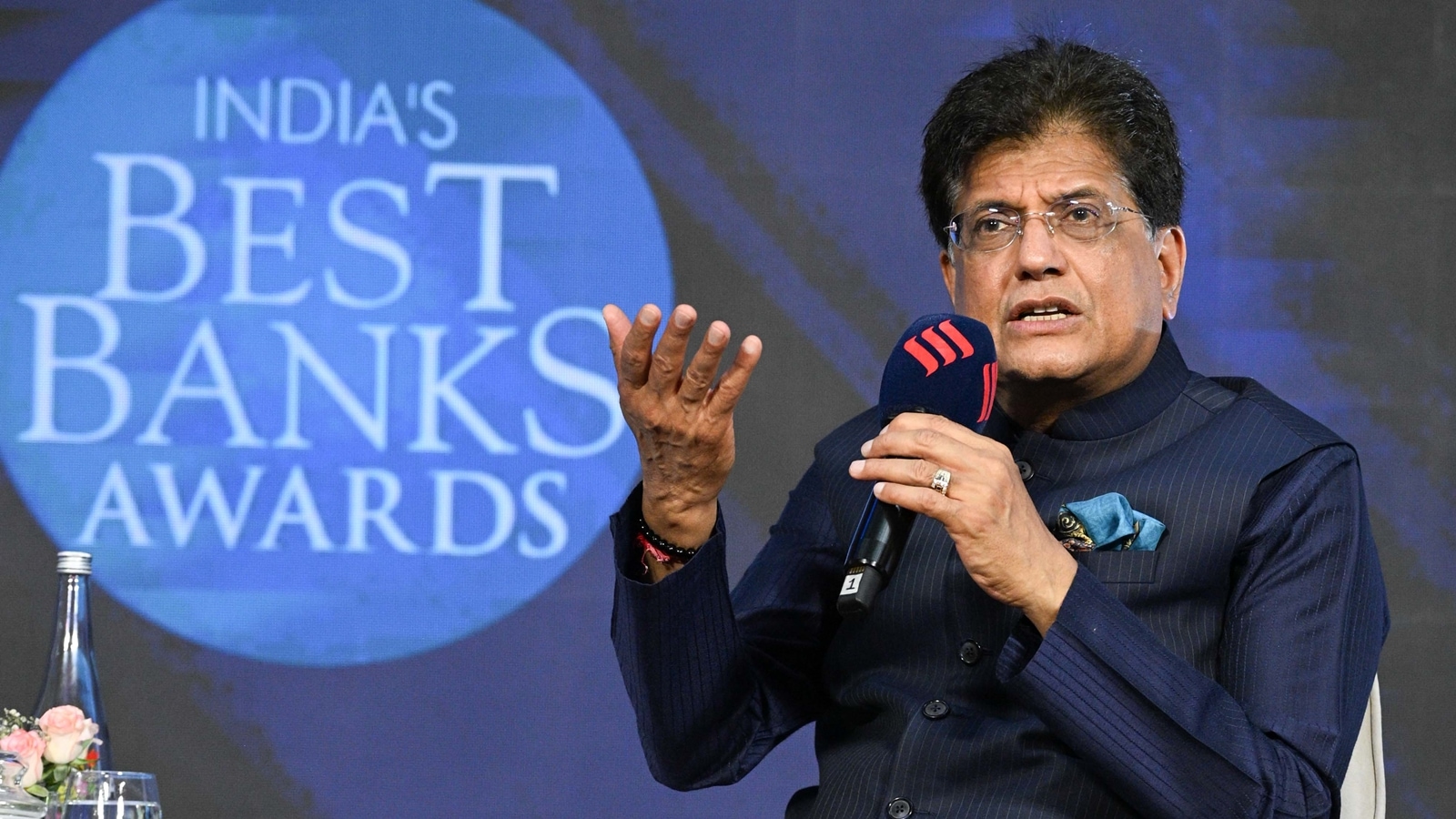
Days after the Trump administration proposed 12.5% tariffs on India and 53 other countries after a United States Trade Representative (USTR) trade investigation under Section 301 of the US Trade Act of 1974 declared that these countries failed to impose a legal prohibition on “importation of goods produced wholly or in part with forced labour”, Commerce and Industry Minister Piyush Goyal said Sunday he didn’t think there was any need to worry about Section 301, and that “we will tackle it”.
The proposed tariffs have been announced while US and Indian negotiators are finalising a bilateral trade agreement.
Speaking at the Financial Express India’s Best Banks Awards in Mumbai, Goyal said US Trade Representative Jamieson Greer will visit India in the next two weeks for further discussions on the trade deal. Earlier, he had indicated an agreement could be reached by July.
“So this (Section 301 investigation) is really a mechanism being created, given their (the US) constraints that the Congress is not going to support any of their actions (on reciprocal tariffs)… They are trying to create a competitive edge for India. So I don’t think (we need to) worry about Section 301, we’ll tackle it, it’s our responsibility,” he said.
“The (Section 301) investigation is directed at a particular country,” Goyal said, without naming China.
He said India was keenly awaiting what kind of tariffs would ultimately be imposed under Section 301. “We will protect India’s interests and I am very confident that the (India-US trade) deal will come through. It will be a good deal,” he said.
He, however, reiterated that “India stands for fair and equitable trade” and any deal being signed would be “balanced,” and that the country won’t negotiate with deadlines set.
Story continues below this ad
Goyal noted that in a world where geopolitics is in a flux, “realignment of friends and friendships” would be inevitable.
Replying to a question on whether investments from China could be facilitated further given India’s growing trade deficit with that country and the critical inputs required for new-age manufacturing, he said the government “has no problem with investments from China so long as they are in the desirable sectors and not meant for opportunistic takeover of Indian assets.”
He, however, ruled out any revisiting of India’s decision to stay out of the China-led Regional Comprehensive Economic Partnership (RCEP), saying it was incomprehensible in the first place why the then UPA government joined the talks for the 15-country trade bloc, while the country already had preferential trade pacts with most of these countries, except China.
He said the bulging merchandise trade deficit with China — $112.4 billion in 2025-2026 — could be progressively reduced by a multi-pronged strategy, including creating competitive domestic capacities wherever feasible, and cracking down on unfair trade practices like dumping and predatory pricing.
Story continues below this ad
He hinted that the UK’s insistence on proceeding with steel import tariff measures after all processes for implementing the India-UK Comprehensive Economic and Trade Agreement (CETA) were almost concluded would lead to India clawing back some concessions it had given in the pact. “On steel, we will have to rebalance with some products which will possibly even hurt the UK businesses. But that’s the nature of trade,” Goyal said. He spoke of “two other issues” that had cropped up closer to the implementation of the bilateral CETA, and one of these was settled in India’s favour in recent Delhi talks.
On March 19, the UK government announced that it will limit tariff-free steel imports from July 1, 2026, reducing overall quota volumes by 60% compared to the steel safeguard measure. Any imports above these levels will subsequently face a 50% tariff.
Goyal ruled out putting any curbs on investors repatriating their investments from India or outbound capital, citing the country’s comfortable foreign exchange reserves and Current Account Deficit (CAD) remaining well under 2%.
“Our financial services are largely about India’s best banks and financial services. We’ve been too inward-looking. We have been content with a large Indian market. We have to shake our conscience, shake ourselves to start exploring world markets,” he said.
Story continues below this ad
Goyal called upon Corporate India “to get out of its comfort zone” and look for investment and business opportunities both in India and abroad. “We have to get out of our comfort zone in every area. I mean, for that matter, whether it’s banking, financial services, taking UPI internationally, publishing, jewellery, construction, education, culture and even sports,” he said. Companies ought to examine their investment numbers in addition to calculating market cap.
View original source — Indian Express ↗
More from Business
Dawn
BusinessJun 8, 2026 · 1 min
CORPORATE WINDOW: No relief measures expected
Dawn
CNA
BusinessJun 8, 2026 · 1 min
Japanese firms field record proposals from activists at this year's shareholder meetings
CNA
Bloomberg
BusinessJun 8, 2026 · 1 min
Saudis Cut July Oil Prices to Asia, Though Still at Decades High
Bloomberg