Indian Express
Indian Express··4 min read
Preventive detention not meant to punish past conduct, says J&K HC, quashing PSA against Srinagar resident
4 min readJun 8, 2026 01:56 PM IST
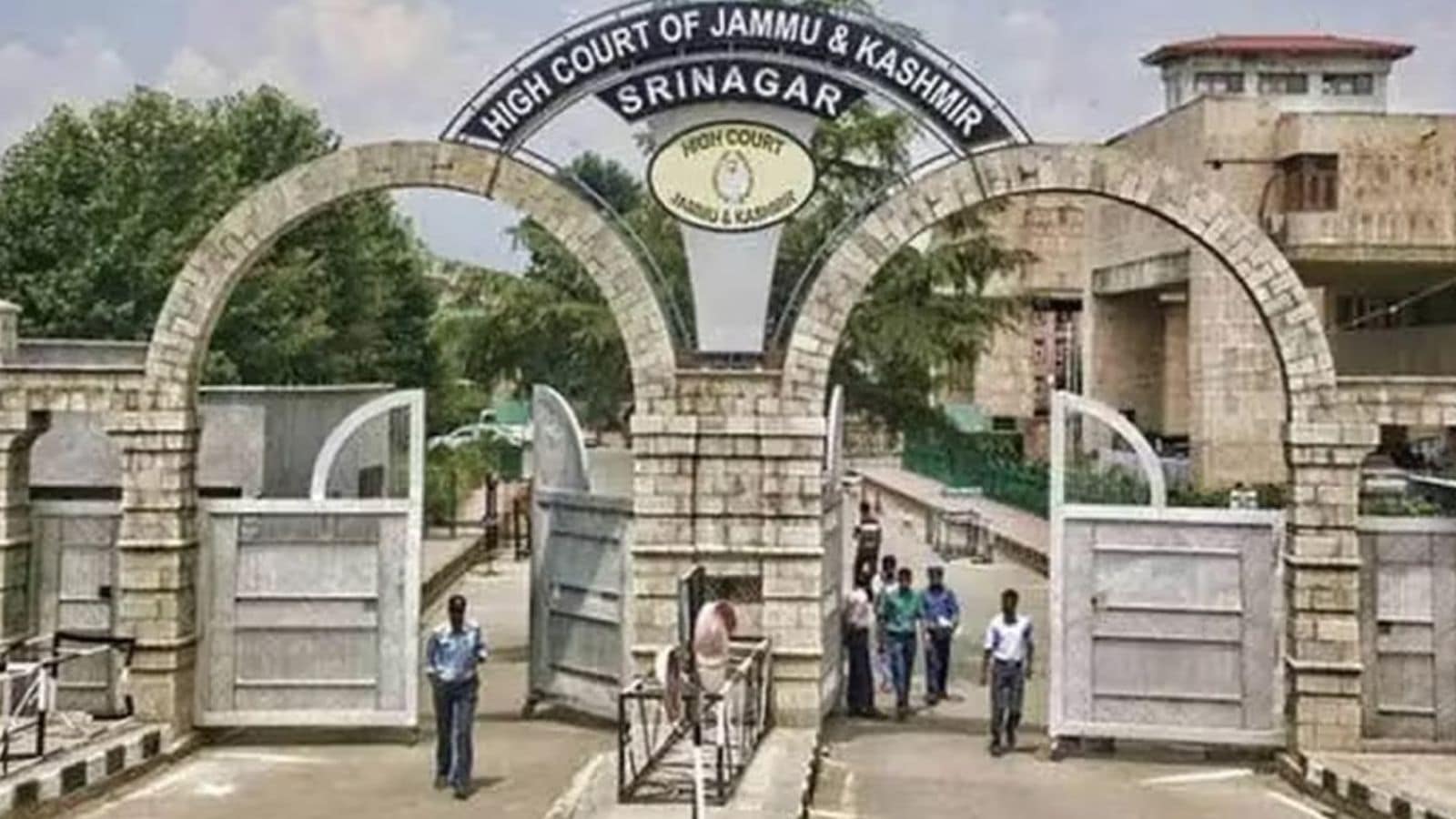
Preventive detention not meant to punish past conduct, the Jammu and Kashmir High Court ruled while quashing a PSA order against a Srinagar resident, finding the detention relied largely on decades-old allegations without a proximate link to present activities. (File Photo)
Saying that the preventive detention is not intended to “punish a person for past conduct”, the Jammu and Kashmir High Court has quashed the Public Safety Act (PSA) against a Srinagar resident, who had crossed over to Pakistan-occupied Kashmir for arms training in 1989.
Mehraj ud din Bhat, a resident of Pandach in Srinagar, was detained under the PSA in June last year for “being an active conduit of the banned outfit, LeT, instigating and motivating youth and providing logistic support to terrorists”.
The court, however, said that the allegations against the petitioner that he instigates youth, works against democratic institutions or supports anti-national ideology are unsupported.
“The grounds of detention reveal that the foundation of the detention order rests substantially on allegations that the petitioner crossed over to Pakistan-occupied Kashmir (POK) in 1989, when he was admittedly a juvenile, received training there and returned in the year 1990,” Justice M A Chowdhary said in his order. “It is further alleged that he was arrested by BSF in the year 1991 and remained in their custody for about twenty months before being released in the year 1992.”
Justice Chowdhary called the allegations against the petitioner “bald assertions” lacking any material facts and said he is not expected to rebut such generalised accusations.
“Allegations that the petitioner instigates youth, works against democratic institutions or supports anti-national ideology are bald assertions unsupported by particulars. The constitutional requirement is that grounds of detention must be sufficiently definite to enable the petitioner to make an effective and meaningful representation. Vague and indefinite allegations render the subjective satisfaction of the detaining authority vulnerable. This court has held that where allegations are vague and lacking material particulars, the detention order cannot survive judicial scrutiny,” the judgment read. “In the present case, the grounds are conspicuously deficient in particulars. The petitioner, thus, could not reasonably be expected to rebut such generalised accusations”.
The court observed that there is no “proximate link” to Bhat’s detention under the PSA and that he can’t be punished for past mistakes. “Preventive detention is not intended to punish a person for past conduct but to prevent him from engaging in future prejudicial activities. There must exist a live and proximate link between the past conduct relied upon and the necessity of detention,” said the order. “The incidents relied upon by the detaining authority pertain to the years 1989, 1990, 1991 and 1992. The detention order has been passed in the year 2025, after a gap of approximately thirty-three years from the petitioner’s release.”
Story continues below this ad
While the prosecution contended that the petitioner was “bound down” on five occasions and didn’t mend his ways, the court said it doesn’t justify preventive detention.
“The contention on behalf of the respondents that the petitioner was bound down on five occasions, however, he did not mend himself, but mere existence of bound down proceedings does not automatically justify preventive detention,” reads the judgment. “Such proceedings may constitute relevant material only if accompanied by specific facts demonstrating continuing and proximate prejudicial conduct. The respondents have not placed on record any material showing the nature of those proceedings, the allegations involved therein, or how they establish an imminent threat to the security of the State. In the absence of such particulars, reference to bound down proceedings remains insufficient to bridge the gap of more than three decades.”
While quashing the detention under PSA, the court said it was satisfied that the detention order was “founded predominantly on stale and remote incidents”.
“Preventive detention, being an exceptional measure which authorises deprivation of liberty without trial, requires strict adherence to constitutional and statutory safeguards, which in the present case seems to have become a casualty,” the order said. “Accordingly, the petition is allowed and the Detention Order… passed by respondent District Magistrate, Srinagar under the Jammu and Kashmir Public Safety Act, 1978, is hereby quashed.”
© The Indian Express Pvt Ltd
Bashaarat Masood is a Special Correspondent with The Indian Express. He has been covering Jammu and Kashmir, especially the conflict-ridden Kashmir valley, for two decades. Bashaarat joined The Indian Express after completing his Masters in Mass Communication and Journalism from the University in Kashmir. He has been writing on politics, conflict and development. Bashaarat was awarded with the Ramnath Goenka Excellence in Journalism Awards in 2012 for his stories on the Pathribal fake encounter.
Expertise and Experience
Two Decades of Frontline Reporting: Bashaarat has spent 20 years documenting the evolution of Kashmir, from high-intensity conflict and political shifts to socio-economic development.
Award-Winning Investigative Journalism: He is a recipient of the prestigious Ramnath Goenka Excellence in Journalism Award (2012). This honor was bestowed for his reporting on the Pathribal fake encounter, a series of stories that highlighted his ability to handle sensitive human rights and security issues with investigative rigor.
Specialized Beats: His authoritative coverage spans:
Political Transitions: Tracking the shift from statehood to Union Territory, electoral dynamics, and the pulse of local governance.
Security & Conflict: Providing nuanced reporting on counter-insurgency, civil liberties, and the impact of the conflict on the civilian population.
Development: Documenting the infrastructure, healthcare, and educational landscape within the Valley.
Academic Background: He holds a Masters in Mass Communication and Journalism from the University of Kashmir, providing him with a localized academic and professional foundation that is rare in regional reporting. ... Read More
Tags:
Jammu and Kashmir
View original source — Indian Express ↗
More from newsGlobal

Straits Times
PoliticsJun 8, 2026 · 1 min
Pope Leo warns Spain's parliament the world is in 'profound' crisis
Straits Times

Straits Times
PoliticsJun 8, 2026 · 1 min
Israel, Iran trade fire for first time since April ceasefire
Straits Times

France 24
PoliticsJun 8, 2026 · 1 min
Peruvians await results of elections for ninth president in a decade
France 24