Indian Express
Ads pay child actors up to Rs 50,000 a day, but TV budgets remain much lower
Any 90s kid would agree that, at some point, they wished they could be Sanju from Shaka Laka Boom Boom, Frooti from Son Pari, or even Tapu from Taarak Mehta Ka Ooltah Chashmah. Captivated by the glamour of the entertainment industry, many children dream of seeing themselves on television screens or billboards. Some do make it there, but what happens after the spotlight finds them? Is life really the fairy tale they had imagined, or does it come with the same challenges as any other profession? The reality lies somewhere in between. While the lives of child actors are far from perfect, working conditions have improved significantly over the years. Today, television and film productions are far more mindful of the well-being of young performers, a stark contrast to how things were in the past.
Recently, SCREEN spoke to some child actors and their parents who shared both the good and bad side of the glamour world. They even explained the payment structures that exist in both the film and TV industry.
What is life like for a child actor?
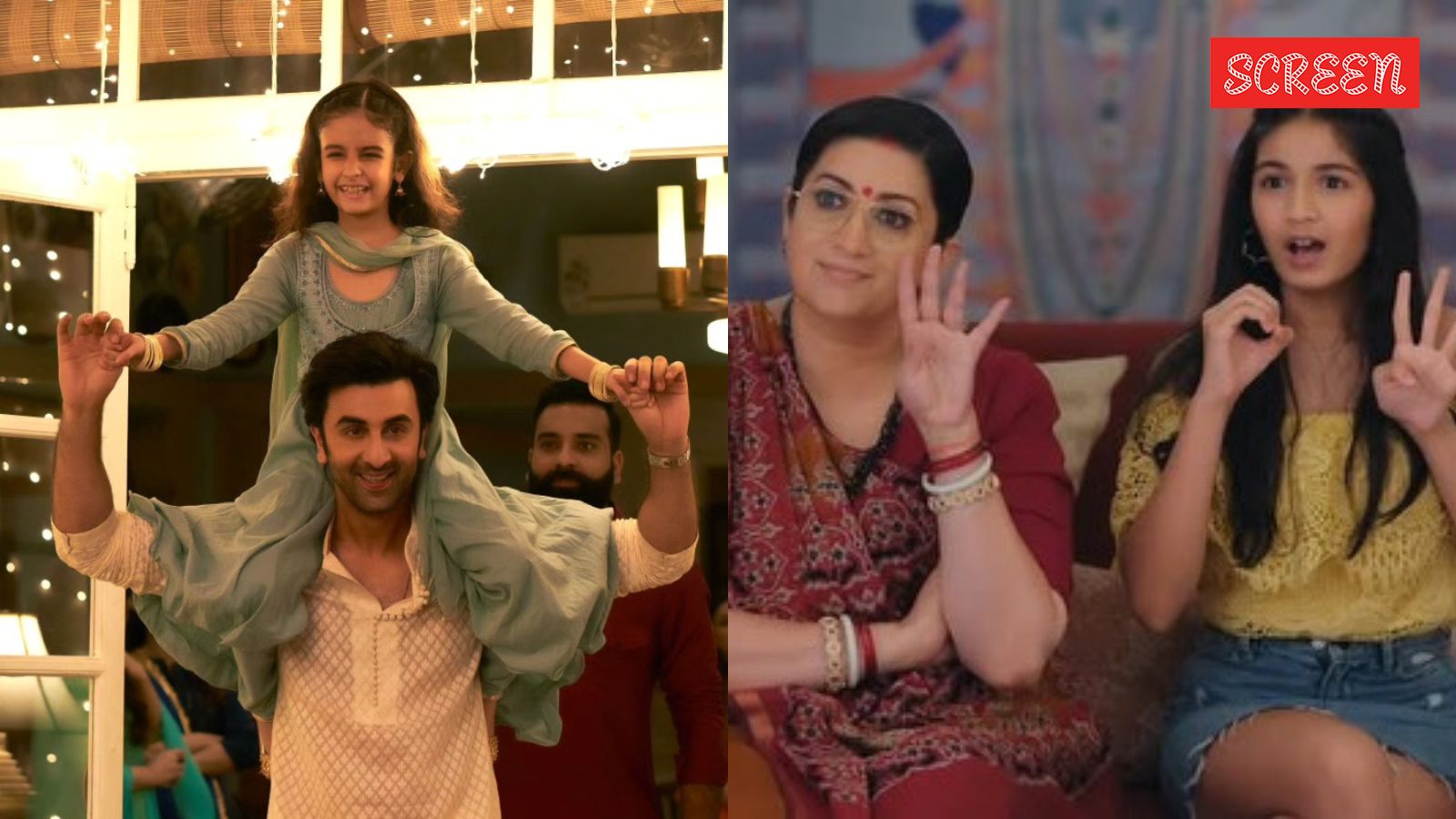
Seeing yourself on screen is certainly a proud feeling. And when you are taken care of, it makes the efforts all the more worthwhile. Talking about her experience of working on Kyunki Saas Bhi Kabhi Bahu Thi, child actor Jia Narigara said, “It’s a really good experience. Everyone is very down to earth. People are very helpful on set. If I make a mistake with my dialogues, they always help. I feel proud to be a part of a show like Kyunki Saas Bhi Kabhi Bahu Thi.” Sharing what Jia’s day on the set looks like, her mother Vaishali adds, “They all are particularly mindful around the kids. We can leave once the work is done for the day. They don’t have any special facilities on set because they are there for very little time. But they do get individual rooms to rest or even study when needed.”
Also Read: ‘Outsiders have it easier’: Imtiaz Ali says Ranbir-Alia face greater scrutiny as nepo kids
Child actor Inayat Verma, who played Ranbir Kapoor’s niece in Tu Jhoothi Main Makkaar and has also starred in Ludo and Be Happy, has also had a similar experience. He father, Mohit Verma, shared, “Inaayat has done 7-8 films till now. Around 2017-18, during reality shows, conditions were tough. We had to wake up early and go through the script. Even the living conditions were not that good. But the movies she has done, especially Ludo, Tu Jhooti Main Makkar, and Be Happy, the facilities and care she got on set for these three films are unmatched to date. They used to treat her like their own child with all facilities, and she used to love it.”
Working hours for child actors
In 2023, the Maharashtra government formulated a 25-point standard operating procedure (SOP) for the film, TV, advertising, digital filming, music and audio entertainment industry, to regulate wages, payment for overtime, and other benefits. According to the SOP, anyone employing child actors had to ensure the child does not work longer than five hours a day, and not more than 27 days in a row. But does this really happen?
Talking about her working hours, Jia Narigara shared, “Our working hours are very different. None of the kids are asked to work for 14 hours. We are there only for 6-7 hours, sometimes it’s even less. We are provided with individual rooms, and in between shots, we are allowed to go and rest. ” Inayat Verma’s father Mohit Verma revealed, “Normally, they say it’s a 12-hour shift, but it’s not in continuity. We are given a specific time, and whenever her shot is over, we can go home. Only on certain days, when the scene is required to be shot at a particular time, are we asked to wait, and in that too the production takes great care. They would ask her what she would like to eat, and if she was comfortable with a shot. If she was not okay, they would change it. We stay in the vanity comfortably, but there have been instances where I have fought with the production.”
Recalling an unpleasant experience they had recently, Mohit added, “After Covid, Inayat did a mythological film. The production house used to have long work hours, and the kind of facilities and vanity condition was not up to the mark. We never used to ask for such things, but in a few projects we realised that it was better to discuss these things in advance. Not all production houses are that great or caring towards kids. They would call us at 5 am, and when we asked if we could go to the hotel nearby and come back, they would say no. She was expected to be there in the costume, ready. It was a mythological shoot, and the costume was heavy. How do you expect an 8-9-year-old child to carry that costume and also sit in a way that the costume doesn’t get affected? I objected to these things and asked them to hire another kid. I refuse to tolerate this. That project has not been released till now; it is still pending.”
How do child actors manage their education?
A very important question that is often asked of child actors is, how do they manage studies? With shoot schedules, they tend to miss school often, but does that hamper their education? Well, not anymore. Inayat Verma’s father Mohit Verma shared, “She is amongst the top 5 students; she is the headgirl. Everyone asks how she manages her studies, because we have to travel from Ludhiana to Mumbai. Her shoot is 7-10 days at maximum; she carries her books along. After pack-up, she studies.” Jiya Narigara added, “My school is very supportive. In between shoots, I study. If I miss my school, I study at home. There are a lot of actors in my school, so they allow us to take leave for a few days. Only going to write exams is compulsory for us.”
Story continues below this ad
Jiya’s mother Vaishali further shared, “The producers are very supportive. On Kyunki Saas Bhi Kabhi Bahu Thi, Jiya had to shoot for a track while her exams were going on, so the director said she shouldn’t compromise on her education. He would shoot Jiya’s part so that she would get free time to study in her room on the set. They never expect child actors to be around even when they are not shooting.”
Payment criteria for child actors
Child actor earnings.
While one might assume that lucrative paychecks are what motivate parents to put their lives on hold and support their children, that is rarely the case. While TV shows offer payments per day, Jiya Narigara’s mother Vaishali shares that the payments for ad-shoots are much better than TV shows, which demand more commitment. She said, “Payments depend from production house to production house. For serials, they are paid on a day-to-day basis. Advertisements pay very well. Kids get paid Rs 25000-30,000 and sometimes even Rs 50,000 a day. On TV shows, per day payments range between Rs 10,000-20,000 per day. TV show budgets are comparatively lower compared to ads. Also, on TV shows, payments come every month, and it usually comes after 45 days.”
However, the payment ecosystem for a child actor in films is completely different. Inayat Verma’s father Mohit explained, “Ad shoots pay more as compared to movies. However, in films, the payment window is the same as Ranbir Kapoor and Shraddha Kapoor’s. The day the invoice is raised, the payment schedule is the same for them, although there is a certain thing: if you raise the invoice, you have to submit proof of a particular amount as FD or investment in the name of the child. So, whatever she earns, more than 70 percent of it has to be invested in FDs or saving schemes, and the rest amount includes the travel cost, shoot requirements. If she has to take some classes for acting or dance, that is according to the norms agreed on contract signing. We have to make an FD or invest that amount and show the proof for the payment invoice.”
“Payments depend on the number of days for the shoot; it’s not like the figures go in crores. They earn a few thousand per day,” Mohit added.
Story continues below this ad
What CINTAA has to say about the working conditions of child actors in India?
We also spoke to Upsana Singh, General Secretary of the Cine & TV Artists Association (CINTAA), asking if the SOPs laid down are followed. Turns out, they continue to remain on paper for most producers. Talking about the provisions laid for child actors, Upasana said, “The SOPs were laid down a few years ago, but producers don’t follow them. Earlier people from CINTAA had the authority to go and stop the shooting if any actor faced a problem, but later there was a case where it was directed that CINTAA could not go on set and stop the shooting. Rules and regulations concerning payment dates have also been laid down. Safety for child and women artists, working hours, etc were announced, but anything that is not in the favour of producers has not been applied yet.” She further added, “If the SOP is brought into effect is when child artists will get benefits. But unfortunately, all the associations are still fighting to get the film fraternity the status of an industry. Until that happens, the labour laws don’t apply to us. Sadly, despite many actors being members of the Rajya Sabha and voicing this concern, they have still not been able to get it done.”
Recalling how child actors faced tough times when she worked with them, Upasana recalled, “I have worked a lot with kids. Sonpari was a famous show I did. Whenever a show features some known actors, their work is done first. In the film industry too, during shoots, if there is a big star who has limited time, others are made to wait. Usually children and actors who are not very well-known shoot last. There are a few production houses who follow these SOPs, but in most sets where I have worked, I saw that kids were made to sit for long hours. Mothers are with them, trying to make them study, but their mind is so diverted.”
Commenting on the payment criteria for child actors, Upsana said, “I don’t know the range of payment they get, but I know that the amount is not much. Unless the child becomes a hit, like Ahsaas Channa, who was a very good actor as a child too. So when their performance is a hit is when their payment is increased. But from what I know, they are not paid much. Parents just bring kids for the fame, and later they complain how the child’s schedule gets disrupted. Some parents from rich homes also push their kids into acting just because they want to show off in society.”
View original source — Indian Express ↗
More from Entertainment

Deadline
EntertainmentJun 8, 2026 · 1 min
Meet Scooby-Doo! First Look At The Pup Set To Portray The Iconic Canine In Netflix Live-Action Series; Release Window…
Deadline

Deadline
EntertainmentJun 8, 2026 · 1 min
SXSW Short Form Prize Winner ‘Son Of A Bikram’ Set For Long-Form Adaptation With Marginal Mediaworks On Board
Deadline

Variety
EntertainmentJun 8, 2026 · 1 min
‘Scooby Doo’ Live-Action Netflix Series Reveals First Look at Crime-Solving Canine, to Premiere in 2027
Variety