Indian Express
The 100ml liquid rule at airports could soon be history — here’s what’s changing
4 min readNew DelhiJun 8, 2026 08:00 PM IST
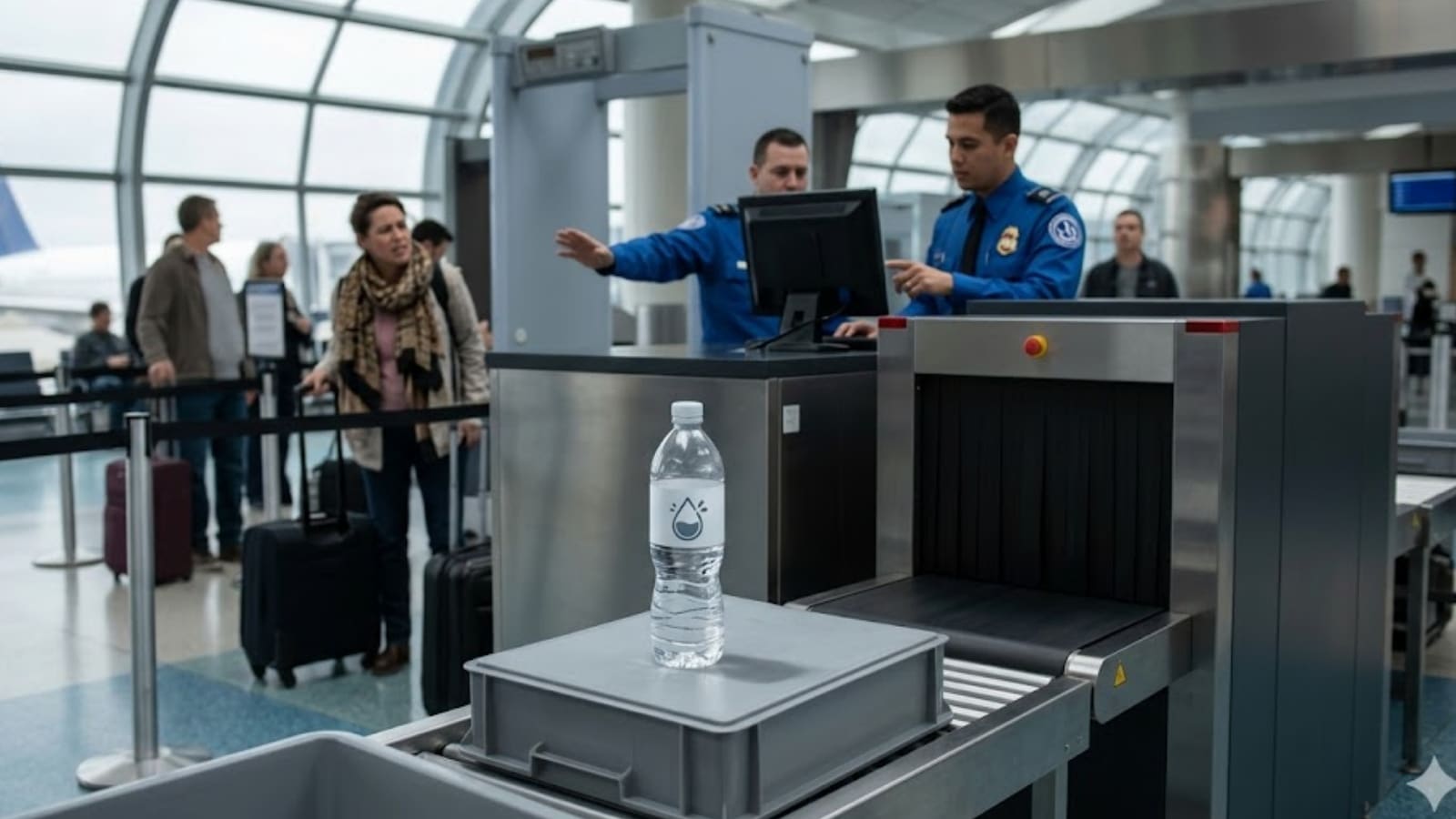
If you’ve ever packed a carry-on bag for a flight, you’ve likely encountered the 100ml liquid rule. Whether it’s a bottle of shampoo, sunscreen, perfume, or even a favourite drink, airport security regulations have long restricted the amount of liquid passengers can carry through security checkpoints.
However, advances in airport screening technology are beginning to change that. Several airports around the world have relaxed or removed the rule altogether, allowing travellers to carry larger quantities of liquids in their hand luggage.
What is the 100ml liquid rule?
Under the 100ml liquid rule, passengers can bring liquids, aerosols, gels, creams, and pastes in their carry-on luggage only if each container holds 100ml or less and is placed inside a clear, resealable quart-sized bag. According to reports, the 100 ml carry-on liquid restriction was introduced worldwide after the 2006 Transatlantic Aircraft Plot exposed vulnerabilities in aviation security. Since liquids can be difficult to screen quickly and accurately at airport checkpoints, authorities adopted the rule to reduce potential risks while maintaining efficient passenger screening. Nearly two decades later, it remains a key component of global air travel security.
Under the rule:
Individual liquid containers must not exceed 100ml.
All containers must fit into a transparent, resealable plastic bag, usually with a capacity of up to one litre.
The bag must be presented separately during security screening.
The restrictions apply to a wide range of items, including water, soft drinks, perfumes, creams, lotions, toothpaste, gels, and cosmetics. While effective from a security perspective, the rule has often been criticised for being inconvenient and confusing for travellers.
Screengrab of the Quora query (Photo: Quora.com/website)
Why are some airports removing the rule?
New-generation CT (Computed Tomography) scanners are making it possible for security personnel to inspect baggage in far greater detail. Unlike traditional X-ray machines, CT scanners create three-dimensional images of the contents of a bag, making it easier to identify potential threats without requiring passengers to remove liquids or electronics.
As a result, some airports have begun allowing passengers to carry larger liquid containers through security.
4 airports where the 100ml rule has been relaxed
1. Heathrow Airport, London (selected terminals)
Story continues below this ad
One of the world’s busiest airports has been gradually introducing advanced CT scanners, allowing more flexible liquid screening procedures in certain areas.
2. London City Airport, United Kingdom
London City Airport became one of the first major airports to remove the 100ml restriction entirely after installing next-generation security scanners.
3. Teesside International Airport, United Kingdom
This regional UK airport allows passengers to carry liquids larger than 100ml thanks to upgraded screening technology.
4. Birmingham Airport, United Kingdom (selected areas)
Passengers travelling through sections equipped with CT scanners may benefit from more relaxed liquid screening requirements.
Story continues below this ad
Should travellers still follow the 100ml rule?
Yes. “Even if some airports have eased restrictions, travellers should always check the latest guidelines before departure. Many airports around the world, including most airports in Asia, North America and parts of Europe, still enforce the 100ml limit,” says aviation expert Amit Mittal.
Besides, rules may differ between departure and transit airports. A passenger leaving from an airport with relaxed regulations could still encounter restrictions at a connecting airport.
View original source — Indian Express ↗
More from Entertainment

The New York Times
EntertainmentJun 8, 2026 · 1 min
On Broadway’s Biggest Night, ‘Saturday Night Live’ Shows Its Strength
The New York Times

Deadline
EntertainmentJun 8, 2026 · 1 min
WME Signs ‘Evil Dead Burn’ Filmmaker Sébastien Vaniček
Deadline

Pitchfork
EntertainmentJun 8, 2026 · 1 min
Kim Petras, horsegiirL, Skrillex, and More: This Week’s Pitchfork Selects Playlist
Pitchfork