Indian Express
Portugal beyond Ronaldo: Vitinha, Bruno creative heartbeat in push for World Cup
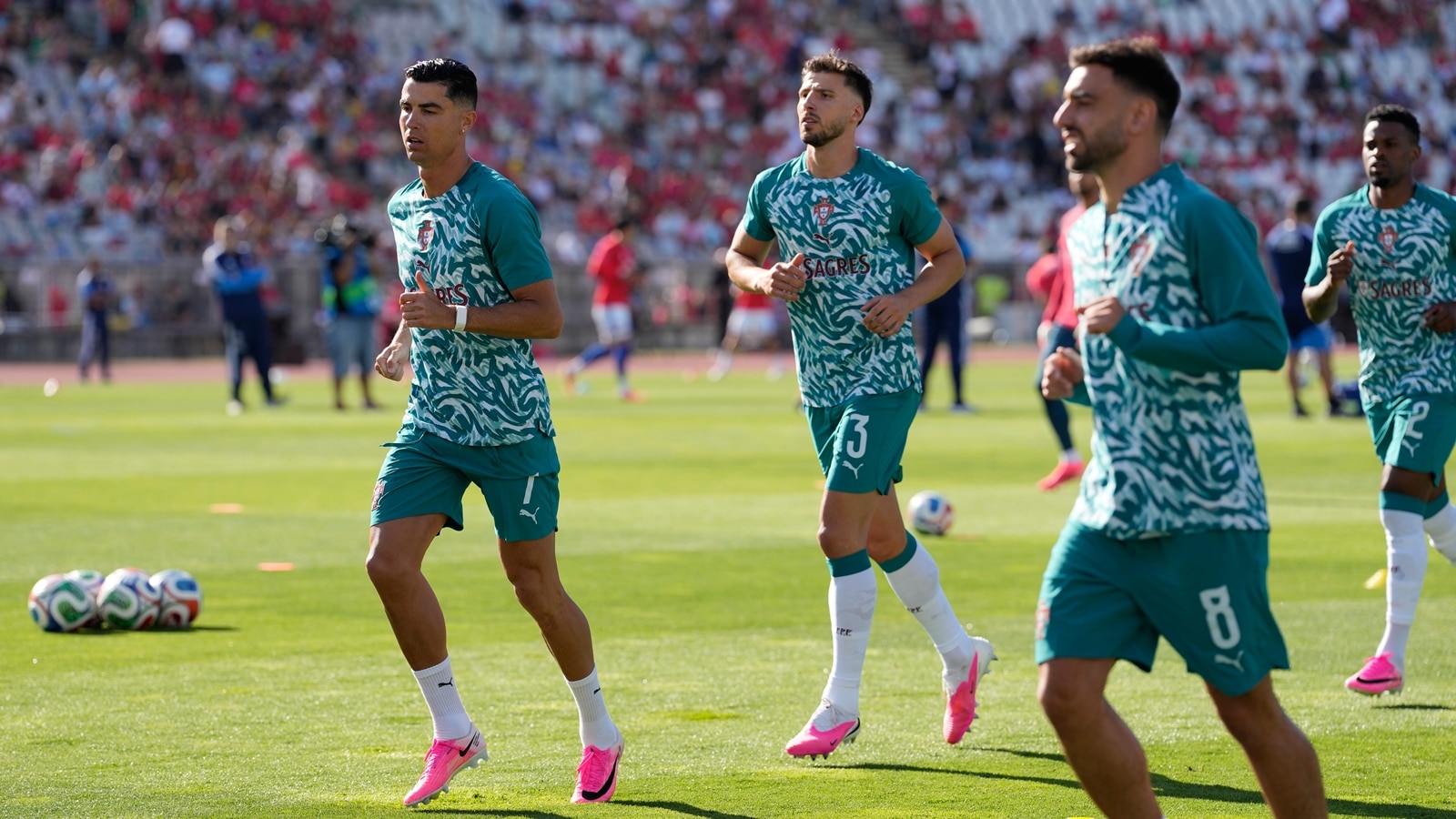
For nearly two decades, Portugal’s football story has been told through Cristiano Ronaldo’s lens. Every major tournament has carried the same question: Can Ronaldo carry Portugal once again? As the 2026 FIFA World Cup approaches, that question still remains. The 41-year-old is still the face of Portuguese football, still the player fans come to watch. But for perhaps the first time in his international career, Portugal’s hopes may depend less on the man finishing THE moves and more on the players creating them around him.
Somewhere behind Ronaldo, scanning the pitch before receiving the ball, will be 26-year-old midfielder Vítor Machado Ferreira, better known as Vitinha.
Born in Santo Tirso, northern Portugal, Vitinha was introduced to football by his father, Vítor Manuel, a former professional player. Yet the game was never forced on him, allowing him to develop at his own pace. He is not the captain. He is not their biggest star. But over the last two years, he has quietly become one of Portugal’s most important players.
A quick look over the shoulder. A pass played with perfect weight. A small run into space to escape pressure. Suddenly, Portugal are moving forward again. It is football’s least visible work, but also one of its most important.
Vitinha lifts the trophy celebrating after winning the Champions League with PSG this season. (AP Photo/Petr Josek)
Vitinha’s biggest strength is not goals or assists, but control. Analysts often call him a “metronome” because he decides when Portugal speed up and when they slow down. In modern football, where attention is fixed on goals and statistics, he stands out for making the team function better as a unit.
He operates as a deep-lying playmaker, similar to players like Andrea Pirlo or Toni Kroos, dictating games from deep areas rather than advanced positions. Most of his work is simple on the surface, but crucial in shaping how the team plays.
When Paris Saint-Germain signed him in 2022, the club was still driven by big names like Lionel Messi, Neymar, and Kylian Mbappé. Vitinha arrived with little attention and had a difficult start.
Story continues below this ad
He was young, adapting to a new league, and competing in a squad full of established stars. At first, opportunities were limited, and he had to wait for his chance.
The turning point came under Luis Enrique. As PSG moved away from relying on individuals and became a more balanced team, Vitinha grew into one of the most important players in the squad. The Spaniard trusted him to control midfield phases.
“Vitinha is very important for us. He has a significant role. Vitinha adapts well to everything we ask of him. He has immense technical ability,” Enrique said before the Champions League final.
Under Roberto Martínez, Portugal have also become more comfortable keeping the ball against top opposition. Vitinha’s calm style fits this approach perfectly, allowing attackers to stay higher and focus on creating chances.
Story continues below this ad
Midfield control
He is also surrounded by a talented set of teammates, who are equally competent in their roles. Among them, none is more influential than Bruno Fernandes. The Manchester United playmaker remains Portugal’s chief creator, capable of producing passes few others would even attempt. While Vitinha provides control, Fernandes supplies invention.
He often looks for quick, early passes into attacking areas, especially into spaces where Ronaldo can attack the ball. These fast combinations around the box will be central to Portugal’s attacking style in the tournament.
With Vitinha behind him, Bruno does not need to control the entire game. He can stay closer to the opposition box, where he is most dangerous. At Manchester United, he often carries the creative burden alone. For Portugal, that responsibility is shared, allowing him to take more risks and act more as a game-changer for the side.
Wide impact
On the left side, Nuno Mendes adds a different kind of threat. After a strong season with Paris Saint-Germain, the full-back has become one of the most important attacking defenders in Europe. He brings pace, strength, and constant forward movement. His runs from deep push opposition defenders back and stretch the pitch.
Story continues below this ad
Mendes’ role is not just about overlapping runs, but also occasional underlaps, allowing wingers to hold width and isolate defenders one-on-one. This variation makes Portugal’s left side far less predictable. Mendes also has the speed to recover quickly if possession is lost, allowing him to attack without leaving his side exposed. That balance makes him ideal for a high-tempo system.
In a team where Vitinha provides control, and Fernandes provides creativity, Mendes adds momentum from wide areas. Each role is different, but they connect naturally.
Together, they help explain why Portugal is seen as a genuine contender for the World Cup. Ronaldo remains the face of the team and its most recognisable figure. Fernandes brings creativity. Mendes brings width and energy. Vitinha brings control.
View original source — Indian Express ↗
More from Sports

The Punch
SportsJun 8, 2026 · 1 min
Liverpool cult hero Origi retires from football at 31
The Punch
Sky Sports
SportsJun 8, 2026 · 1 min
Eriksen 'doing well and at home' after collapse during Denmark friendly
Sky Sports
Indian Express
SportsJun 8, 2026 · 1 min
FIFA asks small Vancouver pet shop to take down plush bears wearing World Cup jerseys
Indian Express