
The Verge
Apple announces Siri AI and its next generation of Apple Intelligence
Two years after first revealing its plans for Apple Intelligence and a smarter Siri that never fully materialized, at WWDC, Apple just revealed a new set of AI features and a smarter, more personalized Siri.
Apple calls Siri AI an “entirely new version of Siri” and says it’s both more conversational and more capable than the previous version of the smart assistant. In conversations, it has a more expressive voice that can be customized by pace, expressivity, and accent.
Siri AI will be accessible systemwide, capable of reading what’s on-screen and interacting with your apps. But Apple’s SVP of software engineering Craig Federighi said it was designed “with privacy at every step.” Queries are all either processed on device or in the cloud via Apple’s Private Cloud Compute.
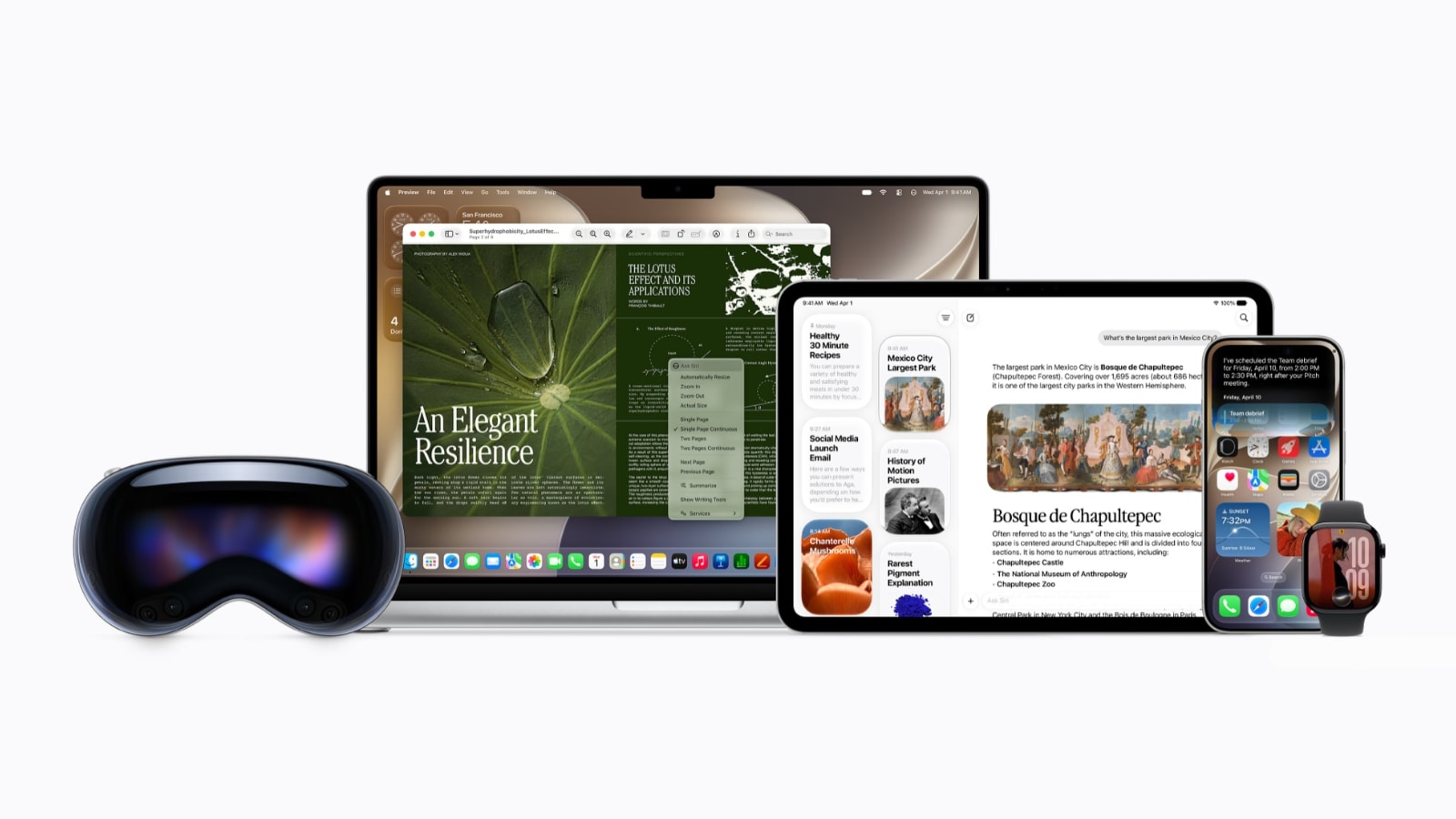
The updated Siri AI is being rolled out across Apple’s ecosystem, with support on iPhone, iPad, Mac, Apple Watch, and Vision Pro. On iPhone, you’ll now be able to access Siri AI by swiping down from the Dynamic Island, in addition to existing ways of accessing the assistant. On Macs, it can be accessed from Spotlight, while Vision Pro users will simply have to look directly at a new Siri visualization — in this case, a floating orb hovering around your field of vision — to be able to start a conversation without saying “Hey, Siri.”
Siri is also getting its own app, which looks similar to existing AI chatbot apps for ChatGPT, Claude, and Gemini. There’s a conversational interface for text or voice conversations with a saved history that lets you dive back into previous conversations. Those conversations will be synced with your iCloud, allowing you to begin a discussion on one device and pick it up seamlessly on another.
Siri is also getting its own app, which looks similar to existing AI chatbot apps for ChatGPT, Claude, and Gemini. There’s a conversational interface for text or voice conversations, the ability to discuss images and files, and the option to dive back into previous conversations. The new, smarter Siri should be able to answer factual questions using details pulled from the web or your own data and also carry out tasks like writing emails or checking your calendar.
Apple struggled to implement the ambitious set of AI features it announced at WWDC 2024, recently agreeing to pay $250 million to settle a class action lawsuit that accused the company of “misleading consumers” about Apple Intelligence’s availability and performance.
Catching up in the AI race, one way or another, has been seen as a clear priority for Apple and incoming CEO John Ternus. Earlier this year it struck a deal with Google for Gemini to power new Apple Intelligence and Siri features, allowing Apple to focus on its AI products and features, not the models that underpin them.
Follow topics and authors from this story to see more like this in your personalized homepage feed and to receive email updates.
Dominic Preston
View original source — The Verge ↗
More from Technology
Indian Express
TechnologyJun 8, 2026 · 1 min
Apple’s Siri AI overhaul: A look at key features coming this year
Indian Express

ZDNet
TechnologyJun 8, 2026 · 1 min
The new iOS 27 child safety features I'm most excited about as a parent
ZDNet

The New York Times
TechnologyJun 8, 2026 · 1 min
Vance Blames Migrant ‘Invasion’ for UK Stabbing
The New York Times