Antara News
Antara News··6 min read
UAE's energy transformation offers model for sustainable future
Jakarta (ANTARA) - As the global community navigates the twin imperatives of energy security and accelerated climate action, countries are increasingly searching for development pathways that reconcile economic growth with long-term sustainability.
The experience of the United Arab Emirates (UAE) demonstrates that energy diversification is no longer a strategic option reserved for advanced economies; rather, it has become an essential prerequisite for resilience, competitiveness, and prosperity in a rapidly evolving global landscape.
For decades, the UAE's economic development was closely linked to its abundant oil and gas resources.
Hydrocarbons formed the foundation of the country's transformation, enabling the development of world-class infrastructure, significant social and economic progress, and the emergence of the UAE as a dynamic global economic hub.
Yet, even amid this success, the country recognized early that long-term prosperity would require a broader economic and energy base.
This forward-looking vision prompted sustained investment in diversification, innovation, and cleaner technologies capable of supporting future generations.
Today, oil and gas exports account for approximately 30 percent of the UAE's total economic activity, reflecting the country's remarkable economic transformation and the rapid growth of new sectors driven by technology, innovation, knowledge-based industries, and sustainable development.
This transition has been guided by a clear national vision aimed at building a diversified, competitive, and resilient economy capable of adapting to global shifts while contributing meaningfully to international climate and sustainable development goals.
At the center of this transformation lies the UAE Energy Strategy 2050, which provides a long-term framework for a balanced and diversified energy mix.
The strategy integrates renewable energy, natural gas, nuclear power, and advanced low-carbon technologies to ensure both energy security and sustainability.
It envisions an energy mix consisting of 44 percent clean energy, 38 percent natural gas, and 6 percent nuclear power.
In response to evolving global dynamics and the accelerating pace of the energy transition, the UAE has further strengthened its ambitions by targeting a tripling of renewable energy capacity by 2030, expanding installed clean energy capacity to more than 14 gigawatts, creating approximately 50,000 new jobs in the sector, and achieving net-zero emissions by 2050.
A defining characteristic of the UAE's approach is its pragmatic understanding of the global energy transition. The country recognized early that the transition would neither be uniform nor linear, but would instead reflect differing national circumstances, development priorities, and economic realities.
Conventional energy sources will continue to play a vital role in supporting industrial development and maintaining energy security, particularly in emerging economies.
Rather than viewing traditional and renewable energy as competing alternatives, the UAE has adopted a balanced and integrated approach that advances both in parallel within a realistic and forward-looking framework.
This philosophy is clearly reflected in the UAE's leadership in large-scale solar energy development.
The country is home to some of the world's largest and most advanced solar projects, including Al Dhafra Solar PV, Noor Abu Dhabi, and the Mohammed bin Rashid Al Maktoum Solar Park in Dubai.
More recently, Abu Dhabi has launched its pioneering Round-the-Clock (RTC) clean energy project, which combines large-scale solar generation with advanced energy storage and system flexibility solutions.
The RTC initiative represents a significant step toward delivering reliable and dispatchable clean power at scale, moving beyond the limitations of intermittent renewable generation.
Collectively, these projects demonstrate the UAE's strategy of scaling proven technologies while simultaneously investing in next-generation energy systems capable of delivering secure, affordable, and continuous decarbonization.
The UAE has also achieved a landmark milestone in nuclear energy. Through the Barakah Nuclear Energy Plant in Abu Dhabi, the country became the first Arab nation to operate a peaceful nuclear energy program.
With four operational reactors, Barakah now supplies approximately one-quarter of the UAE's electricity needs, significantly enhancing energy security while preventing millions of tonnes of carbon emissions each year.
The program has earned international recognition for its strong governance framework and strict adherence to the highest standards of safety, transparency, and non-proliferation in close cooperation with the International Atomic Energy Agency (IAEA), establishing it as a global benchmark for responsible nuclear energy deployment.
Beyond renewable and nuclear energy, the UAE is actively shaping the next frontier of decarbonization through carbon management and clean hydrogen.
The Abu Dhabi National Oil Company (ADNOC) has developed one of the region's largest industrial-scale carbon capture, utilization, and storage (CCUS) facilities, demonstrating a strategic commitment to reducing emissions from hard-to-abate sectors.
At the same time, the UAE is advancing its National Hydrogen Strategy 2050 by developing both blue and green hydrogen pathways, with the objective of positioning itself as a leading global hub for hydrogen production and export.
Taken together, this integrated energy portfolio reflects a broader national philosophy: economic development and environmental sustainability are not competing objectives, but mutually reinforcing pillars of long-term resilience.
In this context, the energy transition is viewed not only as an environmental necessity but also as a significant economic opportunity — one that can drive industrial diversification, attract investment, stimulate innovation, and create high-value jobs for future generations.
Complementing its domestic transformation, the UAE has emerged as a proactive and constructive international partner in advancing clean energy and climate action.
The country has consistently translated national ambition into global engagement through strategic partnerships with developing and emerging economies, as well as through substantial investments in climate and energy finance that support just and inclusive transitions.
This commitment was further demonstrated through the successful hosting of the 28th Conference of the Parties (COP28) in Dubai in 2023, which culminated in the UAE Consensus — a historic agreement adopted by 198 Parties that charted a new course for global climate action and reinforced collective efforts to accelerate the energy transition.
Through institutions such as the International Renewable Energy Agency (IRENA), headquartered in Abu Dhabi since 2009, and through targeted investments in renewable energy projects across Africa, Asia, and Small Island Developing States (SIDS), the UAE continues to play a catalytic role in expanding global clean energy deployment and supporting the implementation of the Paris Agreement.
The UAE views international cooperation as a central pillar of the global energy transition architecture.
Effective transitions require more than ambition alone; they depend on structured collaboration that combines capital, technology, expertise, and institutional capacity.
Through organizations such as Masdar and other national entities, the UAE has developed an investment-led cooperation model focused on enabling bankable renewable energy projects, expanding energy access, promoting sustainable development, and strengthening local capacity in partner countries.
Importantly, the UAE's approach to energy partnerships extends beyond financial investment. It is grounded in long-term sustainability, technological innovation, and shared prosperity.
Over the past decades, the country has developed integrated capabilities across the entire energy value chain — from hydrocarbons to renewable energy and advanced low-carbon solutions — positioning itself as a credible and reliable partner for countries navigating complex energy transitions.
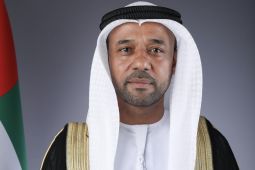
*) Abdulla Salem AlDhaheri is Ambassador of the United Arab Emirates to the Republic of Indonesia and the Democratic Republic of Timor-Leste (Non-Resident)
Disclaimer: The views and opinions expressed here are those of the author and do not necessarily reflect the official policy or position of the ANTARA News Agency.
Related news: RI, UAE provide free cataract surgery for 500 people in remote areas
Related news: Indonesia-UAE boost renewable energy cooperation as ties mark 50 years
Translator: Abdulla Salem AlDhaheri*
Editor: Anton Santoso
Copyright © ANTARA 2026
View original source — Antara News ↗
Related stories

Antara News
NewsJun 18, 2026 · 1 min
Indonesia key to global energy transition: ministry
Antara News

Antara News
BusinessJun 9, 2026 · 1 min
Indonesia, Singapore deepen investment and green energy ties
Antara News

Euronews
NewsJun 18, 2026 · 1 min
The energy transition's next test is security
Euronews
Antara News
NewsJun 16, 2026 · 1 min
Germany and Indonesia deepen trade and clean energy partnership
Antara News