Indian Express
BKC’s first Public Transport Friday cuts morning traffic, highlights last-mile gaps
The first edition of Public Transport Friday in the Bandra-Kurla Complex (BKC) led to a modest reduction in traffic congestion during morning peak hours, with traffic police estimating a 10-15 per cent drop in vehicle movement. However, commuters said the initiative’s long-term success would depend on addressing persistent last-mile connectivity issues, particularly between railway stations, metro stations, and office complexes.
The initiative, spearheaded by the Mumbai Metropolitan Region Development Authority (MMRDA) and WRI India, aims to encourage employees in the city’s premier business district to shift from private vehicles to public transport.
“During the peak hours in the morning, traffic was less by 10 to 15%. While typically, traffic disperses after 11:30am, today the roads largely cleared by 10:45 to 11am,” said a senior traffic police officer who overlooks the BKC area.
“While traffic returned in the evening, it was slightly lesser than normal.”
The private bus service operator, Cityflo, noted a 22 to 25% increased in the ridership of their buses plying to and from from BKC, and a whopping 154% increase in ridership in their metro feeder buses.
BKC sees an estimated 4-6 lakh people enter the district every day. Studies have estimated that around 20,000 private vehicles enter the area during peak hours, contributing to chronic congestion.
Ahead of Friday, several companies and institutions encouraged employees to use public transport. Puneet Saxena, chairman of the Association of Members of G Block, said he had written to at least 15 companies in the area, including UTI, NSE, PNB and ICICI, urging them to participate.
Story continues below this ad
“Even one person taking the step towards public transport can have an influence on others,” said Saxena.
“In the first half of the day, I saw considerable improvement on the roads. People showed a good response.”
Officials said organisations such as Bharat Diamond Bourse and SEBI circulated advisories encouraging employees to leave their cars at home. BEST deployed seven additional buses on BKC routes, while Cityflo plans to add another 50 buses to the 100 buses currently servicing the business district.
For some commuters, the experience demonstrated that public transport could be a viable alternative if services remained reliable.
Story continues below this ad
“If the journey through public transport is as predictable and dependable as mine was today, I might consider ditching my car more often,” said Ashish, a banking technology professional in G Block who travelled by BEST bus from Bhandup to BKC.
“The ride to the office took around 45 minutes, which is around 15 minutes more than my usual transit. But instead of focusing on the driving, I had some time to sit with my thoughts. And, I was helping my country while at it.”
The journey back in the evening for Ashish by train took 45 minutes, quicker than what it takes him by car.
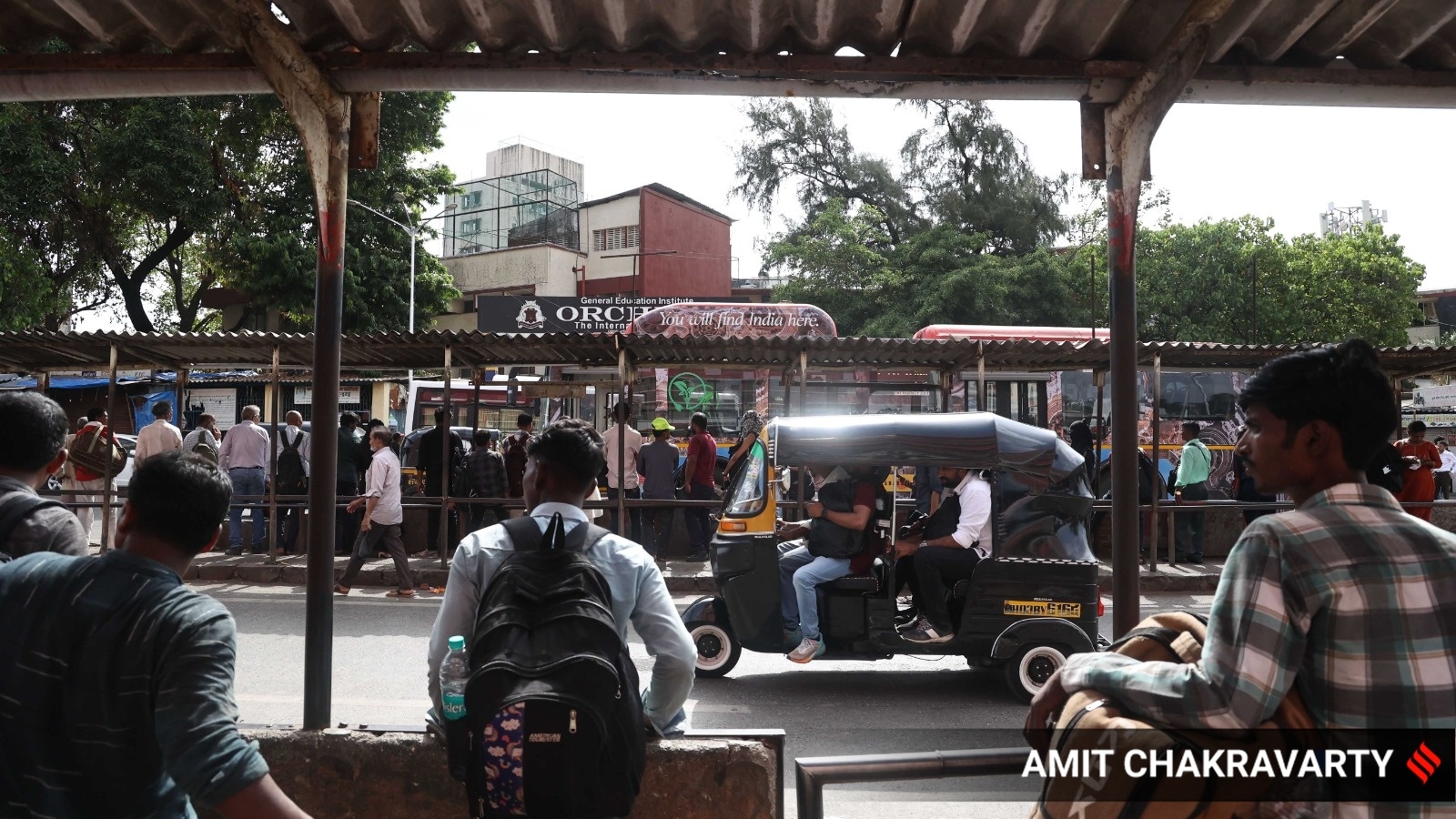
But commuters said reaching offices from Bandra and Kurla stations remains one of the biggest challenges.
Story continues below this ad
“Coming from the train through Kurla station, I don’t take the BEST bus because it takes a long route, which takes over 30 minutes.
Rickshaws are faster, typically taking 10 to 15 minutes, because the distance to ply to my office in the Capital building is not that much, and traffic too is manageable. But the pain point is finding a rickshaw. 9 out of 10 rickshaws at Kurla station refuse to go to the destination, which means us passengers end up walking for almost a kilometer to fetch a rickshaw. After an exhausting train journey, facing rejections by so many rickshaws is frustrating,” said Vidyasagar Jagadesan, who works in BKC.
Evening travel remains a bigger challenge, several commuters said, with traffic often forcing people to walk large stretches to reach railway stations.
“While going by bus or auto is manageable in the mornings, although many informal and low salaried workers find rickshaws expensive, in the evenings, people walk the entire or half the journey. You can find many people leaving BEST buses at the Equinox signal, which is jammed, and walking the rest of the way to Kurla station,” said Nishant Bangera.
Story continues below this ad
“And walking is not pleasant; there is little space between cars and pedestrians, leaving us walking neck to neck.”
Commuters suggested increasing the frequency of BEST buses, introducing dedicated internal BKC shuttle services and streamlining shared-rickshaw operations at Bandra and Kurla stations.
“The response was very encouraging to me, and that was delightful. People need to look at the positive strides public transport has made in BKC, and take the first step towards using it. I hope this becomes an organic sustainable movement. In the coming week, I appeal to more people to take on this initiative to use public transport,” said Sanjay Mukherjee, commissioner.
View original source — Indian Express ↗
Related stories

Antara News
TechnologyJun 13, 2026 · 1 min
Indonesia taps Brazil for semiconductor, aerospace expertise
Antara News
Indian Express
TechnologyJun 13, 2026 · 1 min
Third IAF AN-32 crash in 10 years: All about the Soviet-origin military transport aircraft
Indian Express

Times of India
TechnologyJun 13, 2026 · 1 min
'Baseless': Iran lashes out after US blames Tehran of attacking ships with Indians onboard
Times of India
The Guardian
TechnologyJun 13, 2026 · 1 min
UK sets out AI infrastructure push at London Tech Week – how does it stack up?
The Guardian