Indian Express
Indian Express··8 min read
The Need to Explain Me: What happens when people interpret your pain instead of hearing it
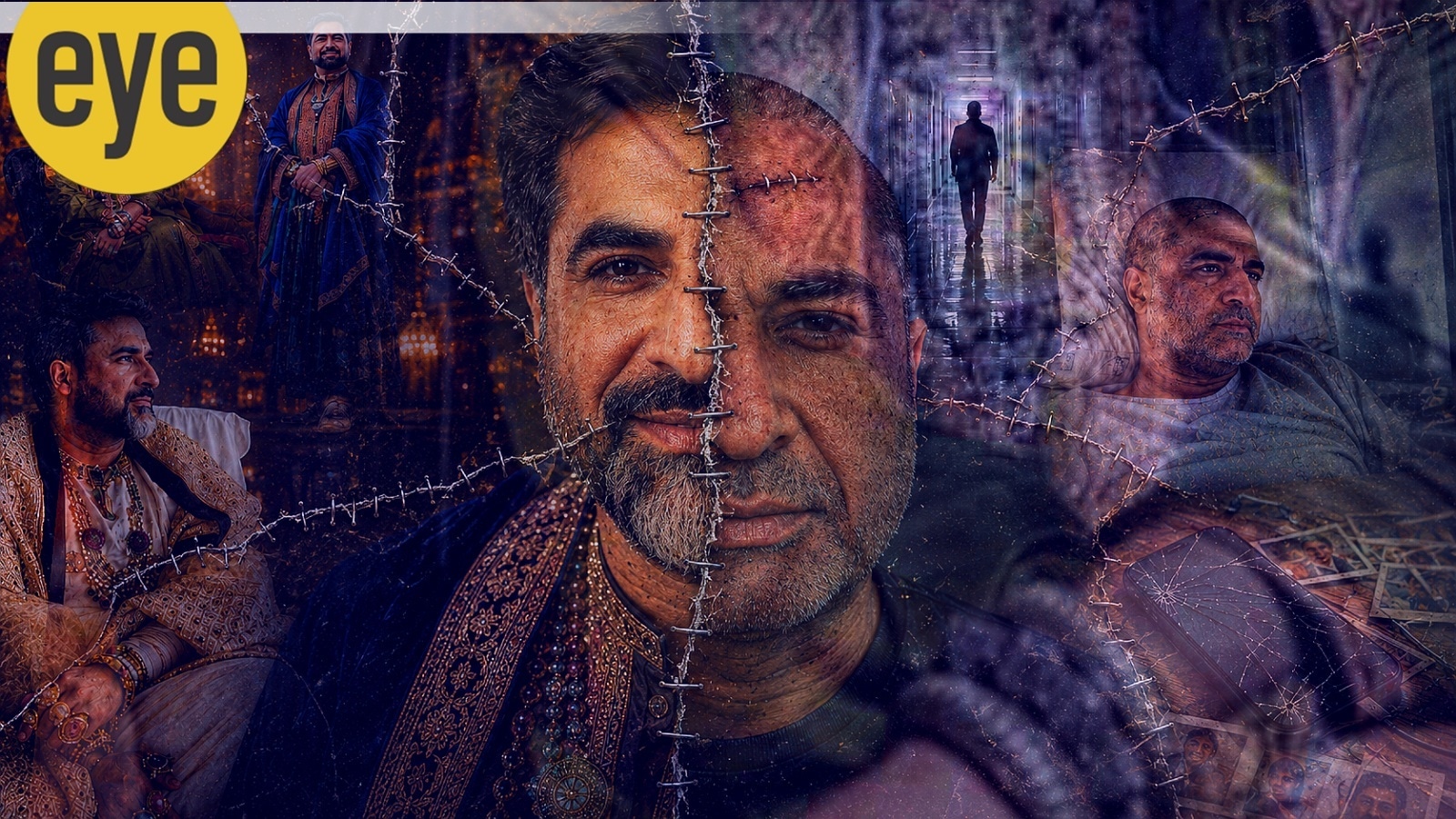
The first thing people reach for after something happens to you is not your body, not your breath, not even your silence — it is an explanation that makes you easier to live with. Not for you, but for them. I learned this not as philosophy but as social weather, in the days after the incident, when I realised that pain is rarely allowed to remain in its raw state. It is immediately recruited into interpretation, instruction, advice, caution, and moral inventory.
The world does not ask what happened so much as it asks what it means, because meaning is what restores everyone else’s sense of control. If it can be explained, it can be contained; if it can be contained, it can be prevented; and if it can be prevented, then it was never truly chaos in the first place. That is the comfort loop we prefer to live inside — the belief that reality is still something we can organise through understanding, even when understanding arrives too late, or does not arrive at all.
On a Thursday morning, I arrived at a hospital covered in blood.
The sentence refuses ordinariness. It resists repetition. Hospitals do not behave like narrative spaces; they behave like systems that have learned to function in the presence of collapse. Everything is procedural, calibrated, indifferent — not cruel, not kind, simply continuous. I remember corridors that did not pause for confusion, only adjusted around it, as though confusion itself were just another input in a larger machine.
A few hours earlier, I had been at home in Delhi with someone I had known for nearly two years. We had met in Mumbai, across intervals, across versions of time that did not announce themselves as trust but slowly became indistinguishable from it. Trust does not arrive as a decision. It arrives as repetition that stops asking to be noticed.
Then, without warning, everything changed without announcing itself as change. It did not feel like a rupture. It felt like continuity forgetting its own grammar. Like a sentence dropping its verb and still expecting to be understood.
Later, a doctor spoke to me in a tone that made refusal structurally unavailable. I touched my hair before I understood the question.
“Do I have a choice?” I asked.
“No.”
Not unkind. Not emotional. Just procedural clarity, stripped of negotiation. A silence followed — not dramatic, not symbolic — only administrative, as if the space between instruction and action briefly acknowledged itself before sealing shut again.
By the time it ended, I was still intact, but no longer familiar to myself in the way I had been before. Identity is not stable; it depends on the continuity of recognition. When that continuity breaks, even slightly, you begin to encounter yourself as something you must re-meet rather than inhabit.
Even now, there are moments when my hand moves toward something that no longer exists — not grief, but lag. Memory refuses to keep up with the speed of change. The body does not revise easily. It resists correction.
When I returned home, the room felt like it had outlived its own version of me. Sheets, surfaces, air —everything carrying the residue of interruption rather than story. Some rooms feel broken. Some feel paused mid-transition, waiting for an explanation that has yet to arrive. This was the second kind.
Nothing dramatic. Only displaced meaning.
And then I realised something that arrived more slowly than everything else:
My phone was gone.
At first, it did not register as a loss. It registered as a delay. Something recoverable. Something was misfiled in time. But it did not return, and slowly its absence expanded beyond object into infrastructure.
A phone is no longer a device. It is memory, access, identity, work, money, rhythm, relationship—all compressed into something you carry without thinking about what it contains. When it disappears, what collapses is not convenience but continuity itself.
The first hour was inconvenient. The next was disorientation. After that, structural absence.
I could not reach the people I needed to reach, not because they were absent, but because the route to them had been taken from me. Memory began to behave differently under pressure. Numbers I had never needed to remember became suddenly unreachable, dissolving as I tried to hold them. Memory is not storage. It is weather — unstable, partial, refusing permanence when demanded to perform permanence.
There is a particular helplessness in discovering how much of your life exists outside your body. Not in memory, but in systems. Not in recollection, but in access. We speak of independence as though it were personal, yet so much of modern existence is borrowed continuity.
What followed was not just logistical disruption but a slow erosion of presence itself. Messages became urgent in ways they were not meant to be. Coordination moved through borrowed access, indirect channels, fractured systems never designed for emotional immediacy. Even care arrived late, translated, and delayed.
People responded in ways that made sense to them.
One said I should be more careful, as if carelessness had produced structural failure. Another said I should not meet people like that, as if proximity itself were the origin of rupture. Another suggested moving, changing cities, reorganising life as if life were a configuration file that could be edited into safety.
Advice always carries the same architecture: it converts uncertainty into instruction so that the listener can return to a stable internal world.
But what did not happen—what I did not immediately notice because everything else was louder—was the simplest question.
No one asked how I was feeling.
Not in the immediate aftermath, not in the days that followed, not in the pauses where language usually becomes less functional and more human. There were questions about what happened, what should be done, what could be prevented, what should be corrected—but the person inside the event never became the centre of attention. I existed in the conversation as material, not as subject.
And the strange part is not the absence of care.
It is the shape care takes when it cannot enter experience directly. It becomes advisory. Interpretive. Corrective. Structural instead of intimate. It moves around pain rather than into it, because entry would require surrendering certainty.
What made it sharper was another absence running alongside it.
There are people who would have understood without translation—people who have lived versions of misreading, displacement, and reduction into narratives they did not author. People for whom ambiguity is not unfamiliar territory. Those are the people whose numbers I do not have. They exist as recognition without reach. Understanding without access.
So even the part of me that might have been held without interpretation remains unreachable.
Instead, what remains reachable are relationships built on other architectures—old friendships, professional continuities, relationships shaped by stability rather than shared fracture. They care, but their care arrives through systems that cannot fully register what rupture feels like from inside it. Even love arrives slightly off-centre. Not wrong. Just misaligned in translation.
Somewhere in this, I tried to say something simple:
I need their number. I am trying to reach them.
The request did not survive interpretation.
Absence was read as a strategy. Missing access was read as withholding. It is easier to believe in intention than in breakdown, because intention preserves coherence. And coherence is what everyone is trying to protect.
The strange thing about a communication failure is that it rarely remains technical for long. The moment contact breaks, interpretation rushes in to occupy the vacancy. Every gap acquires intention. Every silence becomes evidence. Every missing piece begins attracting narrative gravity.
So another narrative formed alongside mine.
A version in which absence had meaning. In which disconnection implied choice. In which silence implied design.
None of it was mine, but it circulated anyway—around the event, around the body, around the gap where explanation was missing.
Calls continued. Messages accumulated. Each one attempting to stabilise something that was not a misunderstanding, but a mismatch between experience and interpretation.
Care, filtered through uncertainty, begins to resemble accusation not because it changes, but because its context does.
Perhaps that is what unsettled me most. Not that people misunderstood, but how quickly understanding surrendered to explanation. The event itself remained unfinished, yet its meanings had already been assigned. I was still trying to locate myself inside what had happened, while others were locating lessons inside it.
There was one presence that did not participate in the conversion.
My mother did not ask for explanation, meaning, or narrative coherence.
She asked whether I had eaten.
Whether I had slept.
Whether I needed anything.
No framework. No translation. No extraction of meaning.
Only presence, unformatted and unconverted.
And in that refusal to interpret, something else became briefly visible: that care does not always need to become explanation in order to exist.
There are other absences too, quieter but precise. People whose lives run parallel enough that recognition exists without needing explanation, but whose coordinates do not align with rupture. Their absence is not emotional; it is structural. Understanding exists without access. Proximity exists without arrival.
So what remains is a scattered orbit: those who interpret, those who advise, those who correct, those who cannot reach, those I cannot reach, and a version of myself moving through all of them without fully belonging to any category they assign.
Life continues regardless — not because it is indifferent, but because it is structured to proceed.
And slowly, without announcement, you begin to move inside it again. Not repaired. Not resolved. Not fully seen. But still present.
Because what remains is not clarity or closure.
It is something more unstable than both: the ability to remain untranslatable in a world that depends on translation to stay comfortable.
And still, messages arrive. Work resumes. People return in fragments of attention. Someone asks if I am okay — not to interpret the answer, but to hear it.
And in that difference — small, almost invisible — something shifts.
Not resolution.
Not understanding.
Contact.
But contact does not explain anything.
It only confirms that interpretation has not yet finished its work.
Which leaves the question suspended, still unresolved, still open, still active beneath everything that has been said:
If everything we call understanding is built on translation, distortion, and containment — what, exactly, are we ever looking at when we look at each other?
And if that is true, has anything here ever been fully known at all?
View original source — Indian Express ↗
Related stories

The Punch
NewsJun 13, 2026 · 1 min
Soldiers destroy terrorist camp, rescue three hostages in Zamfara
The Punch
The Punch
NewsJun 13, 2026 · 1 min
Police foil kidnap attempt, rescue nine victims in Katsina
The Punch
The Punch
NewsJun 13, 2026 · 1 min
Nigerian arrested in Turkey over $2.5m romance scam
The Punch
The Punch
NewsJun 13, 2026 · 1 min
VIDEO: Elections are rigged because Nigerians allow it – Obi
The Punch