Indian Express
Haiti at FIFA World Cup 2026: A war escape, a ghost coach and 52 years of waiting
Duckens Nazon was already strapped into his seat on the tarmac at Tehran airport when his phone lit up. A friend playing in Israel. The war alarm was ringing. “I said, wow, I’m so lucky because I’m on the plane right now, ready to take off,” Nazon, Haiti’s all-time leading scorer, recalled to Reuters. Ten seconds later, his luck ran out.
“The cabin chief said, ‘Everybody has to get off the plane. The war has started. The sky is closed,'” Nazon recalled. “And now you start survival mode.” He watched a strike land 100 metres away before eventually finding a route out of Iran and into France, where he needed a visa for the World Cup.
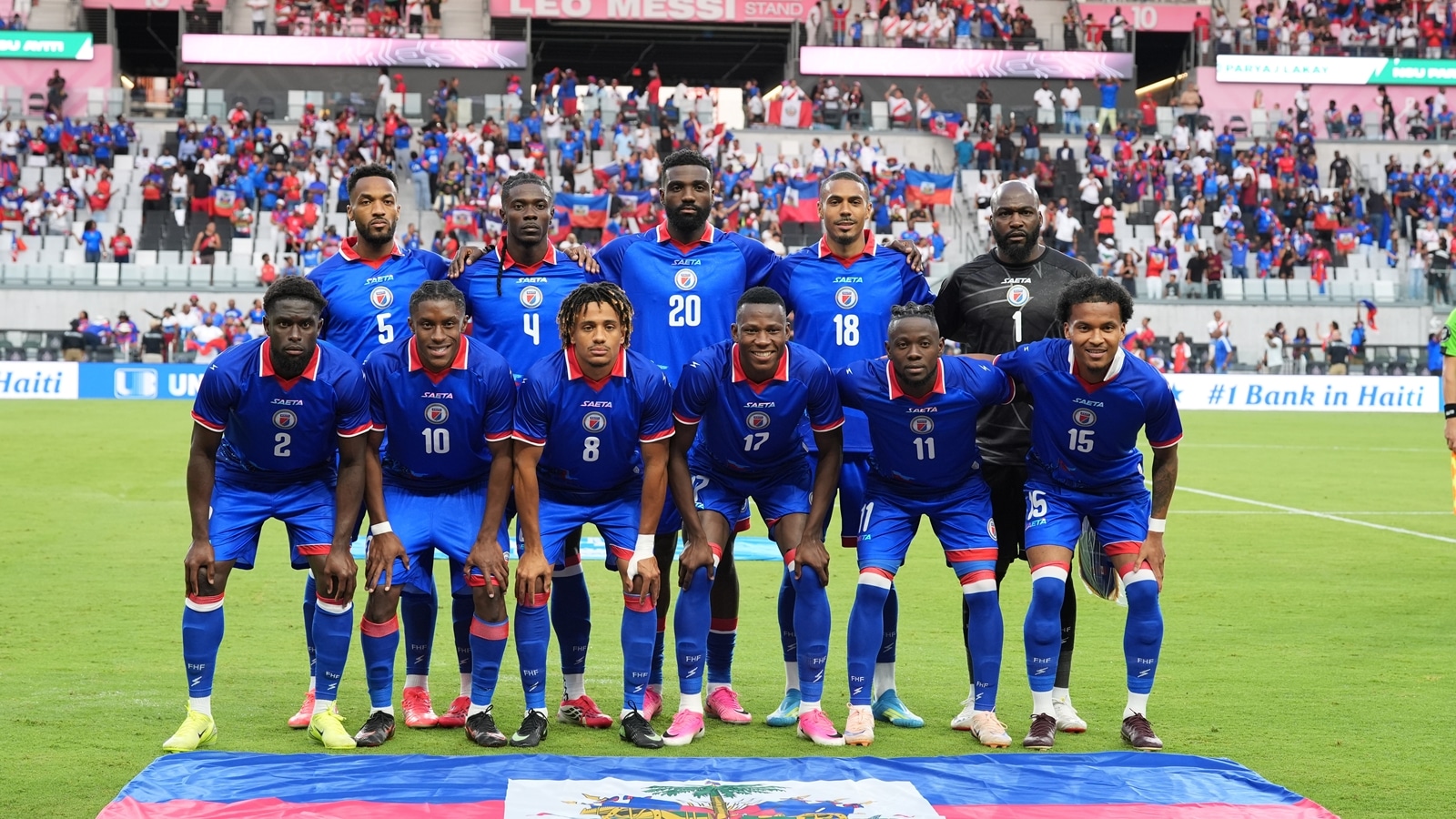
He made it. Haiti’s record scorer — born in a Paris suburb, playing for a Tehran club, escaping a war — made it to a World Cup his country hadn’t attended in 52 years. It is, in miniature, the story of the whole squad.
On the night Haiti qualified, their players were not in Haiti. They were in Curacao — a Dutch island off the coast of Venezuela, 500 miles from home — because armed gangs control most of Port-au-Prince and the national stadium sits unusable. They had beaten Nicaragua 2-0. Now they needed Costa Rica to not beat Honduras.
Someone found a phone. The squad gathered around it. When the result came through, coach Sébastien Migne described the scene: “Everything exploded, with people running in all directions.” In Haiti, fans erupted and took over the streets. In Little Haiti, Miami, watch parties spilled into the night.
Migne himself was not in Curacao. He has never set foot in Haiti.
“It’s impossible because it’s too dangerous,” the Frenchman told France Football. “I usually live in the countries where I work, but I can’t here. There are no more international flights landing there.”
Story continues below this ad
He managed the whole operation remotely — phone calls, video calls, federation officials feeding him intelligence on local players — and, in his own words, “took up his pilgrim’s staff to convince dual nationals to join the adventure.” He coached a country he had never seen. “The Haitian people are waiting for a sign,” Migne said. “And we’re going to show them that we’re here.”
The last time Haiti were here, they had a moment the country still carries.
June 15, 1974, West Germany. Italy had not conceded in 1,142 minutes of international football. Goalkeeper Dino Zoff was considered impregnable. Then Emmanuel Sanon — 20 years old, born in Port-au-Prince — took a pass from Philippe Vorbe, dribbled past a defender and powered the ball into the net.
Haiti lost that game 1-3, lost all three in the group, and went home. Sanon went on to play in Belgium and Florida, managed the national team, died in Orlando in 2008 and was given a state funeral in Haiti. A mural in Port-au-Prince’s Bel Air neighbourhood depicts him alongside Che Guevara, Fidel Castro and Dessalines. The goal was 52 years ago. It is still the first thing any Haitian mentions when you say the word football.
Story continues below this ad
This squad is almost entirely built of people who left. Of the 26 in Migne’s squad, only Woodensky Pierre plays his football at home, for Violette AC in Port-au-Prince. The rest are scattered across England, France, Belgium, Iran, Hungary, Slovakia, the United States.
Nazon’s journey is the most extreme version of it. Born to Haitian parents, he grew up speaking Creole at home, eating Joumou soup on New Year’s Day, hearing family stories about a country he first visited as a child.
What struck him then, he has said, was not the poverty but the kindness of the people. He chose Haiti. Jean-Ricner Bellegarde, the Wolverhampton Wanderers midfielder, said the same thing differently: “I feel like I’m representing my family.”
Frantzdy Pierrot was born in Cap Haïtien, grew up in Melrose, Massachusetts, and will have a homecoming playing back on American soil. On May 26 this year, the governor of Massachusetts declared Frantzdy Pierrot Day in the state.
Story continues below this ad
A country that has pushed its people outward for decades is watching them come back, wearing its colours, on the world’s biggest stage. They face Brazil, Morocco and Scotland in Group C. Scotland, on June 14 in Foxborough, is the match that matters — the one game where a win is genuinely imaginable. Nazon will lead the line, chasing his 50th goal for the country.
Before the Costa Rica qualifier, he was asked what this means. “We can change many things in our country,” he said. “People need it.”
View original source — Indian Express ↗
Related stories

The Guardian
SportsJun 13, 2026 · 1 min
‘Everyone is welcome with us’: Curaçao want you along for their first World Cup ride
The Guardian

BBC Sport
SportsJun 13, 2026 · 1 min
Why Pulisic is ready to take USA to next level - Giroud
BBC Sport

BBC Sport
SportsJun 13, 2026 · 1 min
NZ call up Young after Williamson retirement
BBC Sport
Indian Express
SportsJun 13, 2026 · 1 min
‘I hope it’s not the end’: Graeme Swann on Ben Stokes after nightclub row
Indian Express