Indian Express
Indian Express··5 min read
Why Siddaramaiah’s final CM act signals his long game at OBC politics vanguard
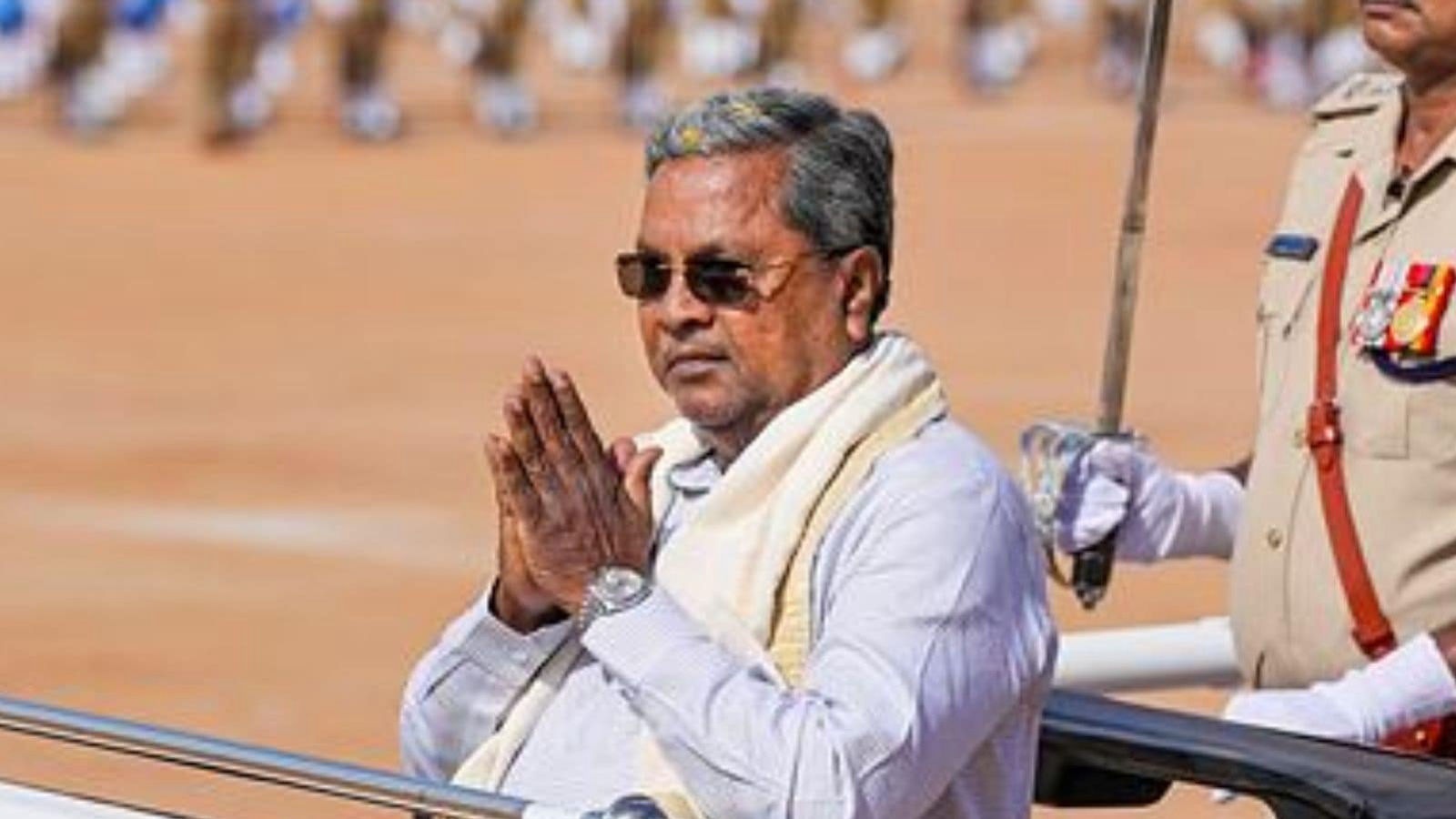
Just before his exit as the Karnataka Chief Minister on June 3, to make way for his successor D K Shivakumar, Congress leader Siddaramaiah, one of the foremost OBC faces, approved the construction of facilities like community halls and hostels in the state for 150 OBC groups at a cost of Rs 71.85 crore.
Most of these facilities cleared by Siddaramaiah are meant for his Kuruba OBC community, which accounts for the largest chunk of the backward classes — 12% of the 42% OBC population — in the state. He called the approval a preliminary exercise ahead of “release of grants”.
Seen alongside his another decision just before his resignation — accepting a caste survey report of the Karnataka State Backward Classes Commission (KSBCC) — it is evident that Siddaramaiah intends to continue championing the cause of the OBCs, which have remained a traditional vote base of the Congress in the state.
“The state Backward Classes Welfare Department has reviewed requests submitted by various backward class organisations and institutions and has given preliminary approval for the construction of community halls and student hostels at a cost of Rs 71.85 crore to about 150 backward class organisations,” the ex-CM said.
“This is not the final list of beneficiaries. The applications submitted by various backward castes will also be reviewed and grants will be released for them in the coming days. The Kuruba community received more grants than other communities due to the large number of applications submitted to the department,” Siddaramaiah said on social media on June 11.
“In addition to the Kuruba community, a preliminary order has been issued for the construction of community halls and student hostels for the Madiwala, Lingayat, Vokkaliga, Besta, Balija, Golla, Jetti, Kumbara, Arasu, Helava, Savita Samaj, Uppara, Ganiga, Kuruhina Shetty, Halakki, and Reddy communities,” Siddaramaiah stated.
Changing of guard
While the Congress high command’s decision to replace the 77-year-old CM with a large base, Siddaramaiah, with the 64-year-old party loyalist and Vokkaliga strongman, Shivakumar, is not likely to have any immediate repercussions, it may have a bearing on the Congress’s roadmap and prospects in the long run.
Siddaramaiah is known to have the support of sections of his own Kuruba group besides Muslims, with both these communities together having a significant influence in as many as 80 Assembly constituencies (of a total of 224 seats) across Karnataka.
The Congress leadership’s decision to opt for changing of the guard came as a surprise to Siddaramaiah himself as he had believed that the party would not upset its traditional OBC applecart by replacing him with a leader from the dominant Vokkaliga community, say close associates of the ex-CM.
The Congress leadership however tempered its move by ensuring an important Cabinet berth in the new Shivakumar ministry for Siddaramaiah’s son Yathindra, 45, his apparent heir who was reportedly pulling strings in the government during his tenure, especially relating to postings and appointments of officials from the Kuruba group.
The Congress also accommodated another Kuruba minister, Byrathi Suresh, 53, a real estate businessman and Siddaramaiah aide, in the new 14-member Shivakumar Cabinet. One more Kuruba face is likely to be inducted into the ministry when it is expanded to its full strength of 34 ministers.
Siddaramaiah play
Siddaramaiah, who has assiduously cultivated his credentials as a leader of the OBC, Dalit and minority communities (the AHINDA bloc) over the decades, turned down the Congress leadership’s offer to enter national politics through a Rajya Sabha nomination, which signalled his intent to remain a power centre in state politics.
“Siddaramaiah is not a leader who can stay away from active politics. Since he is not employed in any official capacity it gives him the freedom to be a protector of the OBC cause and social justice in the state and this could cause friction, especially if he is not given importance and is sidelined in the Congress,” said a party leader, who was earlier his associate.
During his two stints as the CM, Siddaramaiah was seen to have “compromised” on social justice issues like the caste survey — which he had commissioned during his first tenure in 2013-2018 — in the face of resistance from the dominant communities in Karnataka as well as the Congress leadership since reports pointed to the core OBC population at around 70% with the KSBCC recommending a 51% OBC quota in jobs and education as compared to the current 32%.
A new caste survey report was presented to Siddaramaiah by the KSBCC headed by Madhusudhan Naik, a few days after he was asked by the Congress leadership to make way for Shivakumar as the CM on May 26, which has pegged the OBC population at 42%.
“The fact that the caste survey report was received by Siddaramaiah before he stepped down as the CM is an indication that there will be a push for its acceptance by the new Cabinet. Shivakumar has been opposed to the survey in the past but the Congress leadership has been in its favour and there may be a push for its approval,” Congress sources said.
The Congress has attempted to offset some of the apparent political losses with the exit of Siddaramaiah by appointing party veteran B K Hariprasad, who belongs to the smaller but politically significant OBC Billavas / Idigas community. Hariprasad is also known to be a votary of the caste census.
Siddaramaiah, who surpassed the record of former CM Devaraj Urs in January this year to become the longest serving CM of Karnataka, seems to have clearly positioned himself as a champion of social justice in the mould of Urs who vested power with the OBCs, Dalits and minorities during his tenure.
“I will fight for social justice as long as I have breath in me. My four decades of political life have never been a bed of roses — it has always been a path of stones and thorns. Many big leaders have carried out numerous cunning conspiracies to politically finish me,” Siddaramaiah had stated in an article he penned to mark World Social Justice Day this February.
View original source — Indian Express ↗
Related stories

The Punch
PoliticsJun 13, 2026 · 1 min
Nigerian inmates in Ethiopia celebrate prisoner transfer deal, thank Tinubu
The Punch

ESPN
SportsJun 13, 2026 · 1 min
Hurdles remain, but UFL upbeat in 2026: 'Didn't th...
ESPN

ESPN
SportsJun 13, 2026 · 1 min
How Giants WRs stack up with Nabers, Beckham & Co....
ESPN

ESPN
SportsJun 13, 2026 · 1 min
World Cup Daily LIVE: Brazil fans take over NYC ah...
ESPN