The Guardian
Head of Commons media committee denies writing article accusing BBC of bias
It was a crisis that toppled a BBC director general and his head of news. After contentious accusations of bias by a former external adviser, Michael Prescott, both Tim Davie and Deborah Turness quit the corporation.
At the height of the media storm that ensued last November, the corporation was struck by another blow. A key figure in scrutinising the BBC – the chair of the Commons culture, media and sport committee – delivered an equally damning verdict.
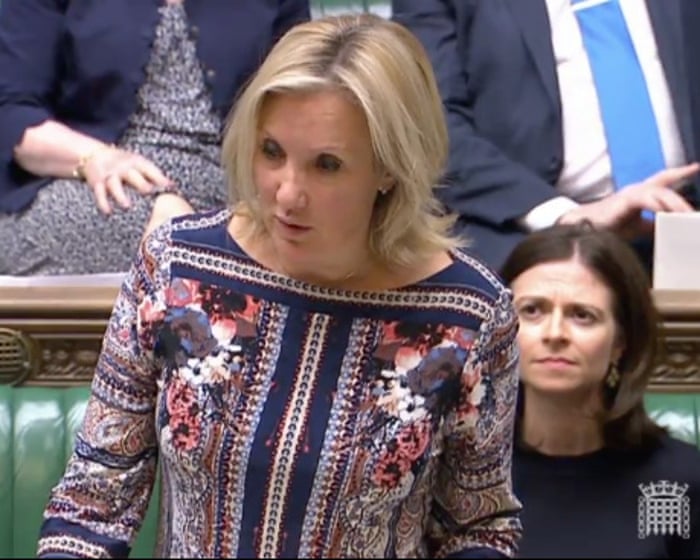
In an article for the ConservativeHome website, Conservative MP Caroline Dinenage said Prescott’s claims “made plain what many viewers have sensed for some time: a pattern of institutional bias within BBC News and current affairs”. She also accused it of “deep anti-Israel bias”.
The issue, she wrote, “runs into the very culture, editorial mindset and assumptions that have shaped the BBC for years”.
It was a strong take for a figure who would no doubt be involved in examining the claims Prescott had made. A problem has emerged with the excoriating article, however – Dinenage now says she did not write it.
Dinenage was quizzed about the article by the BeebWatch podcast, fronted by former BBC Radio 4 presenter Roger Bolton. However, before the episode was released, the podcast was contacted by Dinenage’s office to say that neither she – nor her team – had written the article, which did not accurately reflect her views
“[The article] was strong stuff coming from the supposedly independent chair of a committee helping to decide on the BBC’s future, so naturally I raised these statements with Ms Dinenage in our interview,” Bolton said.
“We had a vigorous discussion in which she did not question the article’s authenticity, and I challenged her suggestion of institutional bias in particular.
“However, shortly after we had recorded the interview, her office contacted us to say that Caroline Dinenage had not written the article, nor had anyone in her office, and that she did not hold some of the beliefs attributed to her.”
The section in question was cut from the podcast.
Meanwhile, ConservativeHome said it could not find the exact details of how the article reached its team, but stood by its publication.
“ConservativeHome cannot now find a record of exactly who sent them an article by Caroline Dinenage in November 2025,” it said in a statement. “However, it was received in the usual manner, subject to our usual processes, and we believe the article to be genuine, sent in good faith, and remains on our website as a record of that day.”
The bizarre disagreement shines a light on the process of drafting opinion pieces that appear under the name of a prominent politician. It is not unusual for such pieces to be drafted by media officers and later approved by the politician in question.
In this case, it is likely that a misunderstanding occurred over whether Dinenage had approved the piece, though the original “author” remains unknown.
“Given this disputed authenticity, we reluctantly decided to edit out that part of the discussion relating to the controversial article,” Bolton said. “There seem to be only two possibilities. Ms Dinenage or her office did write the article. Someone pretending to be her wrote it.
“Whatever the truth, it has remained on the ConservativeHome website for several months without anyone apparently noticing. It is still there to be read. Altogether a rum affair.”
View original source — The Guardian ↗
Related stories

Variety
EntertainmentJun 13, 2026 · 1 min
Beauty vs. The Beast: Here’s Where to Watch Tommy Fury vs. Eddie Hall Boxing Pay-Per-View Live Online
Variety

Deadline
EntertainmentJun 13, 2026 · 1 min
Upriver Into Moral Morass: ‘Amazomania’ Takes Critical Look At Documenting Uncontacted Indigenous Tribes – DC/DOX
Deadline

Rolling Stone
EntertainmentJun 13, 2026 · 1 min
BTS Will Break Down Their Song Lyrics and Favorite Korean Dishes in Upcoming Book Releases
Rolling Stone

Variety
EntertainmentJun 13, 2026 · 1 min
Anna Faris Opens Up About ‘Scary Movie’ and Overcoming Anxiety
Variety