Times of India
Times of India··6 min read
What happens when online gaming addiction blurs the line between the virtual world and reality?
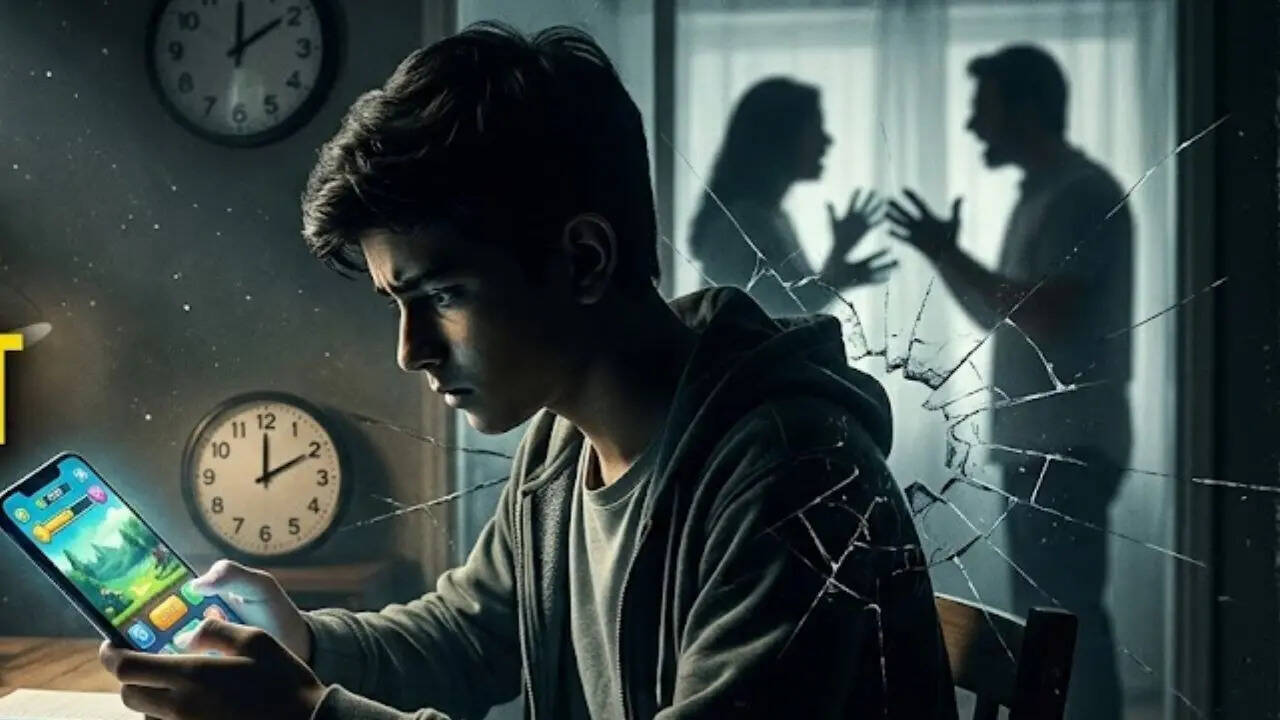
The growing rift at home as online gaming dominates teen life (AI image used for representational purpose only)
Online gaming has become part of everyday growing up in today’s digital world. It now shows up almost everywhere—from school corridors to family WhatsApp groups—where talk of new games, levels and wins has become routine.
Teenagers often rush home just to finish missions with friends, celebrate victories with teammates they may never meet in person, and spend long stretches inside virtual worlds that can feel almost as real as their own surroundings.
For many young people, gaming is simply entertainment—a way to unwind, connect and compete. But parents, teachers and mental health professionals say they are beginning to notice shifts that are hard to ignore.
Screen time is becoming harder to regulate. What starts as small arguments at home over gaming often stretches into daily friction. Sleep gets pushed later, studies take a back seat, and tempers flare when access is cut off.The concern, experts stress, is not gaming itself. It becomes an issue when it starts edging out everything else—relationships, academics and routine life.With cheap data and affordable smartphones, gaming has stopped being something occasional.
It now sits quietly in the background of daily routines. Unlike earlier generations that spent more time outdoors, many teenagers today build friendships inside multiplayer games and online communities. For some, the recognition they get there feels more immediate—and sometimes more satisfying—than what they experience offline.The reasons vary. A quiet or shy teenager may find it easier to open up online. A student under pressure may find comfort in rankings and rewards.
Others simply use gaming as a way to switch off from stress or loneliness for a while.Experts say that’s why the issue doesn’t sit neatly in one box. It isn’t just about technology—it reflects how young people are coping, connecting and looking for validation today.
When arguments at home turn serious
In recent years, a number of incidents have brought attention to concerns around excessive gaming among young people. They are not connected, but together they raise difficult questions about screen dependence, emotional strain and how warning signs are often missed until much later.
In June 2026, a case from Karnataka’s Koppal district shocked many. An 18-year-old pre-university student allegedly attacked his family after repeated arguments over his gaming habits. Police said disputes over screen time had become a regular feature in the household.The teenager allegedly stabbed his father, mother and elder sister. His father and sister died, while his mother survived with serious injuries.The case left many unsettled, particularly because such disputes over screen use are not unusual in homes where parents are trying to manage rising digital habits among children. Mental health experts, however, caution against drawing a direct link between gaming and violence, pointing out that behaviour is shaped by several psychological and environmental factors.Still, the incident has added to a wider concern: when early changes in behaviour go unnoticed or are not taken seriously, everyday conflicts at home can sometimes spiral in unexpected and tragic ways.
Delhi: A childhood increasingly shaped by screens
Another disturbing case emerged from Delhi's Nangloi area, where a 10-year-old boy died by suicide. Reports suggested he spent long hours engaged with online gaming and digital content, raising concerns about his screen habits. Investigators examined whether excessive digital exposure and emotional distress may have contributed to the circumstances surrounding his death. Experts emphasised that suicide is never the result of a single factor.
However, the case triggered wider questions about childhood in the digital age—how much screen time is too much, and whether parents are fully aware of the emotional worlds their children inhabit online. The tragedy highlighted a quieter concern: screen dependence often develops gradually, making it difficult for families to recognise warning signs until it is too late.
Visakhapatnam: When intervention came too late
In Visakhapatnam, another case reflected the complex overlap between gaming habits, mental health and family conflict.
An engineering student allegedly killed his mother after she confiscated his devices due to concerns about excessive gaming. Reports indicated that the young man was undergoing treatment for bipolar disorder. The case reinforced a crucial point: problematic gaming often exists alongside deeper psychological issues. Experts note that removing access to devices without addressing underlying mental health conditions may not resolve the core problem. It also highlighted the importance of timely intervention and professional support in cases where behavioural changes appear severe or persistent.
Why games are hard to put down
Modern online games are designed for continuous engagement. Unlike earlier formats with clear endings, today's games are built around progression systems that never truly stop. There is always another level, reward or challenge. Psychologists describe this as a feedback loop. Achievements trigger satisfaction.
Daily rewards build habits. Time-limited events create urgency. Multiplayer formats add social pressure, as teammates depend on participation. For teenagers dealing with academic stress and uncertainty, games offer something powerful: structure, predictability and instant reward. This does not mean gaming is harmful in itself. Millions of young people play without negative effects. The concern begins when control is lost.
Experts say problematic gaming is rarely sudden. It develops gradually and can be difficult for parents to identify early.
Key warning signs include irritability when asked to stop, declining academic performance, disrupted sleep patterns, skipped meals, loss of interest in offline activities and repeated unsuccessful attempts to reduce screen time.
Often, parents misinterpret these changes as typical teenage behaviour or respond with strict restrictions, which can worsen resistance.
Experts stress that early communication is more effective than punishment. Teenagers who feel understood are more likely to open up about their habits and emotional struggles.
The role of schools and communities
The issue of gaming behaviour extends beyond households. Schools are often the first to notice changes such as fatigue, reduced attention span and withdrawal from peers. Counsellors can play an important role in identifying students at risk and guiding families toward support systems before problems escalate. However, stigma around mental health remains a barrier. Many families still hesitate to seek psychological help. Experts argue that normalising emotional conversations and improving access to counselling can make early intervention more effective.
Building healthier digital habits
Rather than banning technology, experts recommend balance. Simple practices can help: screen-free meals, fixed sleep routines, encouragement of outdoor activities, and clear but flexible boundaries around device use. Parents are also advised to model healthy digital behaviour themselves, as children often imitate adult habits. Digital literacy, experts say, is not just about using technology, but understanding its influence on attention, behaviour and emotion.
The conversation India needs
Gaming is not the enemy. It has created entertainment, careers and communities for millions of young Indians. It also continues to grow as a global industry. But as digital life expands, so does the responsibility to understand its impact. The cases from Karnataka, Delhi and Visakhapatnam are not representative of the average gamer.
They are exceptions—but important ones. They raise difficult questions about emotional well-being, parenting in the digital age, and the role of schools and society in identifying early signs of distress. Ultimately, the challenge is not to fear gaming, but to understand it. Because the issue is not simply that children play games. It is what happens when the game begins to matter more than everything else around it.
View original source — Times of India ↗
Related stories

The Punch
SportsJun 13, 2026 · 1 min
Ghana protests Canada’s visa denial for Partey ahead of World Cup
The Punch
The Punch
NewsJun 13, 2026 · 1 min
Bandits kill 17 farmers, injure others in Zamfara community
The Punch
The Punch
NewsJun 13, 2026 · 1 min
DSS intercepts arms cache in Zamfara, nabs courier
The Punch
The Punch
NewsJun 13, 2026 · 1 min
Kebbi begins plan for new police mobile force base
The Punch