Indian Express
Indian Express··4 min read
How BJP’s expansion in Maharashtra puts Shiv Sena, NCP on tenterhooks
While political realignments have remained a constant in Maharashtra, the BJP’s growing assertiveness has left regional parties, both in the ruling Mahayuti and the Opposition Maha Vikas Aghadi (MVA), on tenterhooks. These parties seem to be struggling to retain their distinct identities in the face of the BJP’s policy of “saam, daam, dand, bhed”.
On Friday, while speaking on Prime Minister Narendra Modi completing 12 years in office, Chief Minister Devendra Fadnavis said, “In 2029, the BJP will contest elections as the Mahayuti.”
Though Fadnavis’s statement implied that the BJP, while pursuing its ambitious goal of an absolute majority in the state Assembly, would go along with its alliance partners, the Eknath Shinde-led Shiv Sena and Sunetra Pawar-led Nationalist Congress Party (NCP) in the 2029 elections, the catch appears to be the point that the BJP would decide how much political space it would give to allies, or it would subject them to its terms. A lack of trust within the ruling coalition has been seen at various forums including the state Cabinet in recent months.
Recently, Deputy CM Eknath Shinde flew to Delhi twice to meet Union Home Minister Amit Shah to seek a greater share of power in the Legislative Council elections on June 18. Later, Fadnavis met Modi and Shah, and said, “All these talks related to Council seats will be discussed at the state level, not in a Delhi durbar.”
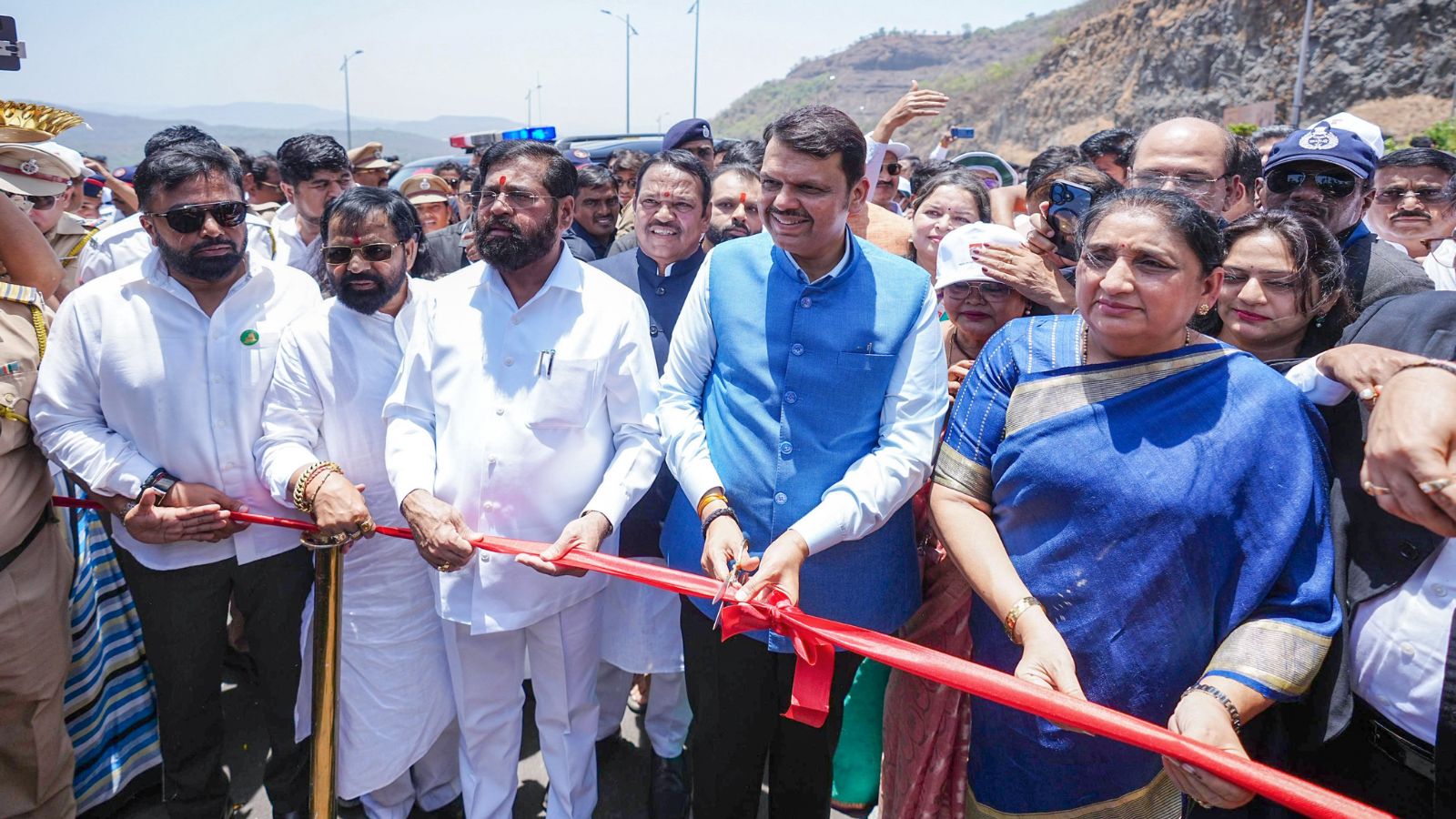
If that was not enough, Shinde was on the receiving end of another snub when he was not invited for the unveiling of the Chhatrapati Shivaji Maharaj statue at the Navi Mumbai International Airport on June 6. Angry Sena ministers raised the issue in a Cabinet meeting, warning that they would not tolerate such “humiliation” of their leadership.
Such coalition conflicts in Mahayuti have remained unresolved as the BJP’s junior allies claim to be struggling to have their voices heard in the Fadnavis government. These rows may intensify ahead of the 2029 elections as the Shiv Sena and the NCP attempt to hold on to their influence in their spheres under a dominant BJP.
A Sena minister said, “We have to fight back to remain relevant. Or else the BJP will swallow us.”
After the revolt in the Trinamool Congress (TMC) following its loss in the West Bengal Assembly polls last month, the Sena and its seven Lok Sabha MPs have fallen in the NDA pecking order with as many as 19 rebel TMC MPs looking to pledge their support to the NDA. The Sena, along with other NDA constituents like the Telugu Desam Party (TDP) and Janata Dal (United), had been crucial in ensuring the NDA’s majority after the 2024 Lok Sabha polls.
Not surprisingly, Shinde has been making efforts to increase his party’s tally by trying to wean away at least six Lok Sabha MPs from the Uddhav Thackeray-led Sena (UBT) through “Operation Tiger”. However, these efforts have been stalled with the BJP’s central and state leadership yet to make a decision on the matter.
In the case of the NCP, led by Deputy CM Sunetra Pawar, it is making concerted efforts to articulate its separate ideology and carve its own niche. At the NCP’s foundation day function in Mumbai on June 10, Sunetra said, “The NCP believes in inclusive politics, taking along all castes, communities and religions. Its ideology is founded on Mahatma Jyotirao Phule, Dr B R Ambedkar and Chhatrapati Shahu Maharaj.”
After former NCP chief Ajit Pawar’s demise, party insiders believe that it cannot afford to antagonise the BJP. So the party did not push to retain the finance ministry, once held by Ajit Pawar, which is now with Fadnavis himself.
When asked about the finance portfolio, Fadnavis said, “As of now, the finance portfolio is with me.” After Ajit Pawar’s death, Fadnavis opted to present the state Budget in March, given its complexities. But almost three months have passed and the finance portfolio remains with the CM.
The NCP’s cautiousness lies in its inexperienced leadership coupled with friction within the party – a sizeable number of NCP MLAs are reportedly in favour of a merger with the Sharad Pawar-led NCP(SP).
A BJP leader said: “Every party has the right to decide its own path. As far as the BJP is concerned, our goal is to get an absolute majority both at Centre and in the state in the 2029 polls.”
In the context of Maharashtra, the BJP leader argued, “Currently, our strength is 132 MLAs out of 288 seats. Our target is to make it 150-plus, which is not difficult if the party works hard.” However, the leader admitted, achieving two-third majority of 202 MLAs would be a daunting task, particularly given the complex caste equations in the state.
View original source — Indian Express ↗
Related stories

The Punch
NewsJun 13, 2026 · 1 min
Insecurity: Ogun on high alert, deploys technology to tackle threats
The Punch

ESPN
SportsJun 13, 2026 · 1 min
Russell edges out Hamilton for pole; Antonelli thi...
ESPN

ESPN
SportsJun 13, 2026 · 1 min
It was all by design: The case for MSG as part of ...
ESPN
The Punch
NewsJun 13, 2026 · 1 min
Ex-Ondo works commissioner dies at 88, Senator, APC elders mourn
The Punch