Indian Express
Japan’s H3 rocket returns to flight with successful launch after earlier setback
3 min readJun 13, 2026 06:57 PM IST
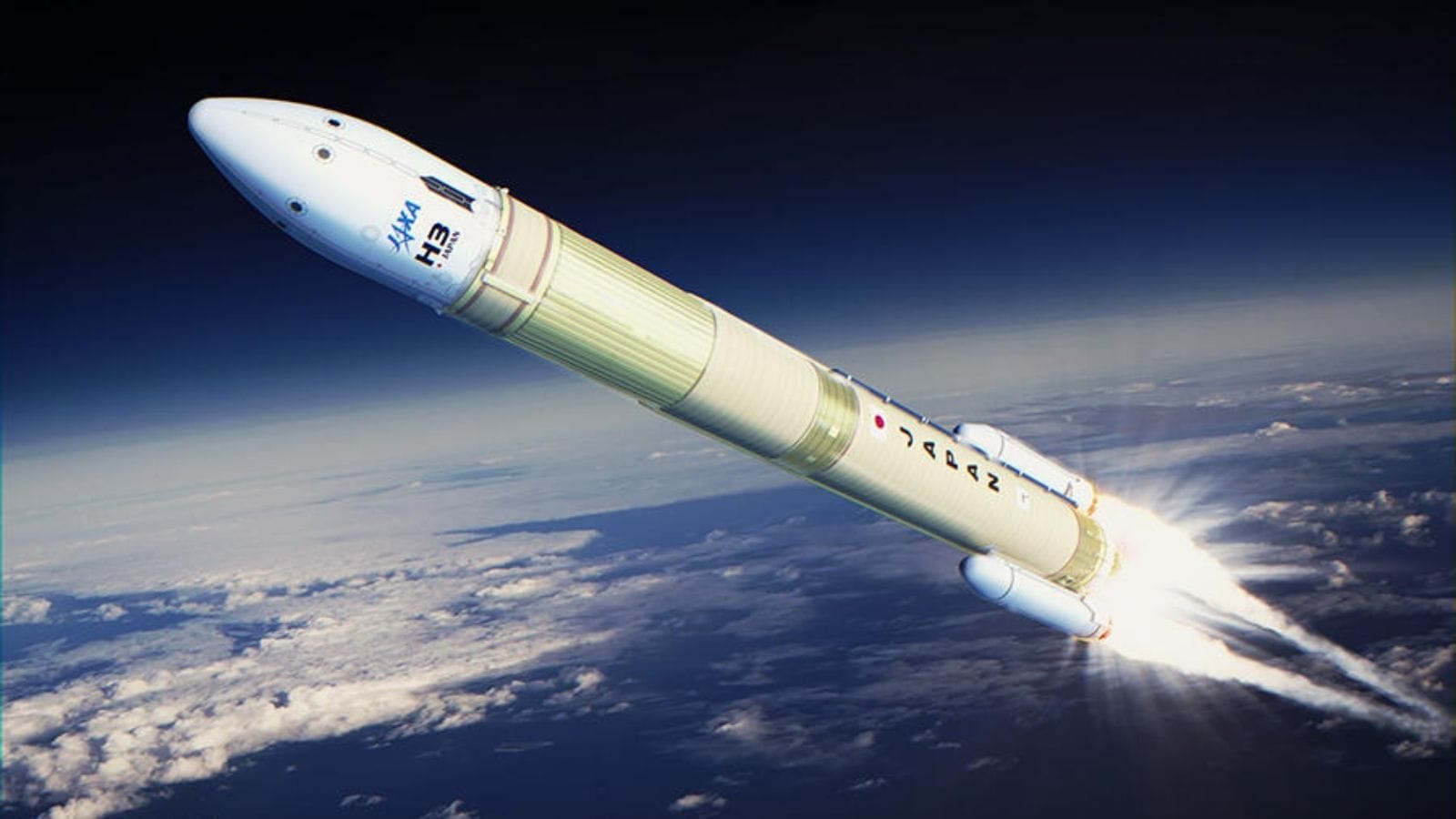
The H3 launch vehicle is a two-stage rocket developed by JAXA and Mitsubishi Heavy Industries. (Image: Jaxa)
Japan’s space program has scored an important victory after the successful launch of its H3 rocket, marking the vehicle’s return to flight following a mission failure last year.
The Japan Aerospace Exploration Agency (JAXA) launched the H3 rocket from the Tanegashima Space Centre on June 12, successfully delivering six satellites into their planned orbits. The mission represents a significant milestone for Japan’s flagship launch vehicle, which is designed to become the country’s primary rocket for government, scientific, and commercial missions.
The launch was particularly important because it came after the H3’s previous mission in December 2025 ended in failure. During that flight, the rocket was unable to deploy the Michibiki 5 navigation satellite after a damaged payload adapter caused problems that affected the second stage and prevented proper engine ignition.
Following a detailed investigation, engineers identified the root cause and implemented corrective measures. The successful mission demonstrates that those fixes worked and restores confidence in the rocket’s reliability.
Thursday’s launch was also notable because it was the first time the H3 flew in its more powerful three-engine configuration. Previous successful missions had relied on a two-engine setup. The upgraded version provides additional performance and flexibility for carrying heavier payloads into space.
The Japanese space agency claims that the rocket fulfilled all mission requirements. At around 16 minutes into the flight, PETREL and STARS-X satellites were deployed. Four other spacecraft, including BRO-22, VERTECS, HORN-L, and HORN-R, were successfully launched shortly afterwards.
The H3 launch vehicle is a two-stage rocket developed by JAXA and Mitsubishi Heavy Industries. Its development is aimed at replacing its predecessor – the H-2A rocket – which was retired in 2025 after years of use.
Story continues below this ad
Although its early career was characterised by difficulties such as failure of its first mission back in 2023, the H3 proved itself capable of fulfilling the required tasks. Before the latest unsuccessful attempt to launch in December, the rocket completed five missions successfully.
The positive experience gained from the successful launch will increase confidence in the H3 among government entities, scientific organisations, and corporations interested in launching satellites using this rocket.
In light of increased spending on space exploration projects and launches, especially on lunar missions, the Japanese government considers the H3 essential in order to compete in the global market.
Also Read: Nasa announces all-male crew for Artemis III Moon mission, faces backlash
Story continues below this ad
After the mission, the Tanegashima Space Center thanked all its supporters and urged further support towards the H3 project, which would play a crucial part in future Japanese missions in outer space, including scientific studies and deep space exploration initiatives.
This latest success brings the H3 project back on track, as the country aims high with its space ambitions.
View original source — Indian Express ↗
Related stories

TechRadar
TechnologyJun 13, 2026 · 1 min
How to watch Qatar vs Switzerland: Free Streams & TV Channels online from anywhere for FIFA World Cup 2026
TechRadar

The Verge
TechnologyJun 13, 2026 · 1 min
Bose’s latest QuietComfort Ultra are $70 off, marking a new low price
The Verge

TechCrunch
TechnologyJun 13, 2026 · 1 min
This thin under-pillow speaker helped me fall asleep without earbuds
TechCrunch

Engadget
TechnologyJun 13, 2026 · 1 min
Why your cardiologist might tell you to skip AirPods
Engadget