Indian Express
Indian Express··3 min read
‘Extreme brutality’: 7 get life term for lynching MP man in 2022 over cow smuggling claim
A sessions court in Madhya Pradesh’s Narmadapuram district has sentenced seven men to life imprisonment for the 2022 lynching of Nazir Ahmed, who was beaten up on suspicion of cow smuggling, holding that they “assaulted the deceased with extreme brutality”.
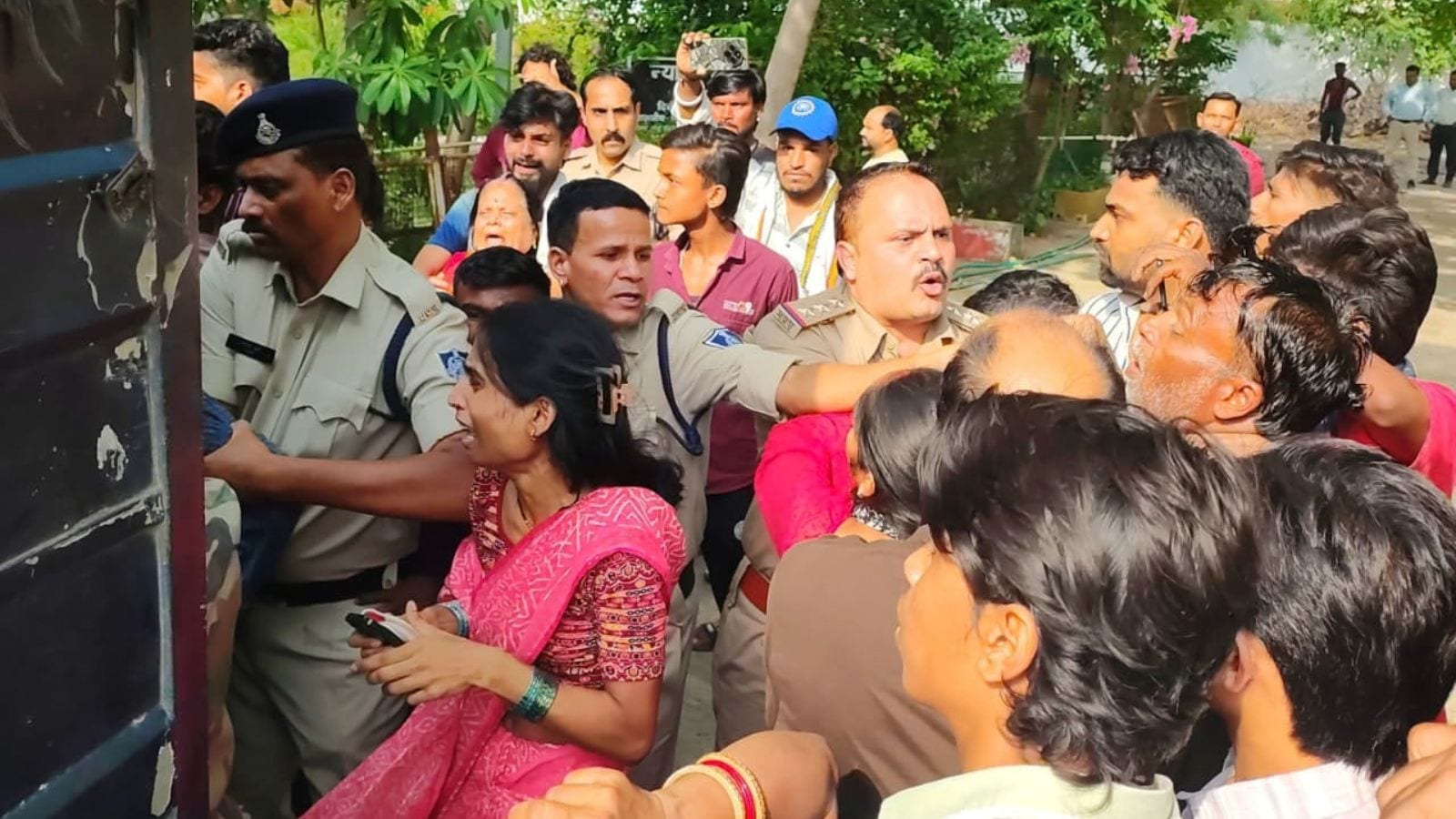
In a judgment delivered on June 12, First Additional Sessions Judge Tabassum Khan held that the prosecution had proved beyond reasonable doubt that the accused participated in the attack that led to Ahmed’s death and injuries to two others travelling with him. After the verdict was delivered, dramatic scenes played outside the court, as relatives of the accused tried to stop the police van carrying them to the local jail.
Recording its principal finding, the court held, “The prosecution has succeeded in proving beyond reasonable doubt that at the time and place of the incident, the accused persons, armed with lathis and sticks, formed an unlawful assembly and committed rioting by using force and violence.” It further held that they assaulted Ahmed with the intention of causing his death or such bodily injury as was likely to cause death, thereby committing his murder.
The incident took place around 12.30 am on August 3, 2022, on Nandarwada Road near Barakhad village in Seoni Malwa. According to the prosecution, Ahmed was travelling in a truck along with Sheikh Lala and Syed Mushtaq when they were attacked by a crowd armed with lathis and sticks on suspicion of cow smuggling.
Ahmed was brought to the Community Health Centre at Seoni Malwa in an unconscious condition, where he died. The post-mortem recorded multiple injuries, including lacerated wounds to the head, fractures of the skull and extensive contusions across the face and body.
A striking feature of the trial was that several key witnesses did not support the prosecution’s case before the court. Sheikh Lala and Syed Mushtaq, who survived the attack, did not identify the accused during the trial. A man, whose statement under Section 164 of the Code of Criminal Procedure had named the accused shortly after the incident, also denied being an eyewitness when examined in court.
The court acknowledged this difficulty, but noted that his statement before a magistrate had been recorded on the day of the incident.
Story continues below this ad
The court placed significant reliance on what it described as corroborative circumstances. It referred to identification proceedings conducted by an executive magistrate, Lalit Soni, in which the accused were identified shortly after their arrest.
The judgment recorded that Tehsildar Soni’s testimony regarding the identification parade “remained unshaken during cross-examination”. The court further observed that although the identifying witnesses later retracted their earlier position, it appeared probable that they had been “influenced” before deposing during trial.
The court also relied on disclosure statements and recoveries made during the investigation. According to the prosecution, several accused led police to bamboo sticks allegedly used in the assault and to clothes said to have been worn during the incident.
The defence argued that the investigation was suspect because no separate action had been taken against persons allegedly involved in transporting cattle in the truck. The court rejected the contention, observing that even if separate proceedings were warranted against other individuals, that would not negate evidence regarding the assault itself. “Merely because no separate legal action was taken,” the court held, “it cannot be inferred that the accused persons were not involved in the incident.”
Story continues below this ad
On sentencing, the court identified mob lynching as a major aggravating factor. It noted that the accused had formed an unlawful assembly armed with deadly weapons and had assaulted the victims with considerable brutality.
At the same time, the court noted that none of the accused had a criminal record placed before it and that jail authorities had not reported any abnormal behaviour during their incarceration. Referring to Supreme Court rulings on the “rarest of rare” doctrine, the court declined to impose the death penalty.
“After considering all aggravating and mitigating circumstances, it does not appear that there is no possibility of reform in the accused persons,” the court observed before sentencing them to life imprisonment.
The judgment further recommended that compensation be paid to Ahmed’s wife, children and surviving parents under the victim compensation scheme. The court also ordered that Rs 15,000 each be paid to survivors Sheikh Lala and Syed Mushtaq from the fine amount after the expiry of the appeal period.
View original source — Indian Express ↗
Related stories

The Punch
NewsJun 13, 2026 · 1 min
Abacha’s death fishy, Abdulsalami raises fresh suspicions
The Punch
The Punch
EntertainmentJun 13, 2026 · 1 min
Nollywood actor Kola Oyewo brought honour to Yorubaland, Ooni mourns
The Punch

ESPN
SportsJun 13, 2026 · 1 min
Behind the scenes for UFC fighters' week at the Wh...
ESPN
The Punch
NewsJun 13, 2026 · 1 min
Defence minister blames Israel-Iran, Russia-Ukraine wars for arms shortage
The Punch