SBS News
SBS News··6 min read
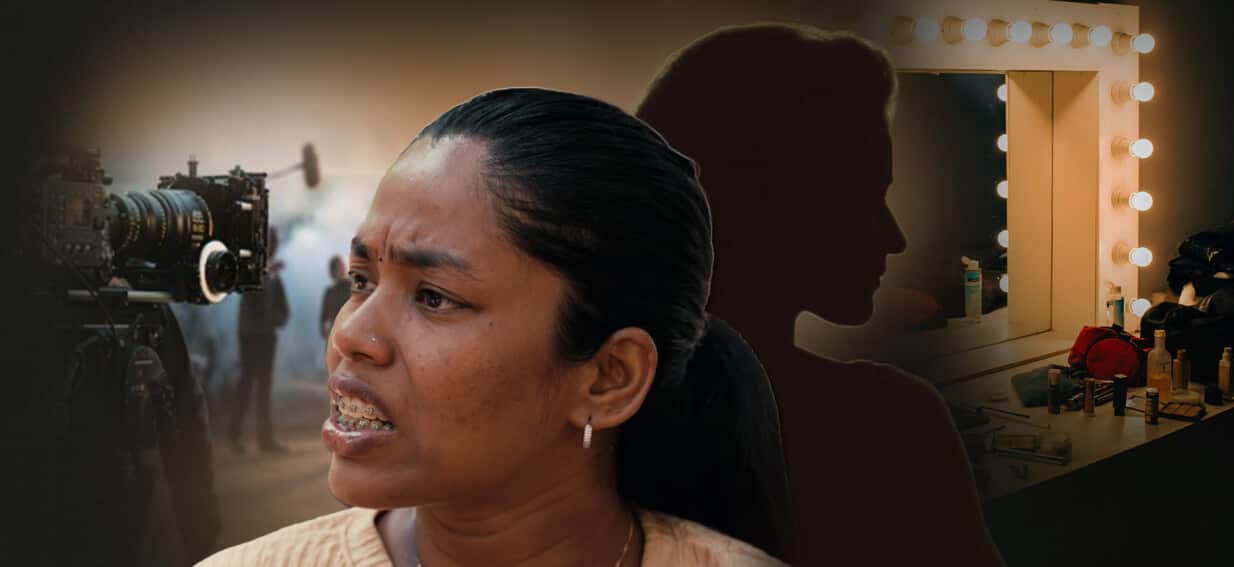
Priya and Rohini dreamt of working in film. But those ambitions made them a target
Meet the women in Kerala’s film industry speaking out against sexual harassment and alleged exploitation by influential men. Tune in on SBS at 9.30pm Tuesday 16 June or watch live on SBS On Demand.
Content warning: This article contains references to sexual assault and rape.
Priya (not her real name) was a young model with dreams of becoming an actor. So when she received a Facebook friend request from one of India’s biggest stars, Siddique, she thought she’d unlocked a once-in-a-lifetime opportunity.
"For me, he was a legend. He used to speak with me like an older person who’s caring for their daughter," Priya says.
She says the award-winning actor — then in his 50s — encouraged her ambitions and invited her to his hotel to discuss a film project in 2016.
News that makes sense
Your trusted source for staying up-to-date with the world around you. Get free daily news updates and analysis, straight to your inbox.
During their meeting, Priya claims Siddique told the then-21-year-old she would need to "make adjustments" if she wanted to succeed. The term is commonly understood by women in the film industry as a demand for sexual favours.
"Slowly, he started touching my hand … I then realised that this was a great trap," Priya claims.
"I was so lost and numb ... I couldn’t move. I completely froze up."
Priya alleges Siddique raped her then threatened to derail her career if she spoke publicly.
"[He said] 'you are not going to say anything to anyone ... Nobody is going to believe you. You and your profession are going to be affected by this'," she alleges.
"I went into a deep, dark hole for some years."
Siddique has denied the accusations, describing them as a criminal conspiracy to tarnish the reputation of the entire Malayalam-language film industry.
An industry shaken by allegations
While Bollywood has long dominated global perceptions of Indian cinema with its lavish Hindi-language musicals, Malayalam cinema or 'Mollywood' — based in the southern state of Kerala — releases about 200 films each year.
Its films are celebrated for their realism, complex characters and unconventional storytelling. But behind the critical acclaim lies a troubling reality, with stories like Priya’s commonplace.
For years, allegations of sexual harassment and abuse circulated quietly — but that changed in 2017.
One of Malayalam cinema's leading female actors was allegedly abducted in the city of Kochi and sexually assaulted inside a moving vehicle, as perpetrators filmed the incident.
The case sparked outrage across India.
Among those arrested and charged was one of Malayalam cinema’s biggest stars, Gopalakrishnan Padmanabhan, who goes by the screen name Dileep.
Prosecutors have accused him of orchestrating the attack. Dileep has denied the allegations and says he was wrongly accused.
Last year, after an eight-year legal battle, six men were convicted over the case and sentenced to 20-year prison sentences.
The survivor described her verdict as "a ray of light at the end of a very long and painful journey".
But Dileep was acquitted of conspiracy charges, with the judge ruling there was insufficient evidence to prove he had hired the men to assault the actor.
The Kerala government has filed an appeal against the ruling.
Despite facing serious allegations, Dileep is among several actors accused of misconduct who have continued to secure prominent roles.
Last year, Dileep starred in the box office hit comedy-drama, Prince and Family, and has another eight titles in production.
A movement for change
For acclaimed Mollywood filmmaker Bina Paul, the allegations against Dileep became a turning point.
She has worked in the male-dominated industry for 40 years, and after the alleged 2017 assault, she and a group of women wanted reform, and founded the Women in Cinema Collective (WCC).
"When we formed the WCC, which was even before #MeToo in the US, we were just a group of 17 or 18 women who thought that we needed to help a colleague who had been abducted and was going through really a bad time," Paul says.
The WCC demanded a government investigation into sexual violence and gender discrimination in the industry. Their advocacy led to the creation of the Hema Committee, a landmark government-appointed inquiry into working conditions in Kerala's film industry.
Five years after being submitted in 2019, its report was publicly released following Right to Information applications by journalists.
It depicts an industry dominated by a small group of powerful men and documents allegations of widespread sexual harassment and exploitation.
It also found women faced unequal pay, insecure employment, poor working conditions and limited formal workplace protections.
The report's release triggered renewed calls for accountability.
Film productions with more than 10 members are now required to have a unit to address sexual harassment complaints, following a 2022 Kerala High Court ruling.
"There was a whole system put in place to support these women," Paul says.
Labelled a troublemaker
It's not just female actors speaking out against abuse.
Rohini worked as a make-up artist on Malayalam film sets but says she battled a constant stream of harassment from her male counterparts.
"A make-up assistant called me into the make-up room and talked sexually about my body," she says.
"I yelled at him and left. Then he said that I was a troublemaker and kicked me off the set."
Further instances of harassment led her to contact the union, which offered her little support, so she went public with her allegations, staging a hunger strike alongside two female colleagues.
Now, she says she’s paid a heavy price — she’s had no regular work for months, is on the verge of selling her home and has struggled to find school fees for her son.
"The higher-ups in the union started telling people that I was a troublemaker," Rohini says.
"If we talk back, we are kept away from the industry."
'No going back'
Allegations of abuse have emerged in other Indian film industries, including Bollywood. Some have set up internal complaints systems.
In Kannada's film industry in south-western India, dozens of high-profile individuals are backing calls for a separate inquiry.
But Kerala remains the only state to have conducted a comprehensive industry-wide investigation, while police say they continue to investigate multiple sexual harassment cases.
Priya's lawyer, J Sandhya, says the Hema Committee report has encouraged more women to come forward and press charges.
"Women are slowly gathering the courage to report sexual violence," she says.
"I think now there is no going back ... Women are going to speak out."
But she warns there’s still a long way to go.
"The only anxiety is how far our redressal mechanisms are sensitive and ready to respond to the violence."
For many survivors, that question remains unanswered, as they wait for accountability years after speaking up about their experiences.
Regrets of speaking up
In Priya's case, police arrested Siddique last year with the case now before the courts. A decision on whether the case will proceed to trial is yet to be made.
The now- 63-year-old has stepped down from his role as General Secretary of the Association of Malayalam Movie Artists (AMMA) since the allegations became public. But last year he appeared in 10 films and he continues to work on more.
But for Priya, speaking out has already come at a heavy cost.
After eventually landing her first film role, she says another director behaved inappropriately towards her, sending late-night messages and asking her to visit his room.
After she complained, she says several promising opportunities began to quickly disappear.
"There were times when I used to think, 'was it a bad decision that I spoke up?'" Priya says.
"I reached a point where I blamed myself and there were a lot of other psychological issues. I felt like a failure.
"I just dreamed. Is that too much?"
Watch your favourite Dateline episodes around the clock on SBS On Demand's dedicated Dateline channel. For the latest from SBS News, download our app and subscribe to our newsletter.
If you or someone you know is impacted by sexual assault, call 1800RESPECT on 1800 737 732, text 0458 737 732, or visit 1800RESPECT.org.au. In an emergency, call 000.
Readers seeking support with mental health can contact Beyond Blue on 1300 22 4636. More information is available at beyondblue.org.au. Embrace Multicultural Mental Health supports people from culturally and linguistically diverse backgrounds.
For the latest from SBS News, download our app and subscribe to our newsletter.
View original source — SBS News ↗
Related stories

The Punch
SportsJun 13, 2026 · 1 min
Qatar earn first ever World Cup point with late goal against Switzerland
The Punch
The Punch
NewsJun 13, 2026 · 1 min
Reps member Tongo laid to rest in Gombe
The Punch
The Punch
NewsJun 13, 2026 · 1 min
Soldiers repel Boko Haram attack, rescue nine abductees in Borno
The Punch

ESPN
SportsJun 13, 2026 · 1 min
Ticketmaster: No Game 5 tickets will be revoked
ESPN