South China Morning Post
Thailand, Vietnam team up in an Asean ‘plus or minus’ gamble
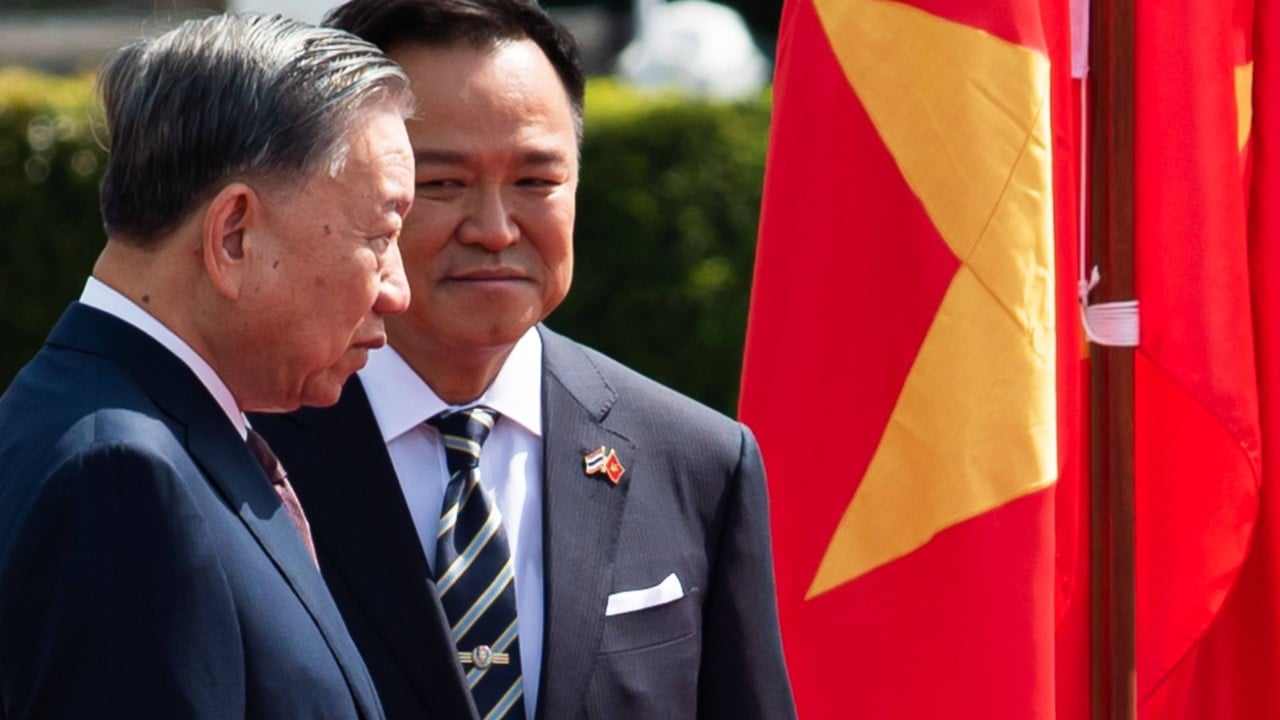
It was a gesture that was equal parts diplomacy and theatre: Thai Prime Minister Anutin Charnvirakul coaxing a melody out of a traditional Vietnamese t’rung xylophone at a Hanoi state banquet on Monday.
The real music, however, had been made in the meeting rooms.
Two days of talks between Anutin and his Vietnamese hosts produced a pledge to nearly double bilateral trade to US$25 billion within four years – and eventually to double it again. Supply chains would be stitched together across electronics and semiconductors; trade barriers would fall.
Behind the bonhomie lay a hard-nosed reality: battered by US tariffs, Middle East turmoil and soaring commodity prices, Thailand and Vietnam have decided they are stronger as a pair.
The summit followed Vietnamese President To Lam’s own debut visit to Bangkok barely a fortnight earlier, marking a rare set of back-to-back meetings between the leaders of Southeast Asia’s second and third-largest economies.
“Both countries face a shared external shock,” said economist Pavida Pananond, an international-business professor at Thammasat Business School in Bangkok, citing “the fracturing of the rules-based trading order”, reconfigured global supply chains and intensifying US-China competition.
View original source — South China Morning Post ↗
Related stories

The Punch
PoliticsJun 14, 2026 · 1 min
Tinubu orders Abuja land allocation for Abdulsalami Abubakar centre
The Punch

France 24
PoliticsJun 14, 2026 · 1 min
Middle East war live: Trump says Iran deal to be signed Sunday
France 24
ABC News
PoliticsJun 14, 2026 · 1 min
New watchdog to probe behaviour of WA judges if legislation passes
ABC News
South China Morning Post
PoliticsJun 14, 2026 · 1 min
How Iran used US ceasefire to replenish its depleted missile stockpiles
South China Morning Post