Indian Express
7 places where the sun never sets
3 min readNew DelhiJun 14, 2026 12:26 PM IST
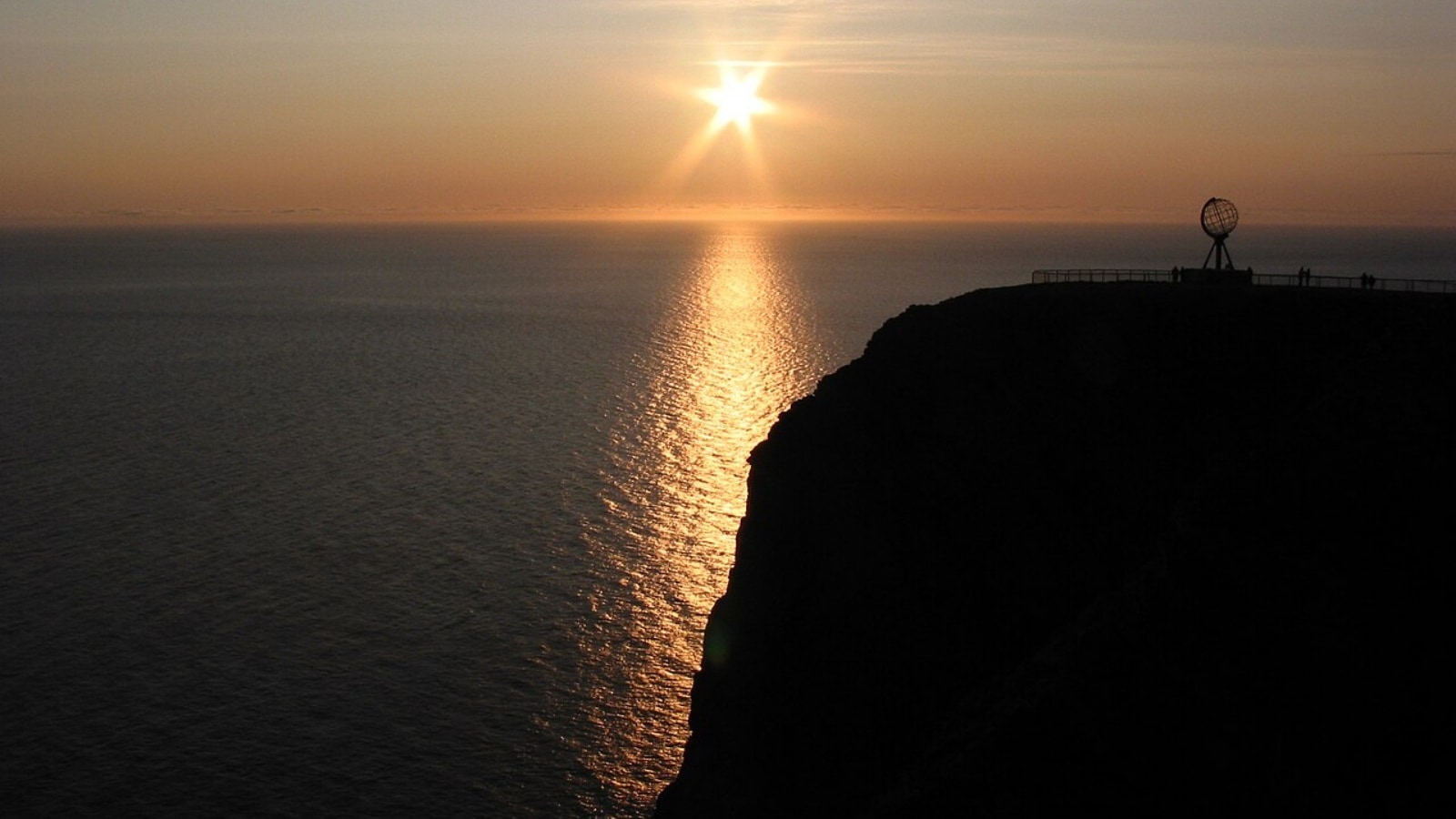
Midnight sun at the North Cape on the island of Magerøya in Norway (Photo: Wikipedia)
Imagine watching the clock strike midnight while the sky still glows like late afternoon. In some parts of the world, this surreal phenomenon is not fiction but a seasonal reality. Known as the Midnight Sun or polar day, it occurs in regions close to the Arctic and Antarctic Circles, where the Earth’s tilt allows sunlight to remain visible for extended periods during summer.
Here are seven places on Earth where the sun barely sets.
Norway
Norway is perhaps the most famous destination associated with endless summer daylight. Areas above the Arctic Circle, especially Tromso and Svalbard, experience weeks or months without sunset.
In Svalbard, the sun does not set from roughly late April to late August. The glowing skies create ideal conditions for hiking, kayaking, and wildlife spotting at unusual hours of the night.
Iceland
Although Iceland lies just below the Arctic Circle, it still experiences extremely long summer days. Around June, the sun dips only briefly below the horizon, leaving the country bathed in twilight through the night. This unique light has inspired Icelandic art, photography and festivals for generations.
Finland
In northern Finland, the Midnight Sun lasts for more than two months. Regions like Lapland experience nearly constant daylight from May to August.
The unusual sunlight cycle affects daily routines, with many people sleeping less and spending more time outdoors. Tourists often visit to enjoy late-night canoeing, forest walks, and lakeside camping under glowing skies.
Story continues below this ad
Sweden
Sweden’s far north experiences nearly round-the-clock sunlight during peak summer. In places like Kiruna, the sun remains visible at midnight for several weeks.
The extended daylight has become deeply tied to Swedish summer traditions, including Midsummer celebrations, outdoor feasts, and nature excursions.
Alaska
Northern Alaska witnesses dramatic periods of continuous daylight. In Utqiaġvik, formerly called Barrow, the sun stays above the horizon for around 80 consecutive days. For residents, the constant sunlight can alter sleep schedules, but it also allows for fishing, hiking, and community activities at all hours.
Canada
Canada’s northern territories, including Nunavut and Yukon, experience polar days during summer. In some Arctic communities, the sun remains visible for nearly 24 hours a day for several weeks. The phenomenon creates stunning golden landscapes and unusual biological rhythms for both humans and wildlife.
Story continues below this ad
Antarctica
While the Arctic experiences endless daylight during the northern summer, Antarctica undergoes the same phenomenon during the southern summer months. At the South Pole, the sun rises once in September and does not set again until March. Researchers stationed there often describe the experience as both beautiful and disorienting.
View original source — Indian Express ↗
Related stories

Indian Express
EntertainmentJun 14, 2026 · 1 min
‘A little hard to accept’: Why Chiranjeevi is proud yet Jealous of son Ram Charan’s Peddi
Indian Express

Deadline
EntertainmentJun 14, 2026 · 1 min
‘Cross’ Creator Says Prime Video Drama “Can Go Forever” As Season 3 Explores Alex Cross’ Addiction To The Hunt
Deadline

Indian Express
EntertainmentJun 14, 2026 · 1 min
When Aamir Khan’s Lagaan cast played a real cricket match and the British won easily
Indian Express

Indian Express
EntertainmentJun 14, 2026 · 1 min
Dipika Kakar suffers severe back pain after first immunotherapy session: ‘Got mild fever’
Indian Express