Indian Express
Why hybrid paddy continues to divide Punjab’s agricultural community
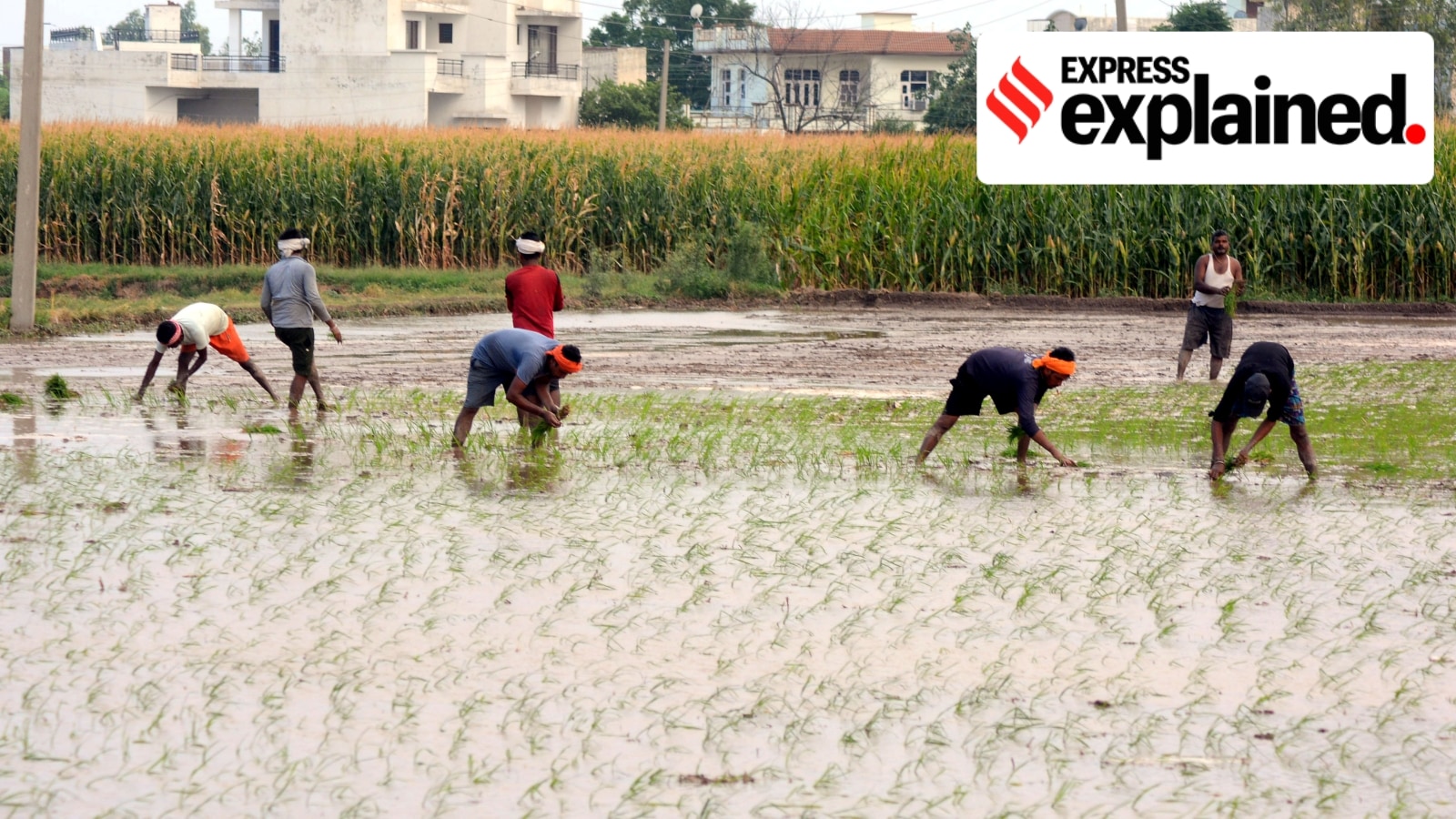
For a state that has long been at the centre of India’s food security architecture, few agricultural issues have generated as much debate in recent years as hybrid paddy.
Of Punjab’s area under paddy cultivation, which is usually over 32 lakh hectares, nearly 10% is estimated to be under hybrid varieties this year. This is despite the state government’s discouragement and attempt to ban the sale of such seeds last year, and the subsequent Punjab and Haryana High Court order striking down the state’s blanket ban on notified hybrid varieties, holding that seeds notified under the Seeds Act, 1966, cannot be barred through state administrative orders.
Yet the legal clarity has done little to settle the larger debate. The Punjab Agricultural University (PAU), the state government, and rice millers remain cautious this year too, while private seed companies strongly advocate these varieties for food security, water saving, and enhancing farmers’ income.
As to why this controversy has become particularly intense only in recent years, the answer lies at the intersection of economics, water conservation, procurement policies, seed regulation, and Punjab’s unique agricultural ecosystem.
Why is hybrid paddy a major issue now?
Hybrid rice is not new. It has been cultivated in several Indian states for decades and occupies significant acreage in states such as Chhattisgarh, Bihar, Uttar Pradesh, and Jharkhand. Globally, countries like China have relied heavily on hybrid rice technology to improve productivity.
However, Punjab’s situation is different. For decades, farmers relied largely on public-sector varieties developed by PAU and the Indian Council of Agricultural Research (ICAR). These varieties integrated smoothly into the state’s procurement system, where most paddy is purchased by government agencies for the Food Corporation of India (FCI).
The debate intensified only recently because hybrid paddy acreage started increasing in Punjab. Farmers facing rising production costs, shrinking groundwater reserves, and pressure to improve profitability began experimenting with hybrids that promised higher yields and shorter crop durations.
Story continues below this ad
As the acreage, which earlier accounted for only around 3-5% of the state’s paddy area, began expanding, concerns emerged among rice millers, policymakers, and agricultural scientists, triggering a wider policy confrontation.
Increasing adoption
For many farmers, the argument is straightforward: economics. Farmers cultivating hybrid varieties often report yields that are 5-8 quintals per acre (1 acre = 0.405 hectare) higher than conventional varieties.
Notified hybrid varieties mature in 125-130 days, shorter than several traditional paddy varieties. Farmers argue that shorter-duration crops help save irrigation water, reduce electricity consumption and provide more time for stubble management before wheat sowing.
Several farmers who have been growing hybrids for the last five to six years claim they earn Rs 12,000 to Rs 16,000 more per acre compared to conventional varieties.
Story continues below this ad
With input costs steadily increasing and farm profitability under pressure, many growers view hybrid seeds as an opportunity to improve returns without expanding landholdings. They argue that higher-yielding and stress-tolerant hybrids could help maintain productivity under changing weather conditions.
The concerns
The PAU’s reservations stem from a different set of concerns. Scientists at PAU acknowledge that hybrids can deliver higher yields. However, they argue that Punjab’s agricultural priorities extend beyond productivity alone.
The university has developed and consistently promoted short-duration public varieties such as PR-126 and other improved strains that consume less water while fitting well into the state’s crop calendar.
PAU Vice-Chancellor Satbir Singh Gosal pointed out that hybrid seeds must be purchased every year, which can be costly, unlike conventional varieties where farmers can save seed from their harvest for future cultivation. This increases dependence on seed companies and raises production costs.
Story continues below this ad
Another concern relates to grain quality and market acceptability. Punjab’s procurement system operates on strict quality parameters. Any mismatch between field performance and post-harvest processing can create complications for farmers, millers, and procurement agencies.
“Hybrid varieties are also reported to have higher grain breakage during milling in some cases, which remains a concern for stakeholders involved in procurement and processing,” said Gosal.
Women clean the paddy in Ludhiana on October 25, 2025. Photo: Gurmeet Singh
The state government’s concerns go beyond agronomy. Officials have repeatedly raised questions about seed pricing, quality control, and regulation.
Punjab’s authorities have argued that unchecked expansion of hybrid seeds could expose farmers to market risks if quality standards are not consistently maintained. The state government has also cited concerns about the milling outturn ratio (OTR): the quantity of rice obtained after milling paddy.
Story continues below this ad
Rice millers alleged that some hybrid varieties produced lower OTR than the minimum 67% required under FCI norms, potentially resulting in losses during procurement and milling. These concerns partly contributed to the state’s attempt last year to prohibit hybrid paddy cultivation.
Critics of the ban, however, argued that regulatory concerns should be addressed through monitoring and certification rather than outright prohibition.
Where the seed industry, rice mills stand
Private seed companies view the issue very differently.
Ajai Rana, chairman of the Federation of Seed Industry of India and CEO & MD of Savannah Seeds, said every hybrid notified by the Centre for cultivation in any state, including Punjab, undergoes extensive multi-location trials conducted by ICAR and other regulatory bodies before approval. Companies argue that modern hybrids offer higher productivity, which is crucial for food security, shorter crop duration, improved water-use efficiency, and better climate resilience.
Rana pointed out that hybrid rice adoption remains below 10% in Punjab, while many other rice-growing states have much larger hybrid acreage. He also disputed claims regarding poor milling performance. According to him, factors such as harvesting time, grain moisture levels, drying practices, and milling machinery calibration often have a greater impact on milling recovery than the seed itself.
Story continues below this ad
The industry further argues that restricting notified hybrids discourages innovation and creates uncertainty for both farmers and investors.
Rice millers occupy a crucial position in the controversy. In 2024, several millers strongly opposed certain hybrid varieties, claiming lower milling recovery and higher grain breakage. This created tension between farmers and millers, with farmers accusing the industry of unfairly targeting high-yielding varieties.
During 2025, a season marked by weather-related yield losses, many millers purchased hybrid paddy without significant objection to maintain adequate stocks for their mills. The episode highlighted how economic compulsions can sometimes override earlier objections.
Deeper questions
An expert from the Punjab Agriculture Department, requesting anonymity, said that this is not entirely a debate about seeds.
Story continues below this ad
“The hybrid paddy controversy reflects deeper questions about the future of Punjab agriculture. Should the state prioritise higher productivity or maintain its reliance on public-sector varieties? Should farmers have unrestricted choice among notified seeds? How should Punjab balance groundwater conservation, food security, farmer income and procurement requirements? And what role should private companies play in shaping the state’s agricultural future? These questions explain why the debate has persisted despite court rulings, scientific studies and competing claims from different stakeholders,” the expert said.
Hybrid paddy is likely to remain one of Punjab’s most contentious agricultural policy issues unless, Rana added, the state moves towards a consistent, science-based and transparent policy framework that balances the interests of farmers, researchers, food security, industry and procurement agencies.
View original source — Indian Express ↗
Related stories

Indian Express
TechnologyJun 14, 2026 · 1 min
Anthropic halts access to new AI models after US order: How Indian tech leaders are responding
Indian Express
Indian Express
TechnologyJun 14, 2026 · 1 min
How a tiny electronic component is slowly driving up inflation in India
Indian Express

Times of India
TechnologyJun 14, 2026 · 1 min
Sooryavanshi sends special message to Team India ahead of T20 WC clash vs Pakistan
Times of India

Wired
TechnologyJun 14, 2026 · 1 min
Laduora Duo 4-in-1 Red Light Therapy Scalp and Hair Care Device Review: Custom Goals
Wired