Indian Express
Indian Express··4 min read
Military Digest | Echoes of late 19th-century Jat Sikh hiring crisis in today’s Sikh Regiment shortage
Senior Army officers and Punjab Chief Minister Bhagwant Mann have recently said the Sikh Regiment is facing a shortage of recruits from the state. However, historical records show this is not the first time the Army has faced a shortage of Sikh troops, particularly Jat Sikh troops.
Archival documents reveal that more than 125 years ago, senior Army officers were grappling with the same issue for the Punjab Frontier Force regiments.
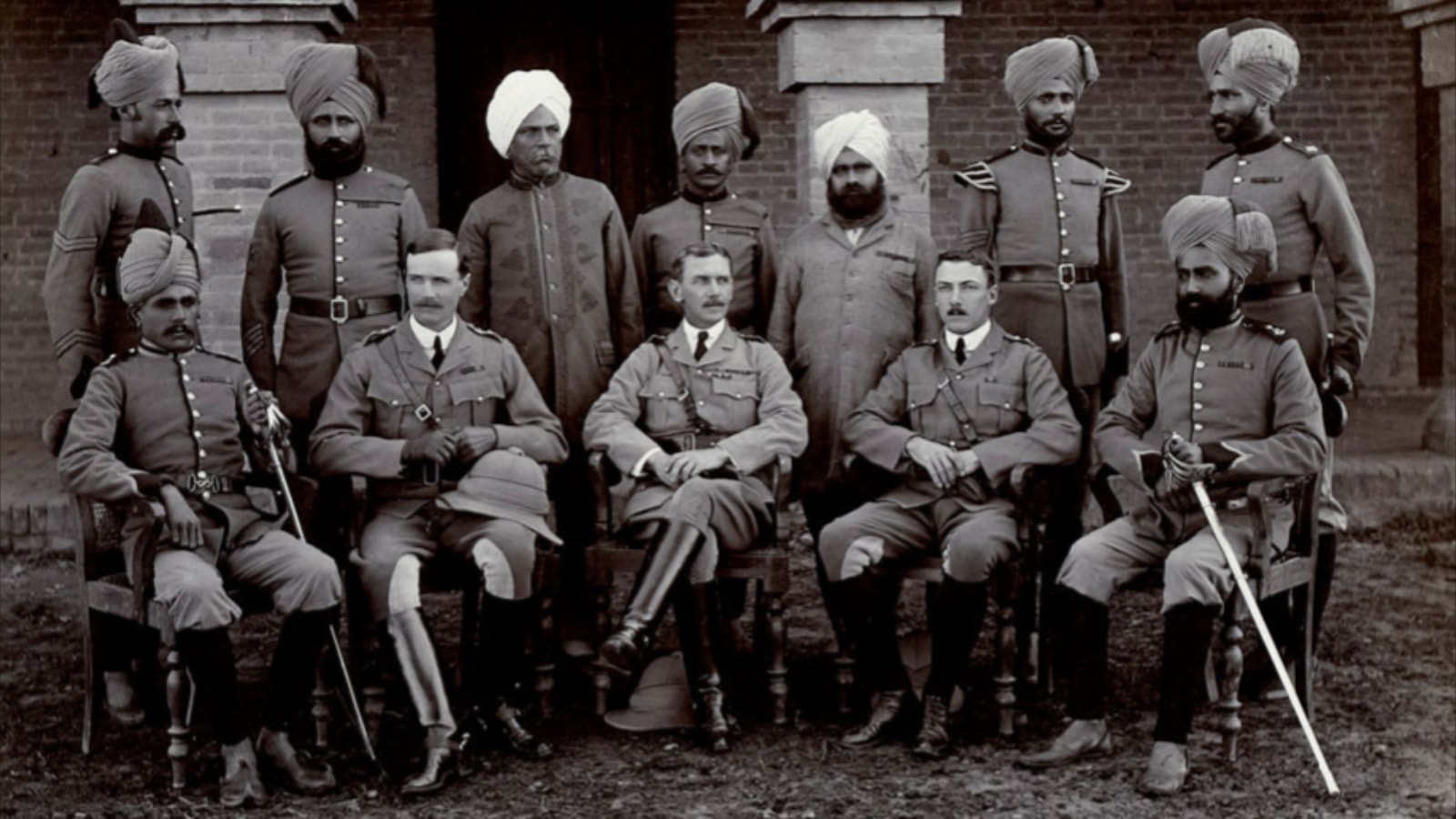
Documents in the national archives show that the issue arose in 1898, when commanding officers of Punjab Frontier Force regiments complained about the difficulty in recruiting Jat Sikhs for those regiments (also known as the Piffers).
Among the reasons cited by the commanding officers were the lack of physical fitness of Jat Sikhs, an increase in agricultural opportunities, preference for civil life, diversion of recruits towards new Sikh regiments, and manpower drain to Myanmar and China.
Another key reason highlighted in the archives is the “decrease of the Gobind Sikhs and backwardness of the rising generation to take the ‘pahul’ (religious pledge of Sikh fraternity)”. Taking ‘pahul’ and being a baptised Sikh, so to speak, was a requirement in the regiments with Sikh troops.
The commander-in-chief of the Army advised several measures to improve the situation and the adjutant general wrote them down. The measures included recommendations that sepoys may be permitted to carry a sword or a gun without a licence; that the preferential right regarding the bearing of his cases in court should be affirmed, and that the fares of approved recruits brought by sepoys from their homes should be paid by the state.
“Canal extension in the Punjab has opened up fresh tracts of land for cultivation; and if a Sikh cannot only gain a living, but earn far more by agriculture than by army service, and at the same time live at home with his family, a backwardness on his part to enlist can easily be understood,” the Army’s internal correspondence notes.
Story continues below this ad
A note by Maj Gen W K Elles, the adjutant general, states that as far as the issue of Jat Sikhs taking “pahul” was concerned, the march of age was “hostile to the maintenance of Sikhism”. “Guru Gobind founded the brotherhood of Singhs in the middle of the 17th century, when the Punjab was under successive Mahomedan invasions. The sect was warlike in its essence, and since those days has always sunk or revived in proportion to the demand for active military service. The disinclination of the rising generation to take the ‘Pahul’ and complete the destiny to which they were born is a sign of the growth of luxury,” he wrote.
In what could be a mirror reflection of the state of affairs in Punjab in the 21st century, the senior Army officer noted at the end of the 19th century that “the youth born of Sikh parents learns in these days to love many things which, as a Singh, he would have to renounce; so he too often declines to put himself under the iron rule”.
Syphilis and alcohol
The military correspondence also discusses the effects of syphilis and alcohol, “which of late years has been gaining ground and undermining the health of the race”. Army officers reported that, of 187 recruits for the 1st Sikh Infantry, 108 were rejected by the medical officer because they tested positive for syphilis.
The comments of Colonel A G Ross, commanding officer of the 1st Sikh Infantry at Kohat, are very instructive and have found detailed mention in the archival documents.
Story continues below this ad
The colonel notes that many of the recruits who came in 1888 and 1889 had cut hair. “My attention was pointedly drawn to this in February 1886 when we were marching through the Malwai country back from the Delhi camp of Exercise. Many lads of cropped heads, sons of Sikh fathers-Sikh to the backbone, told me that they saw no use in taking the Pahul in peacetime. “Why should we not smoke? If war breaks out, we will go to Amritsar for the Pahul,” he quotes the Sikh youth as saying.
Colonel Ross further says these are Jats of good classes, sons of Sikh fathers of the Gonind branch, who do not smoke and live like Sikhs in all ways, save that they cut their hair and have not taken the Pahul.
“When enlisted, they take the Pahul in the regiment, and some of them, with cut hair, have taken the Pahul at Amritsar and have begun to let their hair grow. But the hair ought not in a Gobind Sikh family to have been cut, and hence the inference is fair that the tenets of the Sikh faith and rule are losing their hold on the Jat classes who were Sikhs of the Punjab and Malwai country,” the colonel says.
The same comment, made by the colonel in 1889, could apply to the situation in Punjab in 2026, too.
View original source — Indian Express ↗
Related stories

ESPN
SportsJun 14, 2026 · 1 min
How Ole Miss' Will Furniss is following in his fat...
ESPN

The Punch
NewsJun 14, 2026 · 1 min
Morocco would have beaten Brazil 3-1 with Osimhen or Lookman — Oliseh
The Punch
The Punch
NewsJun 14, 2026 · 1 min
Diaspora group seeks improved passport services in Poland, Central Europe
The Punch
The Punch
PoliticsJun 14, 2026 · 1 min
Ekiti 2026: APC mega rally to showcase Oyebanji’s overwhelming support — Campaign council
The Punch