Indian Express
Indian Express··3 min read
India, China in talks over joint UNESCO nominations for Xuanzang’s work
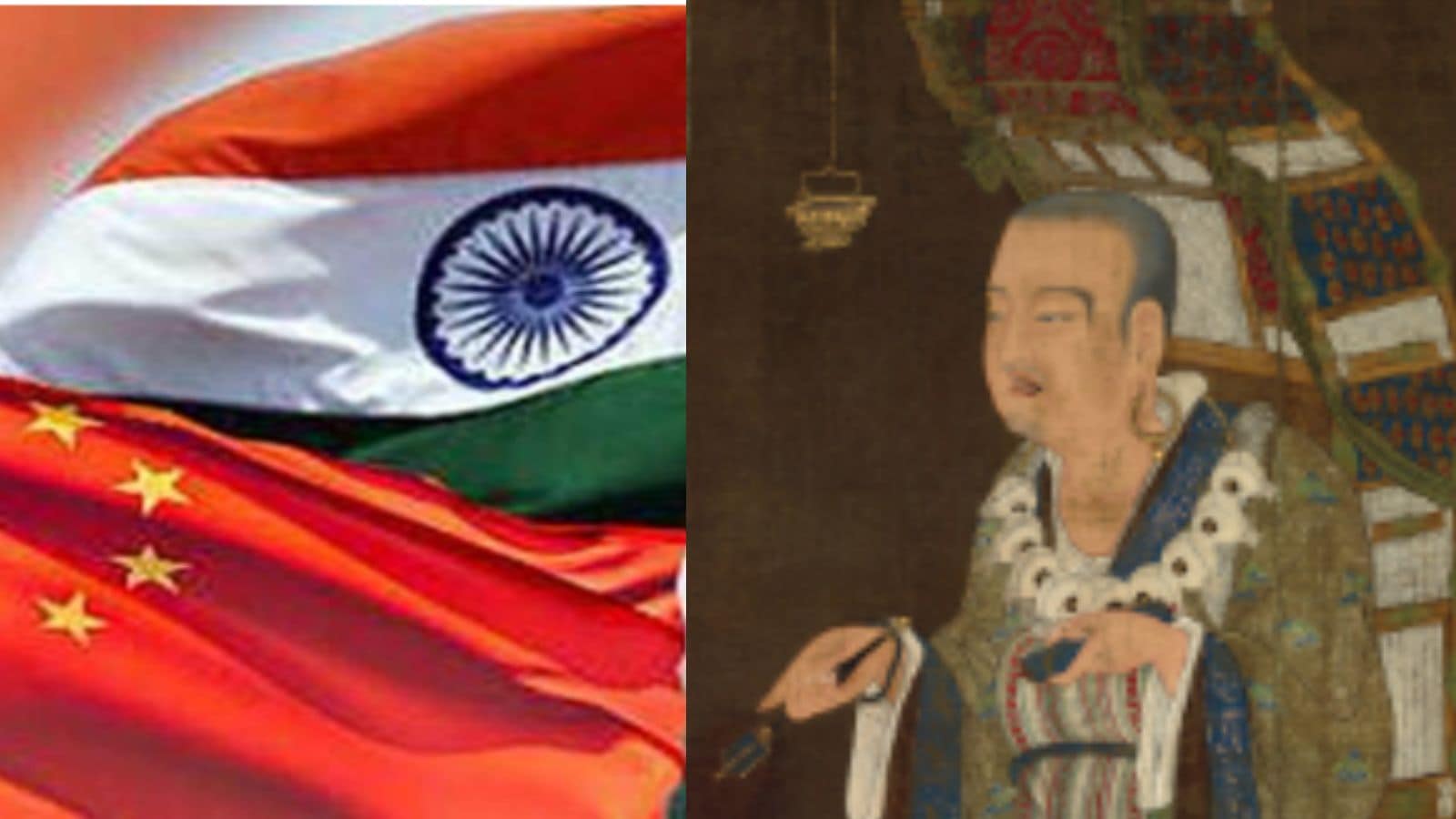
To speed up the process of safeguarding heritage, the BRICS countries are deliberating on filing joint nominations for various UNESCO lists. In this line, India and China are in advanced stages of discussions over a joint nomination for ‘The Great Tang Records on the Western Regions’, a narrative of Chinese Buddhist monk and scholar Xuanzang’s travels through medieval India in the 7th century.
The proposal, led by China and to be supported by India, is presently under consideration with the Ministry of External Affairs, as per sources. China had earlier reached out through diplomatic channels to convey an interest in pursuing a joint nomination for an inscription in UNESCO’s Intangible Cultural Heritage List.
The accounts of Xuanzang, also known as Hiuen Tsang, who spent 19 years travelling through India, remain a source for the study of early medieval India. He studied at the Nalanda University and captured the political, social and religious practices of the time in his accounts.
India also aims at securing a place for Panchtantra on the UNESCO list along with Iran as the fables have been a staple of Persian literature and folklore for over 1,500 years; as also for the philosophy of Satyagraha along with South Africa, official sources told The Indian Express.
This has come out of deliberations at the recent BRICS Culture Working Group meeting under India’s chair, which was attended by delegations from Brazil, China, South Africa, the UAE, Indonesia and Iran, with representatives from Russia, Ethiopia, and Egypt joining in hybrid mode.
The second meeting of the BRICS Culture Working Group was held in Varanasi earlier this month. At the inaugural session, Union Culture Secretary, Vivek Aggarwal, highlighted that BRICS countries are home to some of the world’s oldest civilisations while also representing vibrant and evolving contemporary cultural landscapes.
The recommendations from the Second Culture Working Group meeting will be sent to the BRICS Cultural Track ministerial meeting in August in Bhopal, so that they could be reflected in the joint statement by BRICS Culture Ministers.
Story continues below this ad
At a panel discussion on “Collaborative Approaches for Safeguarding Shared Heritage: Joint Nominations under the UNESCO World Heritage Convention, Intangible Cultural Heritage, and the Memory of the World Programme”, held during the meeting, delegates explored opportunities for collaborative nominations among BRICS countries.
The idea is to skip the queue by filing joint nominations since each country is allowed only two dossiers during the two-year cycle of UNESCO heritage lists with most BRICS nations having a lot of heritage and civilisational agenda that needs to be safeguarded.
As per officials, there is no limit on countries filing joint nominations, with the dossier led by one country, and supported by others.
The joint nominations, in fact, would be a diametrically opposite position from earlier stances that India and China took over heritage and legacy matters at various UNESCO fora.
Story continues below this ad
In 2017, as India had sent Sowa-Rigpa, the Tibetan system of medicine, as its official entry for UNESCO’s Intangible Cultural Heritage list, China had also sent a similar entry, claiming Sowa-Rigpa as its own.
To avoid such instances, the delegates also discussed keeping the other in loop within the BRICS framework to prevent concurrent dossiers for the same item.
Ramesh C Gaur, Dean, Indira Gandhi National Centre for the Arts (IGNCA), the Indian government’s nodal agency for preparing and presenting these nominations, said, “BRICS nations have a lot of common, overlapping heritage — be it the Ramayana traditions which are equally popular in India and Indonesia, the Buddhist scriptures common to India and China, or the Panchatantra fables in India and Iran. So if we leverage joint nominations, we can achieve a lot more towards safeguarding our civilisational heritage.”
Why joint nominations
The idea is to skip the queue since each country is allowed only two dossiers during the two-year cycle of UNESCO heritage lists, and most BRICS nations have a lot of heritage that needs safeguarding. As per officials, there is no limit on nations filing joint nominations, with the dossier led by one country, backed by others.
View original source — Indian Express ↗
Related stories

The Punch
BusinessJun 14, 2026 · 1 min
SSDC chairman demands transparency, accountability from board
The Punch
The Punch
NewsJun 14, 2026 · 1 min
FCT residents decry rising cost of tomatoes
The Punch
The Punch
PoliticsJun 14, 2026 · 1 min
Mideast deal still on despite Israeli strikes killing three in Beirut — Trump
The Punch
The Punch
NewsJun 14, 2026 · 1 min
Police to begin crackdown on vehicles without clear number plates in Lagos
The Punch