Indian Express
Indian Express··4 min read
Delhi CM joins mega cleanliness drive on Yamuna riverbank, calls for public participation
3 min readJun 14, 2026 08:09 PM IST
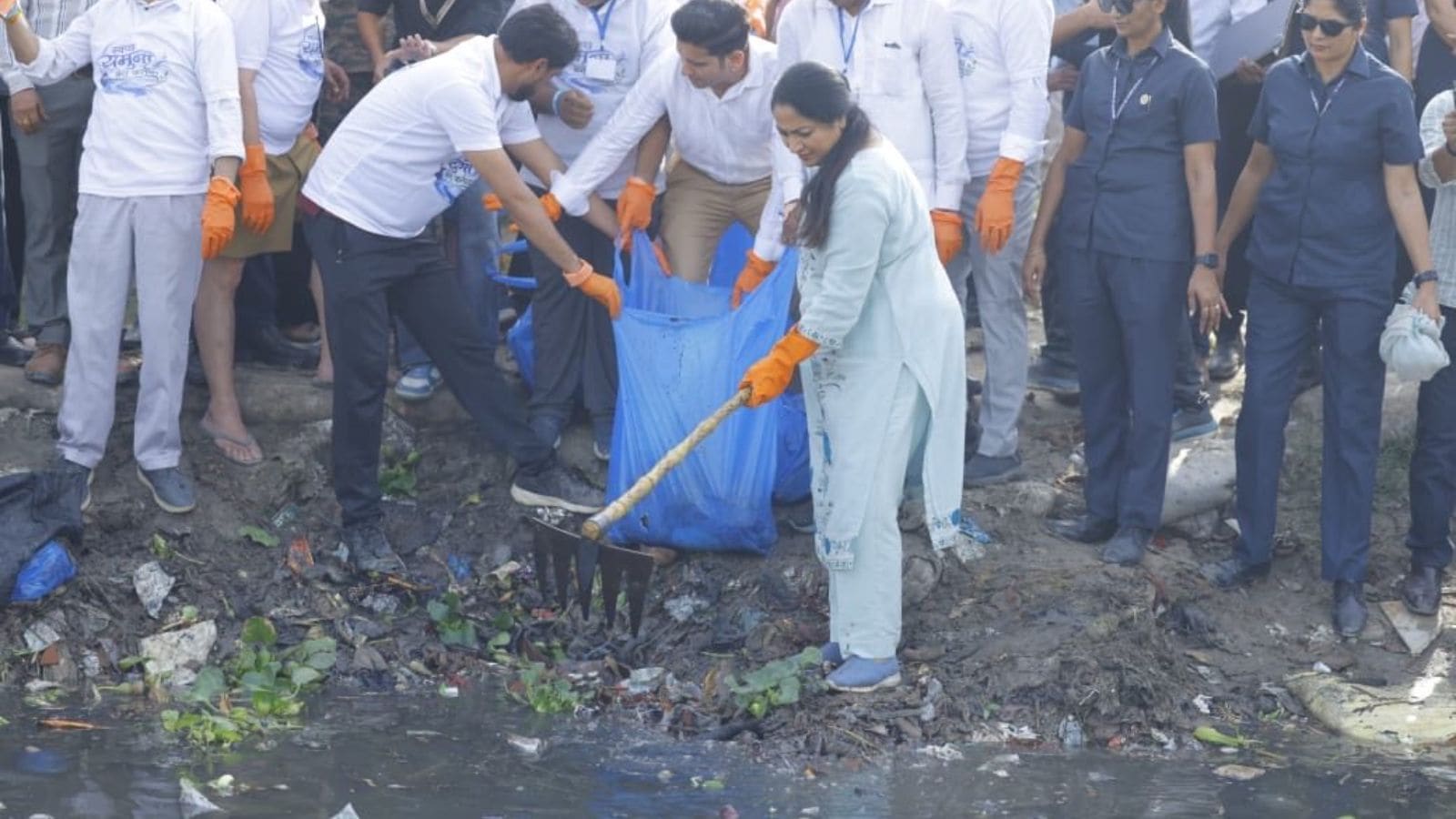
Describing the Yamuna as a source of faith, culture and life for crores of people, Gupta appealed to residents not to throw plastic waste, religious offerings, flowers, garlands, idols or other materials into the river. (Image: @gupta_rekha/X)
“Maintaining the cleanliness of the Yamuna is not solely the responsibility of the government but the duty of every citizen,” Chief Minister Rekha Gupta said on Sunday as she joined a mega cleanliness drive along the riverbank, with thousands of volunteers participating across 28 locations in Delhi.
The Delhi government organised a simultaneous clean-up campaign at 28 ghats and riverfront sites as part of the Yamuna Riverbank Cleanliness Campaign 2026. Gupta participated in the drive at Geeta Colony Ghat, where she joined volunteers and residents in removing waste from the riverbank.
Describing the Yamuna as a source of faith, culture and life for crores of people, Gupta appealed to residents not to throw plastic waste, religious offerings, flowers, garlands, idols or other materials into the river. She added that a significant quantity of broken idols, garments used for deities and worship material wrapped in plastic were removed during the drive, highlighting the need for behavioural change among citizens.
According to the government, thousands of volunteers from more than 500 social, religious and community organisations participated in the campaign across nearly 22 kilometres of the riverfront. The drive, which began at 6 am, went on for four hours.
Delhi ministers Parvesh Sahib Singh, Pankaj Singh, Ravinder Indraj, and Delhi Assembly Speaker Vijender Gupta also participated in the campaign at different ghats. BJP MPs Ramvir Singh Bidhuri, Manoj Tiwari and Swati Maliwal, and Delhi BJP president Harsh Malhotra also took part, along with other party leaders and workers.
Addressing volunteers at Hathi Ghat near ITO, Water Minister Parvesh said the scale of participation reflected growing public awareness about the river’s condition. “The overwhelming participation of thousands of Delhiites in today’s drive across 28 ghats was truly inspiring. At Hathi Ghat, ITO, I witnessed people from all walks of life — children, youth, women, senior citizens, volunteers and social organisations — coming together with a shared sense of responsibility towards our Yamuna,” he said.
“Yamuna is not just a river; it is an integral part of Delhi’s cultural, spiritual and historical identity. Ensuring a clean and rejuvenated Yamuna for future generations is a collective responsibility that goes beyond governments and institutions,” he added.
Story continues below this ad
The CM said similar drives would continue in the Capital, adding that sustained public participation could help restore the river.
Speaking about ongoing Yamuna rejuvenation projects, Gupta said works worth over Rs 1,000 crore had been approved. Among those are 12 decentralised sewage treatment plants in Najafgarh, being developed under the AMRUT scheme at a cost of Rs 860 crore to prevent untreated sewage from entering Najafgarh drain and the Yamuna, she said. The government is also undertaking the upgradation of the Keshopur sewage treatment plant and other water conservation initiatives.
The campaign covered locations including Geeta Colony Ghat, Nizamuddin Ghat, Kalindi Kunj, ITO Ghat, Nigam Bodh Ghat, Kudesia Ghat, Sarai Kale Khan, Yamuna Bank and sites near the Signature Bridge.
During the programme, participants took a pledge not to dump waste, religious offerings, plastics or other materials into the river and to spread awareness about keeping the Yamuna clean.
© The Indian Express Pvt Ltd
Devansh Mittal is a Correspondent at The Indian Express, based in the New Delhi City bureau. He reports on urban policy, civic governance, and infrastructure in the National Capital Region, with a growing focus on housing, land policy, transport, and the disruption economy and its social implications.
Professional Background
Education: He studied Political Science at Ashoka University.
Core Beats: His reporting focuses on policy and governance in the National Capital Region, one of the largest urban agglomerations in the world. He covers housing and land policy, municipal governance, urban transport, and the interface between infrastructure, regulation, and everyday life in the city.
Recent Notable Work
His recent reporting includes in-depth examinations of urban policy and its on-ground consequences:
An investigation into subvention-linked home loans that documented how homebuyers were drawn into under-construction projects through a “builder–bank” nexus, often leaving them financially exposed when delivery stalled.
A detailed report on why Delhi’s land-pooling policy has remained stalled since 2007, tracing how fragmented land ownership, policy design flaws, and mistrust among stakeholders have kept one of the capital’s flagship urban reforms in limbo.
A reported piece examining the collapse of an electric mobility startup and what it meant for women drivers dependent on the platform for livelihoods.
Reporting Approach
Devansh’s work combines on-ground reporting with analysis of government data, court records, and academic research. He regularly reports from neighbourhoods, government offices, and courtrooms to explain how decisions on housing, transport, and the disruption economy shape everyday life in the city.
Contact
X (Twitter): @devanshmittal_
Email: [email protected] ... Read More
Stay updated with the latest - Click here to follow us on Instagram
Tags:
Rekha Gupta
Yamuna cleaning
View original source — Indian Express ↗
Related stories

The Punch
BusinessJun 14, 2026 · 1 min
SSDC chairman demands transparency, accountability from board
The Punch
The Punch
NewsJun 14, 2026 · 1 min
FCT residents decry rising cost of tomatoes
The Punch
The Punch
PoliticsJun 14, 2026 · 1 min
Mideast deal still on despite Israeli strikes killing three in Beirut — Trump
The Punch
The Punch
NewsJun 14, 2026 · 1 min
Police to begin crackdown on vehicles without clear number plates in Lagos
The Punch