Indian Express
Everything you need to know about ligers — the extraordinary lion-tiger hybrid
4 min readNew DelhiJun 14, 2026 08:00 PM IST
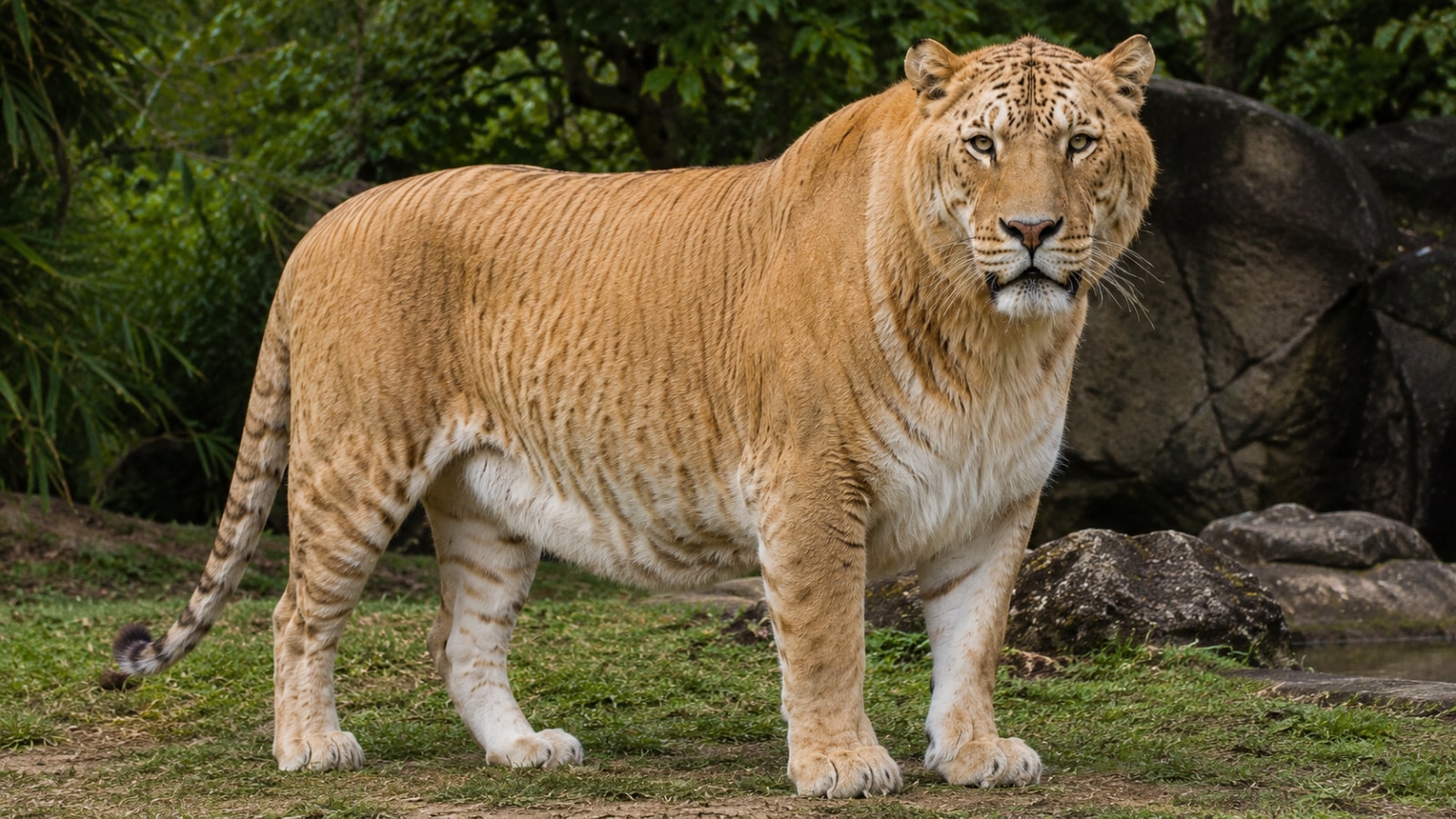
Liger is the result of mating a male tiger with a female lion (Image: Ai generated)
What happens when two of the world’s most powerful big cats cross paths? You get a liger — a rare hybrid that combines traits of both a lion and a tiger, often growing even larger than either parent.
With lion-like features, tiger stripes, and a size that can seem almost unbelievable, ligers have fascinated animal lovers for decades. But behind the wow factor lies a more complicated story about genetics, captivity, and ethics.
First, what exactly is a liger?
A liger is the offspring of a male lion and a female tiger (tigress). Because lions and tigers belong to the same genus — Panthera — they are genetically similar enough to produce offspring.
But before you imagine this happening in the wild, here’s the catch: lions and tigers rarely cross paths naturally.
Wild lions are mostly found in Africa, with a small Asiatic lion population in India’s Gir forest, while tigers live across Asia. Their habitats, behaviours, and lifestyles are very different — lions are social and live in prides, while tigers are largely solitary.
That’s why almost all known ligers are born in captivity. The first known breeding of a lion and a tigress in captivity likely occurred sometime during the late 1700s, as per Britannica Encyclopedia.
The reverse pairing exists as well. A male tiger and lioness produce a tigon, which is a different hybrid altogether.
Story continues below this ad
Why are ligers so massive?
This is what makes them especially fascinating. Ligers are often considered the largest cats in the world, sometimes weighing more than 400 kg. However, there have been reports of some individual ligers weighing more than 1,000 kg (about 2,200 pounds).
The largest ligers often grow to lengths of more than 3.3 meters (10.8 feet). The reason lies in genetics. Scientists believe lion fathers tend to pass on genes that encourage growth, while tigress mothers may not pass the same growth-limiting signals that would naturally regulate size.
The result? A hybrid that can grow unusually large. Think of it as nature’s genetic volume knob accidentally being turned up.
What do they look like?
Ligers look like nature couldn’t quite decide.
They may have:
Story continues below this ad
a lion-like face and broad body
faint tiger stripes
golden or sandy fur
a small mane in some males
tiger-like behaviours, including an unusual fondness for swimming
No two look exactly alike because genetics can vary.
The ethical question around ligers
This is where things get uncomfortable. Ligers may look spectacular, but conservationists and animal welfare experts have long questioned whether they should be bred at all. Because these hybrids are usually created in captivity, they are not part of any conservation effort. They do not help protect endangered lions or tigers. And their unusual size can come at a cost. Experts say ligers may face health issues such as:
joint and mobility problems
heart strain
developmental complications
neurological concerns
fertility problems, especially in males
In simple terms: just because an animal can be created doesn’t always mean it should be.
So, are ligers natural? Technically, yes — lions and tigers can produce offspring because they are closely related.
Story continues below this ad
But in reality, modern ligers are overwhelmingly a human-created phenomenon because the circumstances needed for this pairing almost never occur naturally. That makes the liger both scientifically fascinating and ethically controversial. A majestic marvel? Perhaps. A conservation success story? Not really.
View original source — Indian Express ↗
Related stories

The Punch
EntertainmentJun 14, 2026 · 1 min
NDDC boss becomes paramount ruler in Bayelsa
The Punch

Deadline
EntertainmentJun 14, 2026 · 1 min
Yahya Abdul-Mateen II On What He Loves About ‘Wonder Man’
Deadline

Indian Express
EntertainmentJun 14, 2026 · 1 min
Soha Ali Khan says ‘breastfeeding shouldn’t be romanticised’; psychologist explains why
Indian Express

Variety
EntertainmentJun 14, 2026 · 1 min
‘Grantchester’: 10 Seasons of ‘Gorgeous’ Vicars, So Many Murders and What’s in Store for Its Final Season: ‘I’m Going…
Variety