Indian Express
Indian Express··3 min read
Why Ladakh’s agreement with Centre has hit a roadblock
THE AGREEMENT between the Ministry of Home Affairs and civil society leaders of Ladakh on giving the region a “representative administration” appears to have run into rough weather over non-inclusion of certain points in the minutes of the meeting (MoM) held on May 22, The Indian Express has learnt.
Sources said that while a broad agreement has been reached, the MoM prepared by the MHA did not include many crucial points that had been agreed upon. This has led to the Ladakh leaders not signing the MoM. The MHA has also not yet scheduled another meeting.
According to sources, the point of contention is the non-inclusion of a clause that would allow the elected Ladakh administrative head to write the Annual Performance Appraisal Report of the Chief Secretary and have a say in transfer and posting of bureaucrats. Another omission, sources said, has been that a solution to Ladakh’s demands for Sixth Schedule would be found under a statute modelled on sub-articles A, F and G of Article 371.
“It was the MHA which had come up with a proposal during the last meeting. We had already given our proposal on our demands for Sixth Schedule and statehood. They asked us for flexibility and came up with this Article 371 proposal and self-administration under the UT structure. We accepted it. So we were a bit surprised to not find them mentioned in the MoM,” a Ladakh leader said.
An official of the MHA said that not all fine details are written in the MoM, and largely the broad agreements are mentioned. “Things are being worked out,” the official said.
However, another Ladakh leader said, “The issue of services being under the elected administrative head is of great importance to us. We are anyway not being given statehood, not even a UT with legislature as it is elsewhere. We are being given an elected administrative head with executive, legislative and revenue powers. He is merely being called a Chief Minister. If the CM has no jurisdiction over services, he will become toothless. We know what has happened in other UTs. So we have to have it in writing.”
Government sources said this was a minor hiccup and negotiations were on track. Yet, the MHA has not scheduled another meeting with Ladakh leaders. The last meeting with the leaders, held on May 22, was a sub-committee meeting. The meeting of the High-Powered Committee on issues concerning Ladakh — these are held under the leadership of MoS Home Nityanand Rai — is yet to be scheduled.
In a breakthrough after months of protests, negotiations, and political mobilisation in Ladakh, representatives of the Apex Body, Leh (ABL) and Kargil Democratic Alliance (KDA) had on May 22 claimed that they had reached “in-principle understanding” with the Centre on “restoring democracy in Ladakh” and providing “Constitutional safeguards on the lines of Article 371 A, F, and G”, following talks with senior Union Home Ministry officials.
“In this model, the legislative, executive and financial powers will rest with elected representatives through a Union Territory-level legislative body,” the ABL and KDA had said in a statement. “All bureaucrats of the UT, including the Chief Secretary, will come under the executive head of the UT-level elected body (proposed to be Chief Minister).”
Incidentally, the MHA, which was also supposed to issue an official statement on the agreement, never came out with one.
The May 22 developments had marked the most substantive movement yet on Ladakh’s political demands since the region was separated from the erstwhile state of J&K and made a Union Territory without a legislature in 2019. While the move was initially welcomed by many in Leh, concerns steadily grew in both Leh and Kargil over the absence of Constitutional safeguards protecting land, jobs and cultural identity, as well as the concentration of administrative authority in the bureaucracy.
The ABL and KDA — umbrella groupings representing civil society, political and religious organisations from Leh and Kargil, respectively — have since jointly spearheaded an agitation demanding statehood, Sixth Schedule status, constitutional protections, a separate Public Service Commission and enhanced parliamentary representation for Ladakh.
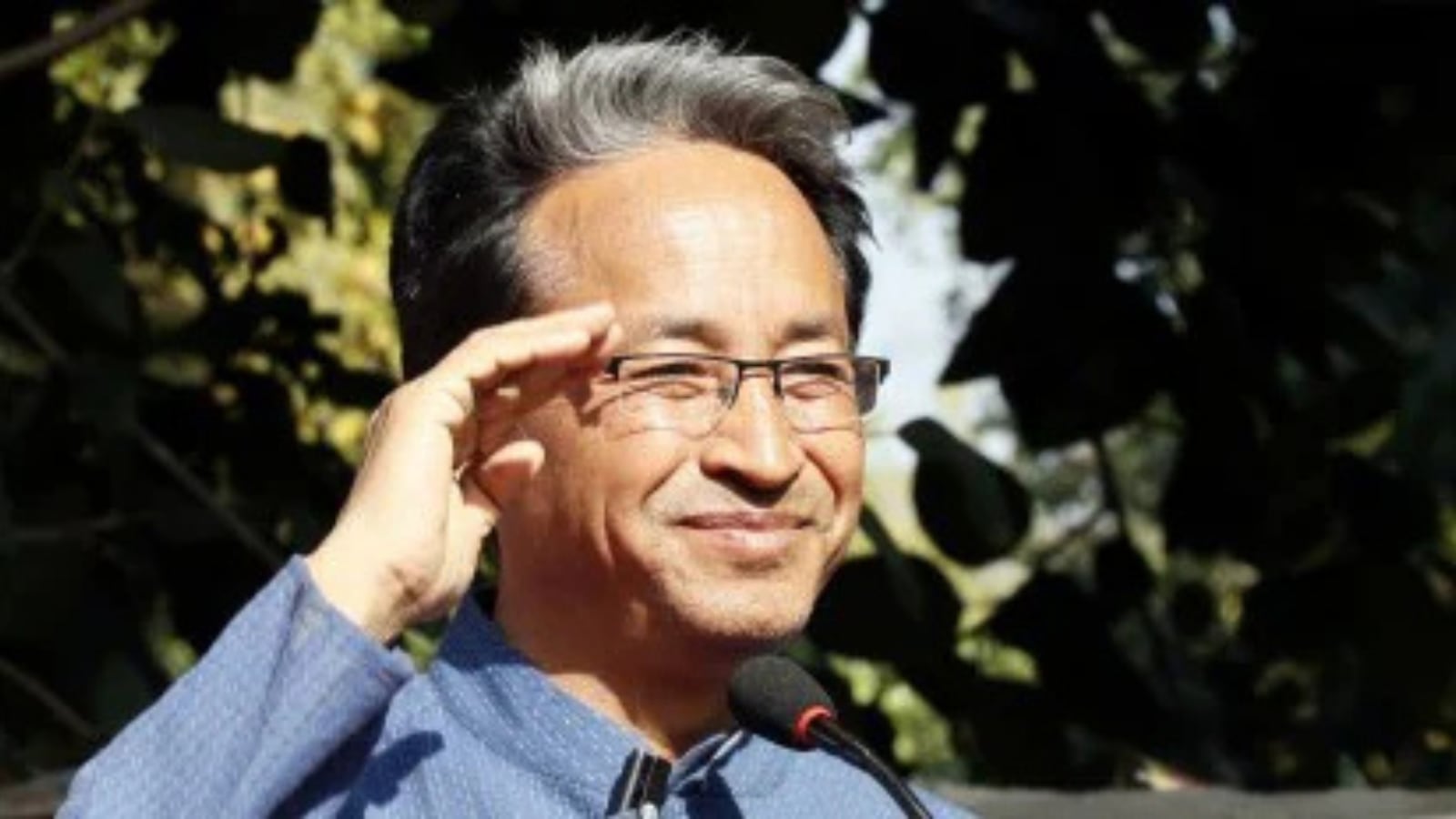
The movement gained national prominence through activist Sonam Wangchuk, who was also present in the May 22 meeting. Wangchuk had led fasts and public campaigns pressing the Centre to fulfil assurances made after the 2019 reorganisation of J&K.
View original source — Indian Express ↗
Related stories

The Punch
NewsJun 14, 2026 · 1 min
FCT residents decry rising cost of tomatoes
The Punch
The Punch
PoliticsJun 14, 2026 · 1 min
Mideast deal still on despite Israeli strikes killing three in Beirut — Trump
The Punch
The Punch
NewsJun 14, 2026 · 1 min
Police to begin crackdown on vehicles without clear number plates in Lagos
The Punch
The Punch
NewsJun 14, 2026 · 1 min
Police debunk video claiming 300 Lakurawa terrorists entered Oyo
The Punch