Indian Express
Indian Express··3 min read
This 14-yr-old is mapping a more accessible India — One wheelchair ramp at a time
Written by: Atashi Sinha
3 min readPuneJun 14, 2026 08:43 PM IST
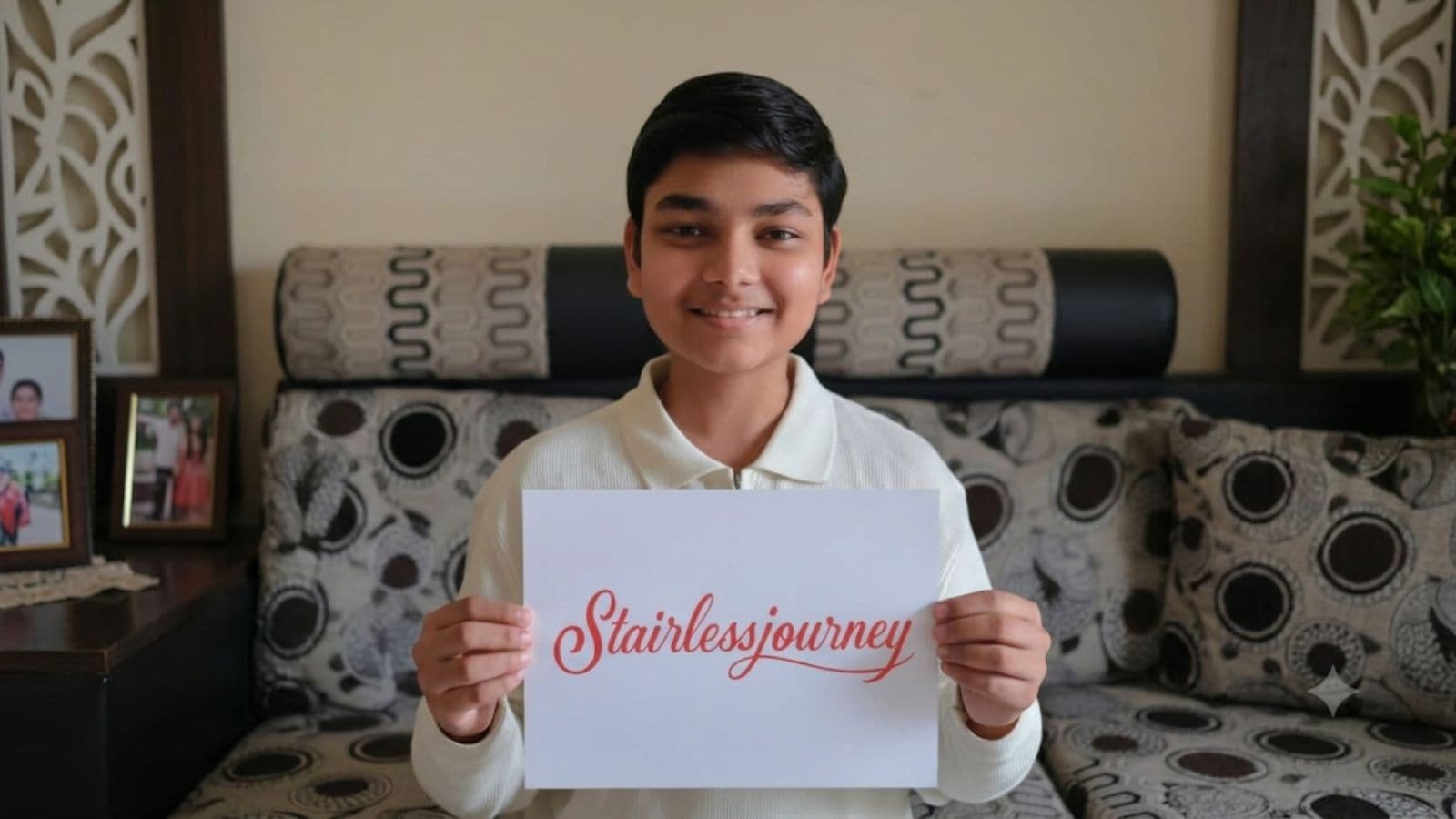
Living with osteogenesis imperfecta, a genetic condition causing extreme bone fragility, Pratik Mansingh Singhare's life was drastically altered after a routine scooter commute in 2022 left him with fractures in both legs. (Express)
In 2022, on an ordinary school commute, Pratik Mansingh Singhare fell from a scooter and fractured both legs. For a boy already living with osteogenesis imperfecta — a condition that makes bones fragile enough to break under the slightest strain — the fall changed everything.
What followed was a year of bed rest, isolation, and a permanent disability that would alter the course of his life.
“During that time, I felt depressed. I started writing because I had nothing else to do,” he says.
That writing became a lifeline — and eventually a book, Where Hope Begins, published in late 2024 and early 2025.
But it also became something else: a window into a world Pratik hadn’t fully seen before. As he worked on the manuscript, he found himself noticing, again and again, how few public spaces in India were built for people like him — how a missing ramp or a narrow doorway could quietly decide where someone was and wasn’t allowed to go.
That observation led to the organisation Stairless Journey.
Three years after the accident that nearly ended his story, fourteen-year-old Pratik from Pune is now mapping accessibility across India, one verified location at a time.
Founded in February 2026, Stairless Journey has already verified more than 50 wheelchair-friendly spaces across Pune, Goa, and Kolkata, documenting accessibility features through Instagram so that disabled visitors know, before they arrive, whether a place can actually welcome them.
A dedicated website, Pratik says, is next.
Story continues below this ad
But the numbers, he insists, aren’t really the point.
What excites him more is the ripple effect: several featured establishments have told Stairless Journey that the verification process pushed them to take accessibility seriously for the first time — some have even cited their verified status while applying for awards and recognition. Meanwhile, disabled visitors who had no idea these spaces existed have started showing up.
“Awareness creates footfall, footfall creates pride, and pride creates more access,” Pratik says — a line that doubles as the initiative’s quiet philosophy.
The organisation’s work extends beyond mapping. In May 2026, it hosted The Access Screen — described as India’s first curated online disability-awareness film screening — featuring Fragile, a film on Fragile X syndrome, followed by a conversation with Shalini Kedia, Chairperson of the Fragile X Society of India. Just 13 participants were selected, by design, to keep the conversation intimate and substantive.
Story continues below this ad
None of this came easily. After his accident, Pratik’s hopes of returning to his old school stalled amid uncertainty over admission, eventually leading him to the National Institute of Open Schooling, where he continues his education today.
Stairless Journey, too, struggled in its early days to find support — until volunteers, mostly students between 16 and 26, began joining through LinkedIn and word of mouth. Throughout, Pratik credits his parents, Mansingh and Manisha Singhare, and his sister Manali — who first encouraged him to publish his writing — as the steady ground beneath everything he’s built.
Now, as Stairless Journey prepares to expand into new cities, its teenage founder is working toward something simple in concept and enormous in practice: a country where accessibility isn’t the exception anyone has to search for — but the norm everyone can expect
© The Indian Express Pvt Ltd
View original source — Indian Express ↗
Related stories

ESPN
SportsJun 14, 2026 · 1 min
Every team's odds to win the World Cup: Brazil's o...
ESPN

The Punch
NewsJun 14, 2026 · 1 min
Power debt: Atiku slams ₦4tn bond, demands accountability
The Punch

ESPN
SportsJun 14, 2026 · 1 min
Koepka WDs from Canadian Open with hand injury
ESPN
The Punch
NewsJun 14, 2026 · 1 min
Why I wore black to Alex Ekubo’s funeral — Daddy Freeze
The Punch