CNA
Trump warns Israel, Iran not to 'blow it' after new strikes on Beirut threaten ceasefire deal
World
The conflict between Israel and Iran-aligned Hezbollah in Lebanon was reignited by the start of the US-Israeli war against Iran more than three months ago.
15 Jun 2026 03:14AM
(Updated: 15 Jun 2026 03:20AM)
DUBAI/WASHINGTON: President Donald Trump criticised an Israeli strike on Lebanon that could complicate attempts to finalise a framework deal between the United States and Iran on Sunday on ending their war, but said an agreement was nonetheless close.
Iranian negotiator Mohammad Baqer Qalibaf said Israel's attack on the southern suburbs of Beirut, which Israel said targeted Iranian-backed Hezbollah militants, showed the US lacked the will or ability to fulfil its commitments.
Tehran warned of a "strong response", with its top joint military command saying the "finger (is) on the trigger" ready to fire at the "enemy's heart".
In a post on his Truth Social platform, Trump said: "This morning’s attack on Beirut should not have happened, particularly on a special day when we are so close to a Peace Deal with Iran."
"We are very close to a Deal that will bring peace to the region, including to Lebanon, and all sides should stand down," he wrote.
ISRAEL-HEZBOLLAH CONFLICT REIGNITED BY IRAN WAR
The conflict between Israel and Iran-aligned Hezbollah in Lebanon was reignited by the start of the US-Israeli war against Iran more than three months ago.
Israel has said it is not party to the planned US-Iran deal and Prime Minister Benjamin Netanyahu has clashed with Trump over US demands that Israel curb military action in Lebanon to allow Washington to reach a deal with Tehran.
"If you lack the will and ability to fulfil your commitments, speaking of continuing the path is not possible," Qalibaf wrote on X, castigating the US.
Trump and mediator Pakistan said on Saturday they expected the deal would be signed on Sunday, the US president's 80th birthday. An official involved in the talks said on Sunday that mediators were optimistic the deal was "nearly over the line," and a Kremlin aide said Trump had told Russian President Vladimir Putin by phone on Sunday that a deal was near.
But Tehran cast doubt over the timing even before the strike on Beirut, saying on Saturday that the signing would not be on Sunday though it could happen in the coming days.
A senior Iranian official told Reuters that, under the terms of the draft deal, the US would agree to release US$25 billion of frozen Iranian assets, while Tehran would agree not to produce or acquire nuclear weapons.
Qatari negotiators flew to Tehran on Sunday morning as part of efforts to finalise the agreement, a source with knowledge of the situation told Reuters.
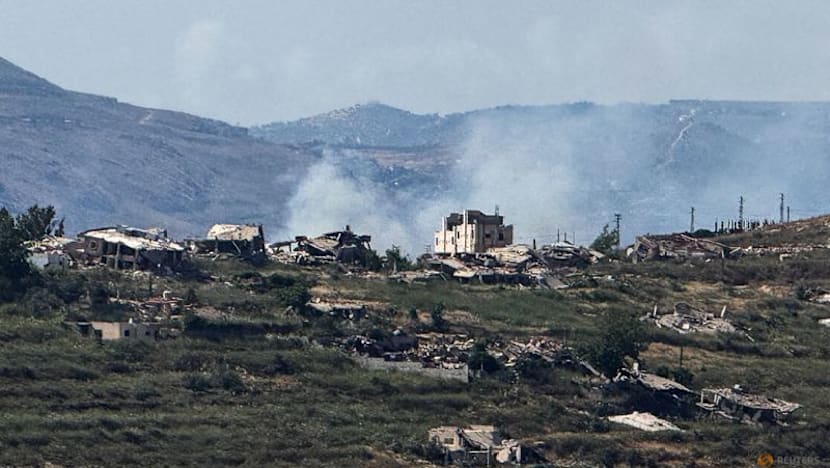
The Israeli military said on Sunday Hezbollah had launched three projectiles towards communities in northern Israel. Israel then fired at what it called Hezbollah targets in the Dahiyeh neighbourhood of Beirut in an attack that Lebanon's civil defence said killed three people.
Fox News quoted an unidentified diplomat involved in the talks as saying the Israeli strikes were complicating efforts to finalise the US-Iran deal, and describing them as an attempt to sabotage those efforts.
Israel did not respond to the assertion.
Israel has said it will retain freedom of operations in Lebanon. Tehran has made a full ceasefire there an important component of its demands.
In Sunday's post, Trump said there "should be no more attacks by Israel anywhere in Lebanon, but there should also be no more attacks by any other party, including Hezbollah, against Israel".
UNCERTAINTY OVER TIMING OF SIGNING
Thousands of people have been killed, mostly in Iran and Lebanon, since the US and Israel began attacks on Iran on Feb 28. Iran has struck Israel and Gulf states hosting US bases, and has effectively blockaded the Strait of Hormuz, a vital artery for global oil supplies, pushing up global energy prices. The US has blocked Iranian ports.
Iran's Fars news agency, citing an informed source, said on Sunday Tehran had not yet taken a final decision on the framework agreement, with reviews of its political, legal and technical aspects under way.
Draft terms described to Reuters by multiple sources indicate the US would begin releasing frozen Iranian assets and waive sanctions on its oil exports, in return for Iran opening the Strait of Hormuz.
Iran's nuclear programme would then be addressed during a 60-day period of talks.
The senior Iranian official told Reuters on Sunday that Iran agreed to maintain the nuclear status quo, including no uranium enrichment or expanding nuclear facilities, until a final deal was reached.
A US official said the agreement would ultimately lead to the dismantling of Iran’s nuclear programme, with its stockpile of highly enriched uranium to be destroyed and removed.
The senior Iranian official said the draft deal would allow Iran, which denies seeking a nuclear bomb, to dilute its enriched uranium inside the country.
US Defense Secretary Pete Hegseth said the end of the naval blockade on Iran would "start immediately" once an accord was signed, but the timing would depend on the strait reopening. He said the US had the capacity to clear the strait to ensure safe transit.
Hegseth, speaking on CBS News' Face the Nation, said the US planned to keep enough military force in the region to "make sure the military option is still there" during negotiations on Iran's nuclear programme.
At pro-government rallies across Iran on Saturday night, residents and news agencies reported that hardliners opposed to the framework agreement loudly voiced their dissatisfaction.
A resident in the northeastern city of Mashhad told Reuters that some protesters chanted "Death to the compromiser," in an apparent reference to Foreign Minister Abbas Araqchi.
Source: Reuters/fs
Related stories

The Punch
PoliticsJun 14, 2026 · 1 min
How Abacha dragged me into his coup — Abdulsalami
The Punch
The Punch
PoliticsJun 14, 2026 · 1 min
Ogun APC unveils Yayi’s running mate
The Punch

Euronews
PoliticsJun 14, 2026 · 1 min
Thousands protest G7 in Geneva as Trump, other leaders ready for summit in France
Euronews
BBC
PoliticsJun 14, 2026 · 1 min
Assisted dying returns to parliament as MP urges peers to 'finish the job'
BBC