Philippine Daily Inquirer
Philippine Daily Inquirer··6 min read
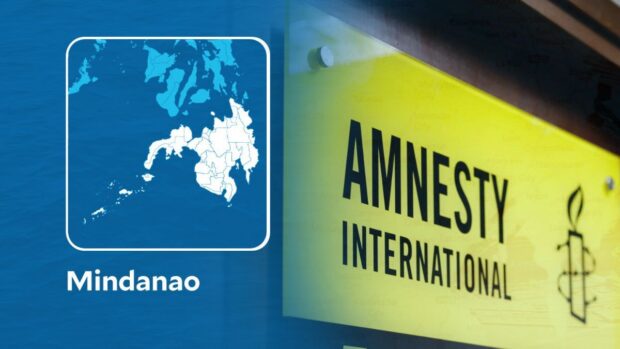
Amnesty: Mindanao pays price for years of impunity
MANILA, Philippines — As Mindanao reeled from a magnitude 7.8 earthquake on Monday, June 8, Amnesty International Philippines (AIPh) said conversations could no longer be limited to disaster preparedness or emergency response.
For AIPh, the dire human rights situation in Mindanao is the consequence of decades of impunity and the failure to hold the government to account for leaving communities vulnerable to precarious living conditions.
READ: LIVE UPDATES: Mindanao earthquake | June 11, 2026
Article continues after this advertisement
“Mindanao is paying the price of accountability failures. This is not simply a result of natural hazards, but unnatural disasters made possible by the lack of commitment of local government units to make certain that communities can thrive despite disasters,” AIPh said.
FEATURED STORIES
NEWSINFO
NEWSINFO
NEWSINFO
It said the issue is no longer whether government agencies can mobilize rescue operations after a disaster.
RELATED STORY: DepEd: Schools hit by Mindanao earthquake rise to 8,642
“This is the time for reckoning and looking into what the government owes the people of Mindanao after years of warnings, repeated tragedies, and missed opportunities to center human rights in governance and public service,” said AIPh section director Ritz Lee Santos III.
Disaster trail
As of Sunday, June 14, the National Disaster Risk Reduction and Management Council had recorded 61 deaths, 1,403 injuries and 40 missing people as a result of the earthquake that occurred off the coast of Sarangani.
Article continues after this advertisement
Most of the deaths were in Soccsksargen, with 33, while the rest were recorded in Davao Region.
A total of 724,000 people, or 173,000 families, were affected by the disaster, the NDRRMC said.
Article continues after this advertisement
READ: Mindanao earthquake death toll rises to 45 – NDRRMC
In 1976, a magnitude 8.1 earthquake also hit Mindanao, triggering a tsunami that devastated more than 700 kilometers of coastline bordering Moro Gulf in the Celebes Sea. Damage was estimated at P6.7 billion.
The earthquake resulted in 8,000 deaths, with the Philippine Institute of Volcanology and Seismology (Phivolcs) saying the tsunami was responsible for 85 percent of the deaths.
RELATED STORY: LIST: Killer earthquakes in the Philippines
In 2012, Mindanao was hit by Typhoon Pablo, which packed winds of more than 200 kilometers per hour and affected 711,682 households in 34 provinces, especially Davao Oriental, Compostela Valley, Bukidnon and Negros Oriental in the Visayas.
It claimed the lives of nearly 2,000 people.
READ: PH’s typhoon alley and the trail of destruction it brings
Late last year, Davao Oriental was hit by two consecutive magnitude 7.4 and 6.8 earthquakes that killed 10 people.
Dangerous neglect
At a press conference in Cagayan de Oro City, AIPh said that while the immediate response operations that saved lives and the tireless efforts of emergency responders were commendable, “rescue operations alone become futile when prior failures are not addressed by LGUs and when the national government lacks prevention efforts.”
It said this kind of governance places everyone in danger, including rescuers and front-liners.
“When buildings collapse and essential services become inoperable, communities are exposed to more risks that go beyond acts of nature,” AIPh said, adding that accountability issues, when left unaddressed, are more consequential than the disaster itself.
Santos said the rights to life and adequate housing impose obligations on the state to protect people from foreseeable disasters through effective regulations and risk reduction measures.
“The right to health requires governments to ensure that medical facilities remain functioning or alternatives are prepared during emergencies,” he said.
For Santos, “the government owes the Filipinos infrastructures that withstand climate hazards, yet Mindanao has repeatedly faced the worst impacts of climate emergencies because the government lacks the basic will to protect communities.”
Hold them to account’
“We have already seen Filipinos in protests calling for accountability over dubious public works contracts and irregular procurement practices, another rebuilding process after the recent earthquake, another opportunity for corruption,” Santos said.
Santos stressed that without the prosecution of those already charged, the cycle would persist not only in Mindanao but in the rest of the Philippines, which is hit by an average of 20 typhoons and 100 earthquakes a year.
RELATED STORY: Phivolcs logs over 2,000 aftershocks after Mindanao earthquake
AIPh called for stricter safeguards over reconstruction efforts, warning that post-disaster funding has historically been vulnerable to irregularities. It also expressed support for the enactment of the Independent People’s Commission (IPC) Act to establish independent civil society oversight over public resources.
The group warned that the earthquake’s impact extends beyond immediate humanitarian needs, as it has also disrupted ongoing efforts to strengthen marine ecosystems and protect the livelihoods of coastal communities in Mindanao.
“Fisherfolks in General Santos, Sarangani, Davao del Sur, and Zamboanga now face the combined pressures of environmental degradation, economic insecurity, business encroachment, and disaster recovery,” AIPh said.
All of these are converging threats: On one hand, climate change is making disasters more destructive and less predictable; on the other, food insecurity and economic vulnerability are deeply entrenched.
For Santos, together, these push communities closer to the brink of desperation.
“Climate change is producing new forms of harm that disproportionately affect marginalized populations,” Santos said.
Beyond calamities
AIPh also expressed concern over attacks on Lumad communities and human rights defenders across Mindanao, saying Indigenous leaders protecting ancestral lands, forests, water sources and ecosystems remain among those most at risk of red-tagging.
“Indigenous communities are not obstacles to development, they are among the most important defenders of our environment and among the strongest allies in confronting climate change. Yet they continue to face threats simply for protecting the ancestral lands to sustain their communities,” Santos said.
READ: CHR renews call to end red-tagging, citing ‘real and well-founded risk’
“For years, indigenous human rights defenders have faced intimidation, attacks, arbitrary arrests, and even killings,” he said, adding that red-tagging has become a dangerous tool that places Indigenous leaders at heightened risk simply for asserting their rights.
“The people of Mindanao have heard promises after every disaster, every tragedy, every crisis. What they are owed now is accountability. Without accountability, disasters become recurring injustices, and the most vulnerable continue to pay the price,” Santos said.
Over the past five years, Mindanao consistently posted one of the fastest-growing shares of regional allocations for the island’s six regions.
Based on the Department of Budget and Management’s (DBM) proposed budgets from 2021 to 2025, regional allocations rose from P3.199 trillion in 2021 to P4.057 trillion in 2025. The budget distribution covered seven regions in Luzon, three regions in the Visayas, six regions in Mindanao and Metro Manila.
Mindanao’s proposed allocation increased steadily throughout the period, rising from P594.2 billion in 2021 to P665.8 billion in 2022, P778.1 billion in 2023, P829.2 billion in 2024 and P940.3 billion in 2025.
Luzon, however, continued to receive the largest share of regional funding outside Metro Manila. Its proposed allocation grew from P1.105 trillion in 2022 to P1.221 trillion in 2023, P1.342 trillion in 2024 and P1.538 trillion in 2025.
The Visayas likewise saw steady increases, with allocations rising from P418.8 billion in 2021 to P721 billion in 2025.
Metro Manila, meanwhile, received some of the largest individual allocations during the period, peaking at P1.235 trillion in 2022 before declining to P997.7 billion in 2023 and stabilizing at P854.2 billion in 2024 and P857.9 billion in 2025.
Your subscription could not be saved. Please try again.
Your subscription has been successful.
In 2021, Metro Manila was reported together with the rest of Luzon under a combined allocation of P2.186 trillion. /dm
HELP MINDANAO EARTHQUAKE VICTIMS
The Inquirer Foundation is calling for support for communities devastated by the recent magnitude 7.8 earthquake that struck Mindanao.
In partnership with the Philippine Red Cross, the foundation is amplifying appeals for food, clean water and other critical assistance for affected families.
Donors may send contributions directly to the Philippine Red Cross through its official transfer channels, the complete list is available on the PRC’s Facebook page.
The Philippine Red Cross has activated its emergency fund campaign and deployed teams on the ground to provide medical services, distribute relief goods and extend psychosocial support to affected families.
View original source — Philippine Daily Inquirer ↗
Related stories

ESPN
SportsJun 15, 2026 · 1 min
The jock, the nerd and the Stanley Cup championshi...
ESPN

ESPN
SportsJun 15, 2026 · 1 min
Hurricanes' Staal, 37, oldest Conn Smythe winner
ESPN

ESPN
SportsJun 15, 2026 · 1 min
Keys to the offseason: Free agency plans for Hurri...
ESPN

The Punch
EntertainmentJun 15, 2026 · 1 min
Dad told us ‘I’m going home’ hours before his death – Late Kola Oyewo’s son
The Punch