Indian Express
Indian Express··4 min read
Our parched cities need to make every drop count, recycle water
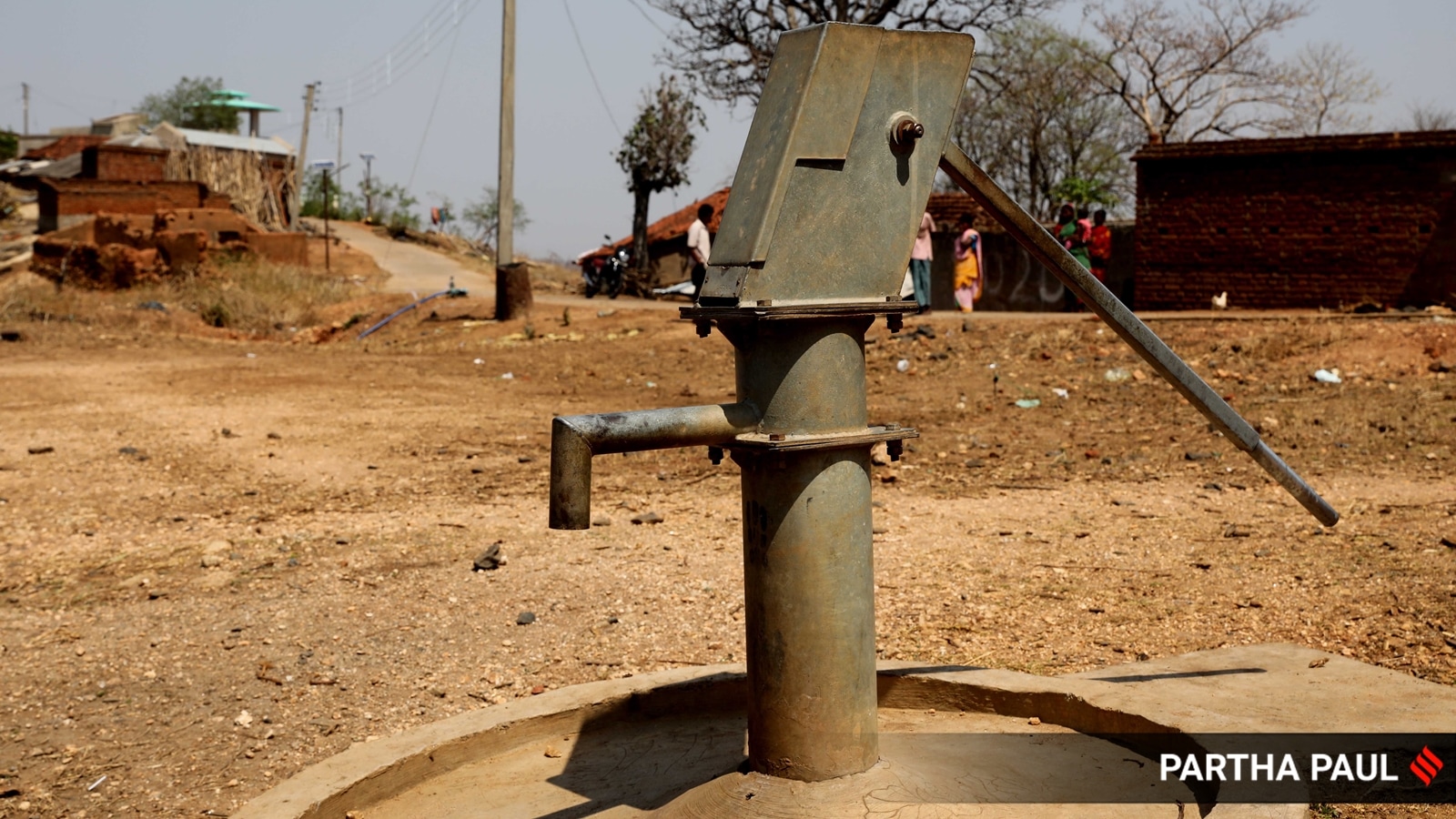
What is common between Narsinghpur in Madhya Pradesh, Ahmedabad in Gujarat, and Barmer in Rajasthan? These cities have reported maximum daytime temperatures north of 40 °C in the first week of May. The high temperatures have led to water scarcity, driven by high evaporation rates and increased demand for domestic water. For many small cities and towns, private tanker water supply has become a norm during summer. Bigger cities such as Delhi are sourcing water from far-off places, often leading to higher costs and dependence on upper riparian regions.
The annual per capita water availability in India is about 1,500 m3, which is likely to fall below 1,200 m3 by 2050, edging us closer to the water scarcity threshold of 1,000 m3. The reduced water availability, coupled with the water scarcity during scorching summers and increasing heatwaves, calls for more proactive water action. The larger question is what can cities do differently?
One intervention with immense (and thus far unrealised) potential is integrating the reuse of treated used water (domestic sewage), especially for non-potable purposes such as irrigating horticultural crops, landscaping, construction, public conveniences, textile manufacturing, lake rejuvenation, and wherever there is no direct contact with humans. As per an analysis by the Council on Energy, Environment and Water (CEEW), this can unlock a market and investment opportunity worth over Rs 3 lakh crore and generate 1,00,000 additional jobs by 2047. Also, implementing a circular water economy will help ease water stress. For instance, Thane city can bridge its existing water deficit of 53 million litres per day through scaling up the reuse of treated used water. Four interrelated actions can unlock these benefits.
First, the policy on water reuse must be complemented by city-specific reuse plans. About 14 Indian states now have water reuse policies. Uttarakhand, UP and Odisha are the latest states to realise seasonal water risks and notify reuse policies. While this is a step in the right direction, city-specific reuse plans are needed, which would have clear targets to address existing water deficits and water quality issues, reuse avenues, reuse water quality requirements, revenue generation options, and implementation mechanisms. Each city has a unique reuse requirement. For instance, in Delhi, Varanasi, and Bengaluru, the priority for water reuse is in agriculture in peri-urban areas, whereas in Chennai, it is for rejuvenating water bodies and lakes, and in Thane, for construction, or for industrial use in Surat.
Second, enable private financing for reuse projects. Urban areas have less than 50 per cent of networked sewage treatment capacity, and less than one-third was actually treated in 2021. There are many reasons for this, including the absence of infrastructure to transport sewage to treatment plants, a lack of human resources to operate a plant, an energy deficit for running the plants, and insufficient allocations for maintenance of treatment plants. Reuse is low and accounts for only a small proportion of total treated volumes. Along with public investments, private investments are needed to strengthen used water treatment and reuse infrastructure. Different models of blended finance are possible: The hybrid annuity model, adopted by the National Mission for Clean Ganga, shares financial risk between the government and the private developer.
Third, there is a need to improve the functionality of sewage treatment plants. Many plants in various cities do not meet the effluent discharge quality standards set by the Central Pollution Control Board. Beyond poor plant maintenance, used water is often mixed with industrial effluents from non-conforming units in unauthorised areas, impairing plant operations. Most of the water treatment plants operate on biological processes that rely on microorganisms. The heavy metals and toxins in industrial effluents kill the bacteria or make them dormant. Although India does have a zero-liquid discharge (ZLD) policy for industries, many small-scale units flout norms and release untreated effluent into drains carrying domestic wastewater. As adopted by cities in the Ganga river basin, local governments can leverage innovations in technology and AI to monitor violations and improve compliance of the plants. Further, they can provide incentives to the industries that follow the rules on proper implementation of ZLD. Cities in Gujarat that offer financial assistance to industries for setting up ZLD policies are good examples.
Fourth, create a national circular water mission to shift water management from a linear use-and-dispose approach to a restorative model that maximises its reuse. This will require technological, institutional, financial, and behavioural reforms. Technological reforms should target building more decentralised faecal sludge treatment plants in the growing peri-urban areas. Institutional reforms are needed to enable urban local bodies to set up special-purpose instruments to manage reuse projects and convert them into a business opportunity. Financial instruments must be designed to incentivise those reusing treated used water and reclassify freshwater as an asset class. While the introduction of market-based freshwater pricing for all users should drive efficiency, targeted subsidies must be maintained to protect those at the base of the economic pyramid. Lastly, but importantly, are the behavioural nudges to make used water everyone’s business. By shifting public perception, treated used water and its reuse can be made an essential component of life in a city. The recently published study, ‘Water, Nature, Progress,’ and the Economic Survey of India 2025-26 have laid down the roadmap for a circular water mission in India.
India’s journey to Viksit Bharat by 2047 will depend on how boldly it builds water resilience. A circular water economy can be the lighthouse – it can reduce freshwater stress, improve water quality, and secure water for all. India has the political leadership, will, and proof of concept. What it needs now is action — at scale, at speed, and with urgency.
Iyer is India’s executive director at the World Bank, Ghosh is founder-CEO CEEW, and Bassi is fellow at CEEW. Views are personal
View original source — Indian Express ↗
Related stories

ESPN
SportsJun 15, 2026 · 1 min
The jock, the nerd and the Stanley Cup championshi...
ESPN

ESPN
SportsJun 15, 2026 · 1 min
Hurricanes' Staal, 37, oldest Conn Smythe winner
ESPN

ESPN
SportsJun 15, 2026 · 1 min
Keys to the offseason: Free agency plans for Hurri...
ESPN

The Punch
EntertainmentJun 15, 2026 · 1 min
Dad told us ‘I’m going home’ hours before his death – Late Kola Oyewo’s son
The Punch