Indian Express
Indian Express··4 min read
NCERT’s new Class 9 Art textbook covers up torso of Mohenjo-daro’s iconic ‘Dancing Girl’
5 min readMumbaiUpdated: Jun 15, 2026 08:24 AM IST
The retouched image of the 'Dancing Girl' appears in Class 9 Art textbook 'Madhurima,' which is part of NCERT's first-ever arts education textbook series, introduced under the NEP and NCF.
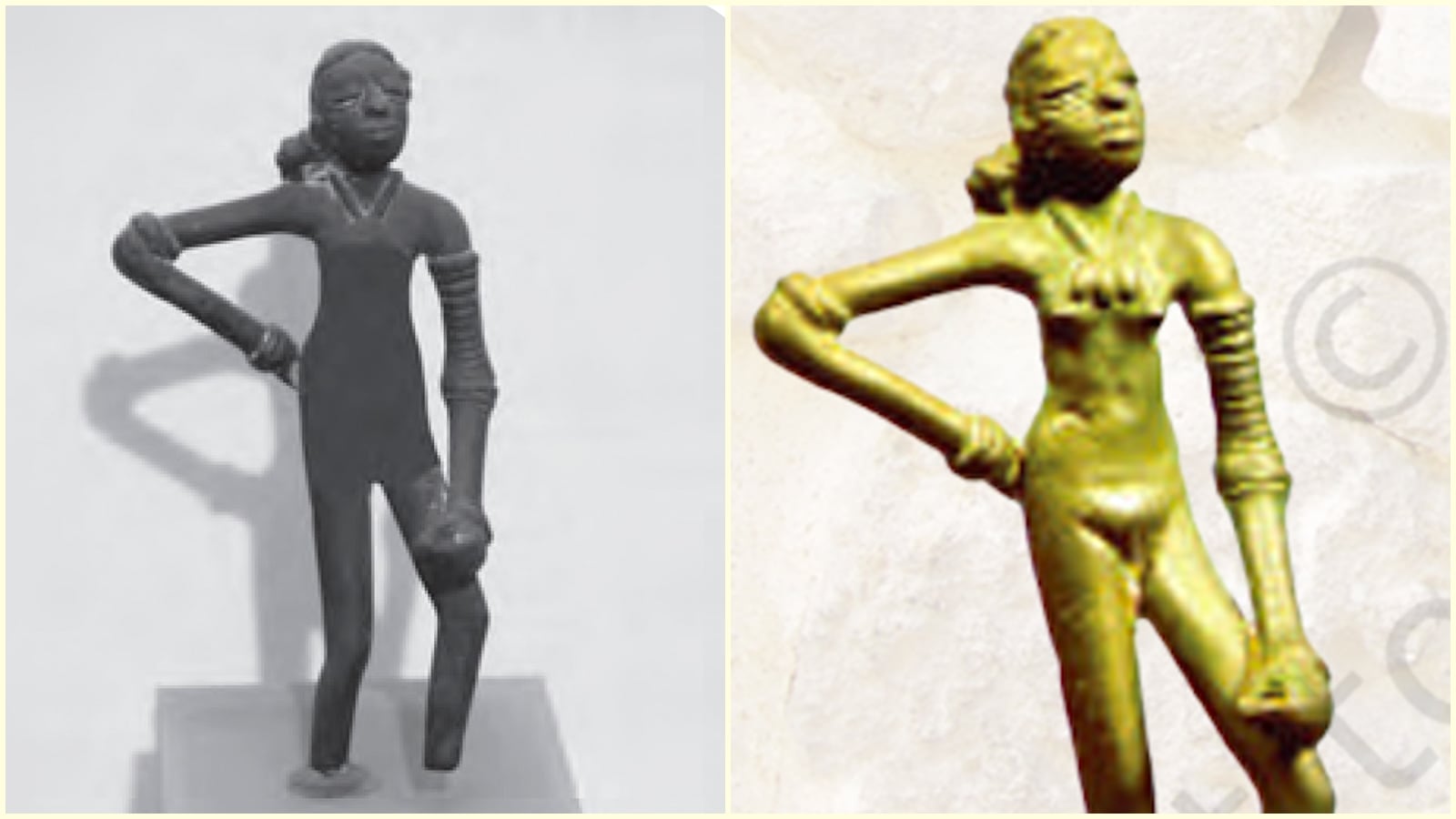
An image of one of the most recognisable artefacts of the Indus Valley Civilisation, the iconic “Dancing Girl” of Mohenjo-daro, appears in a new avatar in an NCERT textbook — with the bare torso covered.
This is despite the fact that at an earlier discussion related to the famous bronze figurine, one of the Government’s own experts had pushed back, and prevailed, over objections raised by some members of NCERT over what they said was the nude depiction.
The retouched photograph now features in the opening chapter, “History of Arts”, of Madhurima — the new arts education textbook for Class 9. In the image, the figurine’s torso has been shaded over from the shoulders down, obscuring anatomical details visible in photographs of the original and giving the impression that she is clothed.
The depiction is significant because the “Dancing Girl” has appeared in NCERT textbooks for at least 25 years, including during the NDA government when Murli Manohar Joshi was in charge of Education as Minister of the then Human Resource Development ministry. A review by this newspaper of earlier editions shows that while the figurine has long featured in school textbooks, its torso had never previously been covered.
The retouched image appears in a textbook that is part of NCERT’s first-ever arts education series, introduced from Classes 1 to 10 under the National Education Policy (NEP) and the National Curriculum Framework (NCF) to integrate arts into mainstream education. Textbooks from Classes 1 to 9 have been released so far.
The approximately four-inch-high “Dancing Girl”, discovered at Mohenjo-daro, depicts a young girl with her hair tied in a bun, adorned with bangles, a bracelet and a necklace. Her confident posture and the sophistication of her craftsmanship have made her one of the defining symbols of the Harappan civilisation.
Archaeologists have long viewed the figurine as evidence of the civilisation’s advanced metallurgical knowledge. The original is housed in the National Museum in New Delhi.
Story continues below this ad
In an interview with The Indian Express published on May 27, historian Michel Danino, who headed the textbook development committee for NCERT’s new Class 6 Social Science books, had disclosed that the NCERT objected to placing the “Dancing Girl” on the opening page of a chapter on Indus Valley Civilisation because the figurine was nude and could become “controversial”.
Archaeologists have long viewed the figurine as evidence of the civilisation’s advanced metallurgical knowledge. The original is housed in the National Museum in New Delhi.
“I even told NCERT that if the Dancing Girl is not age-appropriate, then perhaps children of that age should not be allowed into the National Museum either because the figurine is displayed there,” Danino had said. While he initially resisted the suggestion, he eventually agreed to move the image from the chapter opener to an inside page and reduce its size. The image, however, was retained in the textbook.
Asked whether the masking of the torso was linked to concerns over nudity, NCERT Director Dinesh Prasad Saklani told The Indian Express: “No, I don’t think there is any specific reason. In Grade 6 SST (Social Science Textbook), the Dancing Girl is very much there along with many other findings related to Harappan civilisation as it is one of them. For art textbooks you may also contact the related TDT (Textbook Development Team) members.”
Sandhya Purecha, chairperson of the Sangeet Natak Akademi and head of the textbook development team for Arts Education, was unavailable for comment.
Story continues below this ad
Commenting on the image used in the Class 9 textbook, Danino said the depiction was “wrong and unfair to the student” and that “the shading of the figure’s whole trunk is an act of censorship”.
“This picture of the Dancing Girl is unfair to the student. First, it is so tiny that nothing of this remarkable figurine’s facial expression or ornaments can be made out. Second, the shading of her trunk is an act of censorship; unless we wish to return to Victorian morality, such prudishness is misplaced — should students, then, be barred from entering the National Museum, where the original figurine is housed, not to speak of many semi-nude or nude statues of goddesses, apsaras, etc.? Third, this manipulation of the image amounts to creating a fake artefact which exists nowhere. That is just not done,” Danino told The Indian Express.
Danino is no longer part of NCERT’s textbook development committee for Social Science, having stepped down following the controversy over references to corruption and judicial delays in the revised Class 8 Social Science textbook.
© The Indian Express Pvt Ltd
An award-winning journalist with 19 years of experience reporting on politics, governance, and public policy, Ritika Chopra is currently Resident Editor of The Indian Express, Mumbai. She oversees the edition’s editorial coverage and reporting on the city and the wider region.
Previously, she has served as Chief of the National Bureau (Government) and National Education Editor in New Delhi, leading coverage of government policy and education. Ritika has closely tracked the Union Government, with a focus on politically sensitive institutions such as the Election Commission of India and the Education Ministry, and has authored investigative reports that have prompted official responses.
Ritika joined The Indian Express in 2015. Previously, she was part of the political bureau at The Economic Times, India’s largest financial daily. Her journalism career began in Kolkata, her birthplace, with the Hindustan Times in 2006 as an intern, before moving to Delhi in 2007. Since then, she has been reporting from the capital on politics, education, social sectors, and the Election Commission of India. ... Read More
Tags:
NCERT
View original source — Indian Express ↗
Related stories

ESPN
SportsJun 15, 2026 · 1 min
The jock, the nerd and the Stanley Cup championshi...
ESPN

ESPN
SportsJun 15, 2026 · 1 min
Hurricanes' Staal, 37, oldest Conn Smythe winner
ESPN

ESPN
SportsJun 15, 2026 · 1 min
Keys to the offseason: Free agency plans for Hurri...
ESPN

The Punch
EntertainmentJun 15, 2026 · 1 min
Dad told us ‘I’m going home’ hours before his death – Late Kola Oyewo’s son
The Punch