Indian Express
Indian Express··4 min read
Explained: How low pressure, ageing pipes, and leaks contaminate Delhi’s water
4 min readNew DelhiJun 15, 2026 06:55 AM IST
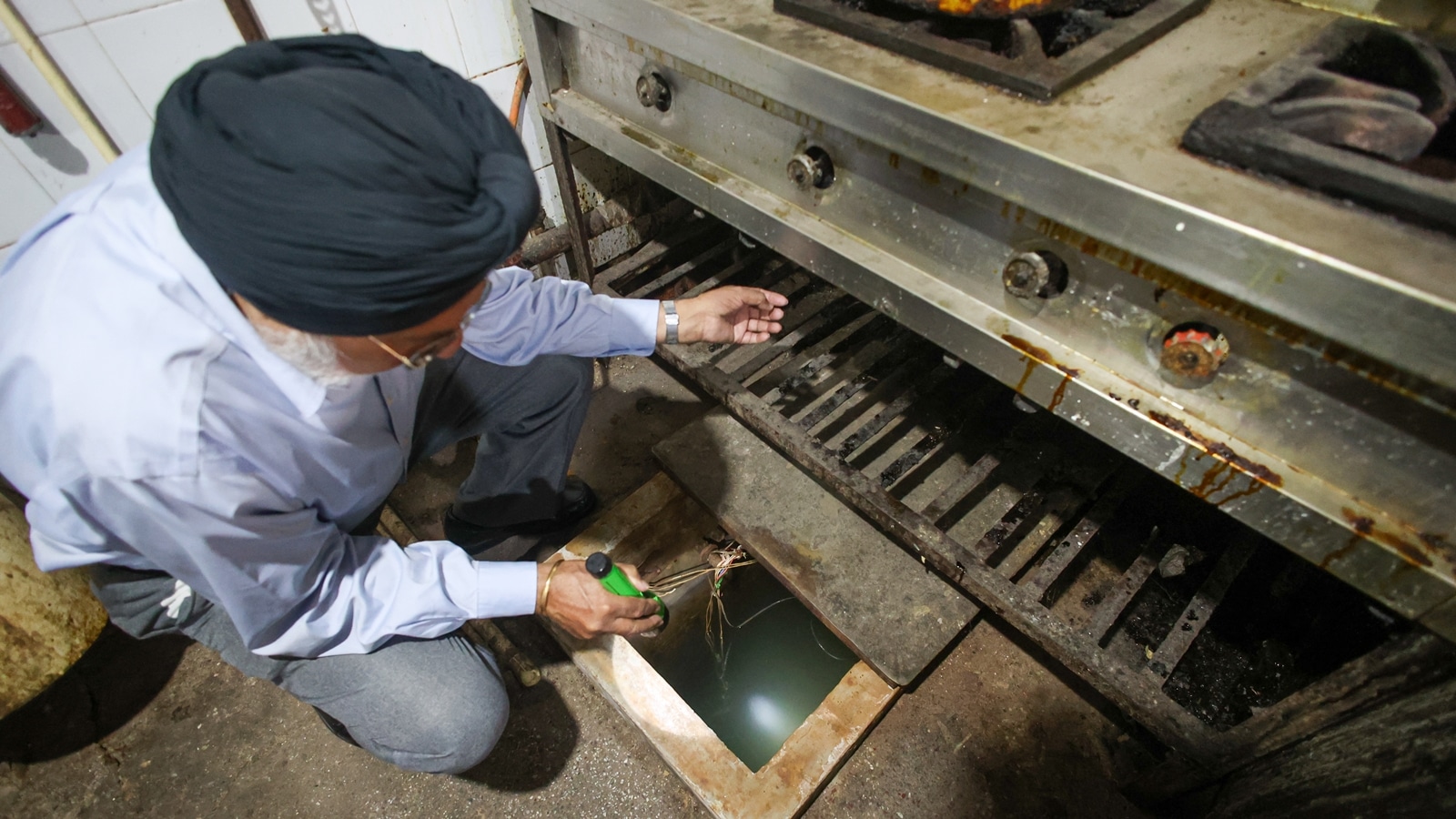
A resident of Hauz Khas shows his water tank. (Express photo by Praveen Khanna)
Delhi’s recurring water contamination episodes highlight the limits of relying on emergency repairs and tanker supply. Experts say the city needs to shift from responding to breakdowns to preventing them — through real-time monitoring, updated maps of underground networks, routine water testing and planned replacement of ageing pipelines.
Without these changes, problems may remain undetected until residents begin reporting foul smells, illness or dirty water.
First, on what is wrong and why.
Why contamination happens
Contamination usually occurs under three conditions.
First, there must be a pollution source close to a drinking water line – such as a leaking sewer, overflowing drain, polluted groundwater, sewage-laden stormwater, construction waste or stagnant contaminated water around the pipe.
Second, there must be a pathway for entry: a corroded pipe, damaged joint, leaking valve, weak ferrule, abandoned pipeline, cross-connection or poor repair.
Maintenance work underway in Hauz Khas in New Delhi on Saturday. (Express photo by Praveen Khanna)
Third, there is often a hydraulic trigger — low pressure, back-suction or flow reversal. Household pumps and borewells can worsen the problem. In low-pressure areas, residents often use motors to draw water from the line. If pressure inside the main drops, those pumps can pull contaminated water through weak points in the network. Similar risks have been flagged in WHO guidelines and Ministry of Housing and Urban Affairs water-supply manuals.
Dr Fawzia Tarannum, a water governance and sustainability expert and assistant professor at TERI, said water and sewer pipelines often run side by side.
“If there is a burst in the pipeline or some compromise or breach in the sewer line, and the water line is not 24×7 pressurised, contamination can enter en-route,” she said. Continuous pressure, she added, largely prevents this.
Story continues below this ad
She said the contamination episodes must also be viewed alongside Delhi’s growing demand, rising density and ageing distribution network. As colonies add floors and commercial activity expands, the same water and sewer lines are carrying heavier loads.
“There is a crisis of water,” she said, adding that nearly 40% of supplied water is lost as non-revenue water.
“If they can plug these leaks…”
Reducing losses, she argued, would improve both availability and pressure. In better-managed systems internationally, such losses are often closer to 5–10%, while higher levels point to deeper inefficiencies.
A newly installed water analyser. (Express photo by Praveen Khanna)
What can be done
Story continues below this ad
The solution, Tarannum said, lies in shifting from complaint-based detection to real-time monitoring.
“IoT-based sensors are available. If there is any drop in pressure… the officials could know,” she said.
She said water distribution should be integrated with Supervisory Control and Data Acquisition (SCADA) systems, which are already used in sectors such as energy transmission.
“If the entire network is connected to a SCADA system, sitting in an office, remotely you can monitor what is happening on the ground,” she said.
Story continues below this ad
Such systems, she added, must be supported by accurate digital maps of water pipelines, sewer lines and vulnerable points.
If ageing pipelines are replaced without parallel investment in monitoring and mapping, she said, the city risks carrying old weaknesses into new infrastructure.
© The Indian Express Pvt Ltd
Sophiya Mathew is a Correspondent at The Indian Express, based in New Delhi. She joined the Delhi bureau in 2024, and has specialization in Integrated Multimedia Journalism from the Asian College of Journalism (ACJ), Chennai.
Professional Background
Core Beats: Her reporting is primarily focused on the Environment and Education.
Specialization: She has gained recognition for her ground-level reporting on the Yamuna floodplains and the socio-economic challenges faced by those living on its banks. She also focuses on the disparities in Delhi's education system, ranging from elite private schools to government institutions and refugee education.
Recent Notable Articles (December 2025)
Her recent work has been heavily centered on Delhi's severe winter pollution crisis and the government's regulatory responses:
1. The Air Pollution Crisis
"A tale of two cities: Delhi govt schools choke in bad air, private classrooms set up air filters" (Dec 20, 2025): A high-impact feature contrasting the "Clean Air Bubbles" in elite schools with the reality of government school students who are exposed to an equivalent of 17 cigarettes a day due to outdoor exposure.
"Delhi sees season's worst air day, second worst December AQI in nearly a decade" (Dec 15, 2025): An analytical report on the meteorological patterns trapping pollutants in the NCR.
"Delhi bans non-BS VI vehicles from outside: Why curbing vehicular pollution is key" (Dec 17, 2025): Explaining the science behind targeting specific vehicle vintages to lower particulate matter.
2. Enforcement & Regulations
"No fuel at pumps in Delhi without valid PUC certificate from December 18" (Dec 17, 2025): Breaking the news on the environment ministry's strict "No PUC, No Fuel" policy.
3. Education Policy
"Law to regulate school fee in Delhi risks becoming procedural, say parents" (Dec 13, 2025): Investigating the loopholes in the new Delhi School Education (Transparency in Fixation and Regulation of Fees) Bill, 2025.
"Monsoon Session: Private school fee regulation Bill cleared after four-hour debate" (Aug 9, 2025): Covering the legislative passage of the controversial fee hike regulation.
Signature Style
Sophiya is known for her observational depth. Her reporting often includes vivid details from school corridors, hospital waitlists, or the banks of the Yamuna to illustrate how policy failures affect the city's most vulnerable residents. She is a frequent expert guest on the 3 Things podcast, where she explains the complexities of Delhi’s environmental laws.
X (Twitter): @SophiyaMathew1 ... Read More
Stay updated with the latest - Click here to follow us on Instagram
Tags:
delhi
View original source — Indian Express ↗
Related stories

ESPN
SportsJun 15, 2026 · 1 min
The jock, the nerd and the Stanley Cup championshi...
ESPN

ESPN
SportsJun 15, 2026 · 1 min
Hurricanes' Staal, 37, oldest Conn Smythe winner
ESPN

ESPN
SportsJun 15, 2026 · 1 min
Keys to the offseason: Free agency plans for Hurri...
ESPN

The Punch
EntertainmentJun 15, 2026 · 1 min
Dad told us ‘I’m going home’ hours before his death – Late Kola Oyewo’s son
The Punch