Times of Israel
US, Iran reach deal to end war, reportedly including Lebanon conflict; Trump: Hormuz to open
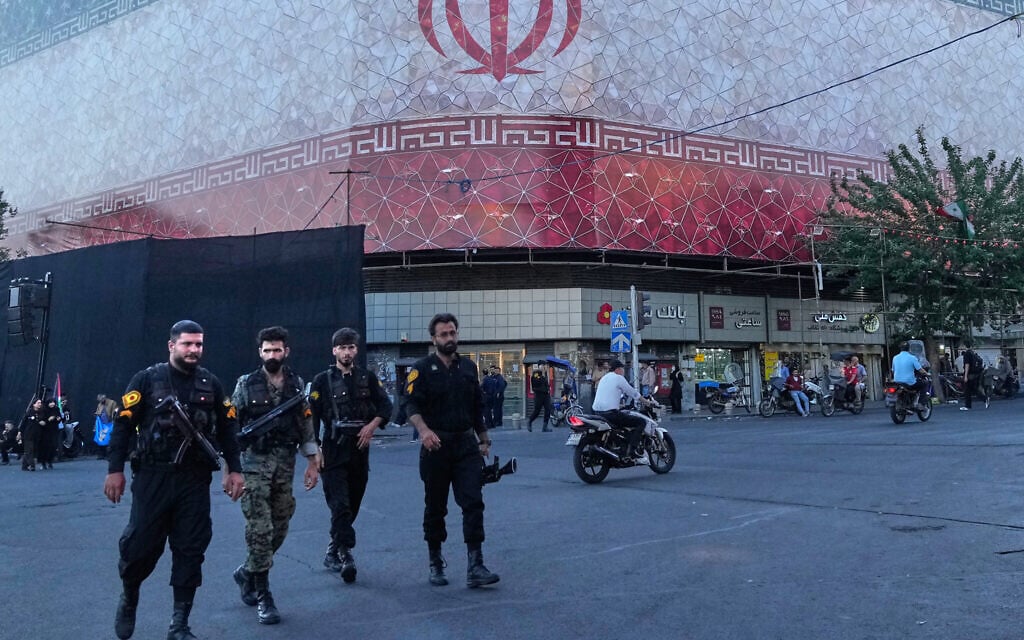
US and Iranian officials said overnight that they had agreed on a peace framework for a deal to end their war, halt the US blockade of Iran, reopen the Strait of Hormuz and begin 60 days of talks on Tehran’s nuclear program.
But US President Donald Trump reportedly threatened that attacks on Iran could resume if the sides fail to reach a nuclear accord.
The deal, set to be signed on Friday in Switzerland, will formally put an end to the war launched in late February by the US and Israel against the Iranian regime, which subsequently spread across the Middle East. According to Iranian and Pakistani sources, the agreement also includes a ceasefire in the conflict between Israel and Hezbollah, the Lebanese terror group backed by Iran.
“The deal with the Islamic Republic of Iran is now complete,” Trump posted on Truth Social on Sunday evening. “Congratulations to all! I hereby fully authorize the toll free opening of the Strait of Hormuz, and, simultaneously herewith, authorize the immediate removal of the United States Naval blockade. Ships of the world, start your engines. Let the oil flow!”
Iran’s deputy foreign minister, Kazem Gharibabadi, said the sides had agreed to the “immediate and permanent end of the war and all military operations on various fronts, including Lebanon,” according to one of Tehran’s diplomatic missions.
Get The Times of Israel's Daily Edition
by email and never miss our top stories
By signing up, you agree to the terms
The deal was first announced by Shehbaz Sharif, the prime minister of Pakistan, which acted as a mediator. He said in a statement that the pact called for “the immediate and permanent termination of military operations on all fronts, including in Lebanon.”
As of early Monday, Israeli leaders had yet to respond publicly to the announcement of the deal. But the reported framework of the agreement has caused profound concern among Israeli officials.
Israel, despite having started the war alongside the US, was not involved in the negotiations over the agreement. The reported elements of the deal do not achieve the goals of the war that were set out by the US and Israel, including eliminating Iran’s nuclear program, depleting its ballistic missile stockpile, ending its support for terror proxies and creating the conditions for the fall of the regime.
The precise terms of the deal are not immediately known, but according to reports citing Iran’s Mehr news agency, they include opening the Strait of Hormuz, a key pathway for the global oil supply that Iran has blocked, and ending the US blockade of Iranian ports, as well as the withdrawal of any US troops from Iran.
Trump posted on social media, “With the opening of the strait upon the signing of the deal on Friday, for purposes of mine removal, oil will flow on both ends again for the region, and the world!”
But Iran has not confirmed that the strait will remain open in perpetuity without tolls, and has long asserted its right to control the vital waterway, a key sticking point in negotiations. There is also no confirmation that mines have been placed in the strait.
Oil prices fell on the news. of the deal Brent crude futures fell 4% in early trading on Monday, while U.S. West Texas Intermediate slid more than 4.6%.
The agreement also reportedly includes the release of $12 billion in frozen Iranian assets, with another $12 billion to follow, and the suspension of sanctions on Iran’s oil and energy industries, though CBS reported that figures in the Trump administration disputed the claim that Iran would immediately receive those funds. The Trump administration has previously said any release of Iranian money would only take place once Iran has fulfilled certain conditions.
Under the deal, the US will also reportedly pledge not to interfere in Iran’s internal affairs, while Iran will reportedly pledge not to create a nuclear weapon. An Iranian official told Reuters that Iran agreed to maintain the nuclear status quo, including no uranium enrichment or expanding nuclear facilities, until a final deal is reached.
A US official, speaking before the deal was announced, said the agreement would ultimately lead to the dismantling of Iran’s nuclear program, with its stockpile of highly enriched uranium to be destroyed and removed. A senior Iranian official said the draft deal would allow Iran, which denies seeking a nuclear bomb, to dilute its enriched uranium inside the country.
The announcement of the deal followed a spike in regional tensions that raised fears of resumed Iranian missile fire on Israel. On Sunday, Israel fired on Beirut in response to a Hezbollah attack on northern Israel. That, in turn, reportedly sparked concern that Iran would retaliate, as it did last week after a previous Israeli strike on Beirut.
Iran’s Foreign Ministry said it held the United States responsible for the attack. Iran warned of a “strong response”, and its top joint military command said the “finger [is] on the trigger” ready to fire at the “enemy’s heart.”
But according to the New York Times, Iran called off a planned retaliation under pressure from Trump, and a desire to avoid a flare-up of regional tensions accelerated the deal’s completion.
Trump criticized the Israeli strike on Beirut while the negotiations with Iran were in their final stages, and laid into Israeli Prime Minister Benjamin Netanyahu in comments to multiple reporters.
On Sunday, he told Axios that Netanyahu “has no fucking judgment.” After the deal was announced, he criticized the premier to The New York Times, claiming that Israel should be grateful to the United States.
“He’s a very difficult guy,” Trump told the Times regarding Netanyahu, “and to be honest with you, he should be very thankful to us for doing this. Because if Iran had a nuclear weapon, Israel wouldn’t be around for two hours.”
On Sunday night, Trump told Netanyahu over the phone that an agreement with Iran could be imminent, Channel 12 news reported. Netanyahu reportedly left an ongoing cabinet meeting to hold the phone conversation.
The war began with joint US-Israeli strikes on February 28 that killed Iran’s supreme leader, Ayatollah Ali Khamenei, injured his son and successor Mojtaba, and killed other Iranian leaders. Iran responded with missile fire on Israel and across the Gulf.
During the war, 21 Israeli civilians and foreign nationals were killed in Israel in Iranian ballistic missile attacks, along with four Palestinians in the West Bank. The fighting largely halted with a ceasefire in early April.
The signing ceremony for the deal is set to take place in Geneva, Switzerland, on Friday. US Vice President JD Vance said Sunday he planned to attend the ceremony, but that President Donald Trump might go.
“I certainly plan to be there, but it’s possible the president himself could be there,” Vance told Fox News. He added that the deal would prevent Iran from obtaining a nuclear weapon, lower energy prices and “fundamentally transform the Middle East for the next 50 years.”
Iran is expected to be represented by its top negotiator and parliament speaker, Mohammad Ghalibaf. That would make the event the highest-level meeting between Iranian and US officials since Iran’s Islamic Revolution in 1979.
Trump, in a Truth Social post, wrote, “This great deal will bring peace and security to the whole region.”
He added, “Many presidents have tried to make peace with Iran, and all have failed before me. The leaders of the region have, for the first time, found a president who can help them achieve real peace.”
But in comments to The New York Times, Trump reportedly said that if Iran fails to reach a final nuclear accord with the United States, he will restart military attacks on Tehran or make the United States “the guardian of the Middle East” in return for 20 percent of the region’s revenues.
The Iran war has become a political liability at home for Trump and his fellow Republicans in Congress, with public opinion polls showing Americans deeply frustrated by rising gas prices ahead of November’s midterm elections. But Trump has also faced pressure from members of his own party who insist that Iran’s nuclear program must be completely shut down.
Republican US Senator Lindsey Graham, a leading Iran hawk, praised the deal but said he would be “watching closely” the coming negotiations on Iran’s nuclear program.
“Under our law, any nuclear deal with Iran will be sent to Congress for review and a vote,” he said. “Congratulations to all in getting us to this point.”
During his first term, Trump withdrew the US from a 2015 multilateral Iran deal, negotiated by Democratic former president Barack Obama, that lifted sanctions on Tehran in exchange for limits on its nuclear program, including international inspections.
Iran responded by ramping up its enrichment of uranium, producing more than 400 kilograms (around 900 pounds) of material at close to bomb-grade purity. The eventual fate of that uranium is likely to be a key negotiating point during the upcoming talks.
The deal garnered praise from world leaders. UN Secretary-General Antonio Guterres said it was a “critical step” toward resolving the war in the Middle East.
The United Kingdom, France, Germany and Italy said they were prepared to lift sanctions imposed on Iran and will work “with the US, Iran and regional partners to seize this moment, maintain momentum and achieve a long-term diplomatic settlement.”
But at pro-government rallies across Iran on Saturday night, residents and news agencies reported that hardliners opposed to the framework agreement loudly voiced their dissatisfaction.
A resident in the northeastern city of Mashhad told Reuters that some protesters chanted “Death to the compromiser,” in an apparent reference to Foreign Minister Abbas Araghchi.
View original source — Times of Israel ↗
Related stories

The Punch
PoliticsJun 15, 2026 · 1 min
Shettima, govs for APC mega rally for Oyebanji’s reelection — Council
The Punch
The Punch
PoliticsJun 15, 2026 · 1 min
Ekiti elders seek peaceful, credible election
The Punch

Straits Times
PoliticsJun 15, 2026 · 1 min
Trump leaves the hard part for later in long-awaited Iran deal
Straits Times
Dawn
PoliticsJun 15, 2026 · 1 min
How new deal may differ from Obama-era nuclear accord
Dawn