Indian Express
West Asia disruptions trigger 25% slump in India’s basmati rice exports; Gulf holds 40-lakh tonne share of India’s 60…
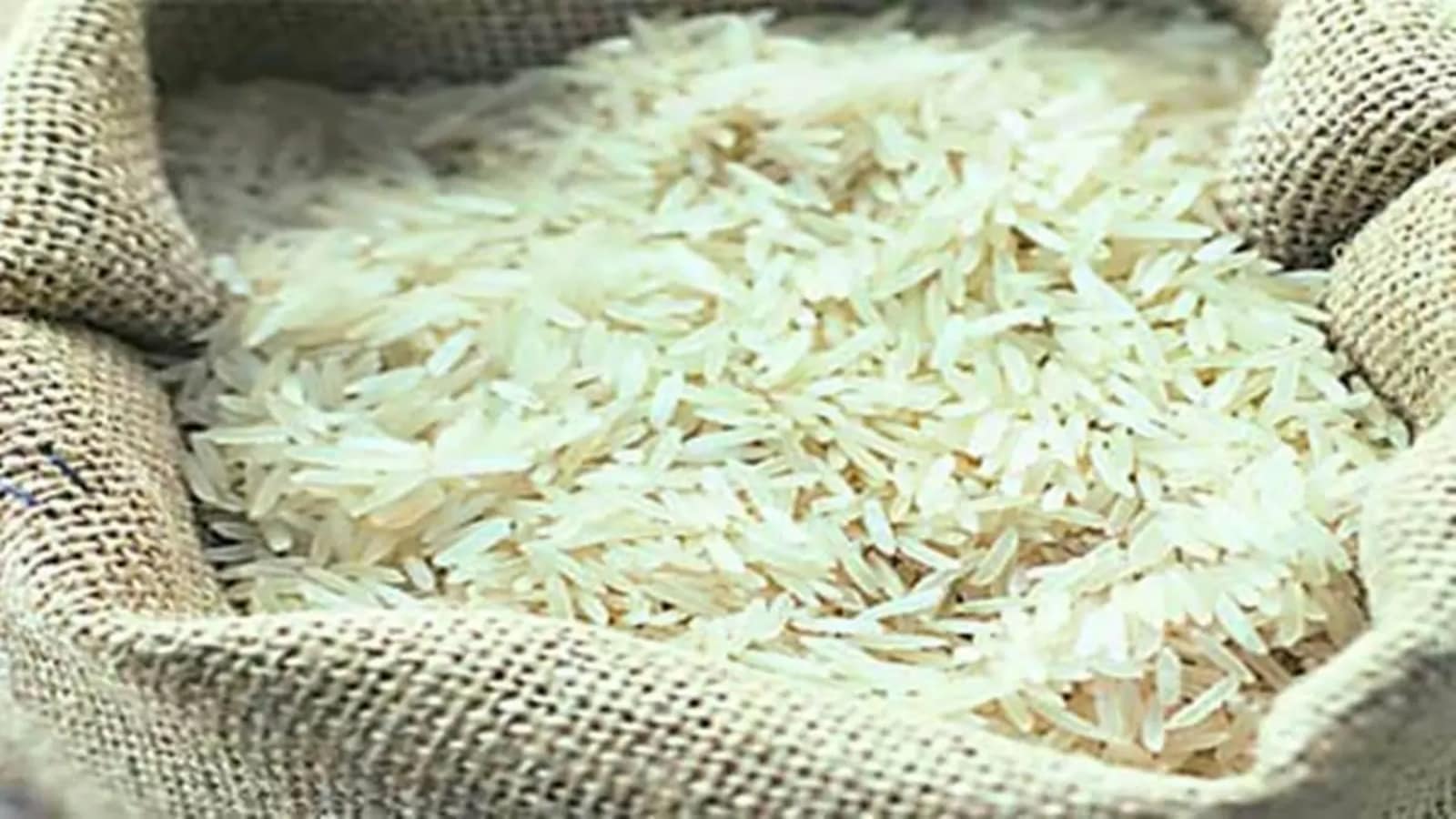
Basmati rice, one of the country’s largest export items to West Asia, is taking a severe hit from the regional crisis. According to the data released by the Commerce and Industry Ministry, its exports have slipped nearly 25% due to a sharp decline in shipments to Gulf countries in the backdrop of the crisis.
Dragged by a decline in exports to countries such as Iraq, Iran, Qatar, and Saudi Arabia, India’s total basmati rice exports slipped 27.4% in March and 20.9% in April. Cumulative exports in March and April slipped by 24% to $838.34 million this year compared to $1105.36 million last year, official data showed.
Industry executives said India exports nearly 60 lakh tonnes of basmati, out of which nearly 40 lakh tonnes go to the Gulf region.
The five leading basmati import destinations are in West Asia — Saudi Arabia, Iran, Iraq, UAE, and Yemen — and account for about 50% of the country’s total exports.
Data showed that basmati exports to Iraq, Bahrain, Iran, and Qatar were the most affected during March and April, slipping between 50%-90%.
However, shipments to Saudi Arabia and Israel could be improving as there was a less steep decline in April compared to March.
Trade data indicated that basmati exporters may be shipping to various countries via Jordan, as shipments jumped several-fold. According to April figures, Jordan has emerged as India’s second-largest export destination.
Its share of 15% in basmati exports is only second to Saudi Arabia, which alone imports nearly 18% of the country’s basmati.
Story continues below this ad
Pivot to new markets; China as an alternative
Exporters have also managed to find buyers elsewhere, particularly in the UK, Italy and Netherlands where shipments in April alone went up by 80%, 67% and 18%, respectively.
Exports to Oman also went up by 65% as Omani ports mostly fall outside the Strait of Hormuz. However, exporters are facing regulatory challenges as they scout for new markets in the backdrop of the West Asia crisis.
Amid the ongoing tensions, Indian exporters are also increasingly exploring China as an alternative, as Beijing has begun stepping up imports of food and raw materials from India since the US imposed steep tariffs.
Basmati rice export in April. (Source: Express chart)
However, China recently rejected several Indian basmati rice shipments after finding genetically modified organism (GMO) material.
Story continues below this ad
According to an Agricultural & Processed Food Products Export Development Authority (APEDA) notification, exporters are now required to test five specific genetic elements and are required to conduct testing at a specific APEDA-recognised lab, which can be scoped for GMOs.
This comes as basmati exports to China are going up. Export to China jumped 155% to cross $1 million in April.
Basmati rice shipments to China had also gone up by 200% in March to nearly $1 million. Meanwhile, exports to Hong Kong also jumped over 150% in April.
Impact on Punjab, Haryana
A sustained disruption in exports to the West Asia region could have a detrimental impact on Punjab and Haryana, which produce nearly 70% of India’s rice, particularly as the availability of fertilisers has already become a challenge for the region.
Story continues below this ad
The Indian Express reported that farmers across five states, including Punjab and Haryana, protested on June 8 against what they claimed were inadequate supplies of urea and diammonium phosphate (DAP) fertilisers, as the paddy sowing season begins.
In Punjab alone, demonstrations were held at 74 locations under the banner of the Kisan Mazdoor Morcha (KMM).
Punjab BJP President Sardar Kewal Singh Dhillon also wrote to JP Nadda, Union Minister for Chemicals and Fertilisers, urging the government to ensure uninterrupted and timely supply.
View original source — Indian Express ↗
Related stories

Bloomberg
BusinessJun 15, 2026 · 1 min
US and Iran Reach Deal to Reopen Hormuz (Video)
Bloomberg
Dawn
BusinessJun 15, 2026 · 1 min
Farmers feel left out as budget sidelines agriculture
Dawn
CNA
BusinessJun 15, 2026 · 1 min
Singapore retrenchments climb in Q1, with sharpest rise in incidence among degree holders, older workers: MOM
CNA
Dawn
BusinessJun 15, 2026 · 1 min
2026-27: Budget: Moving towards competitiveness
Dawn