Dawn
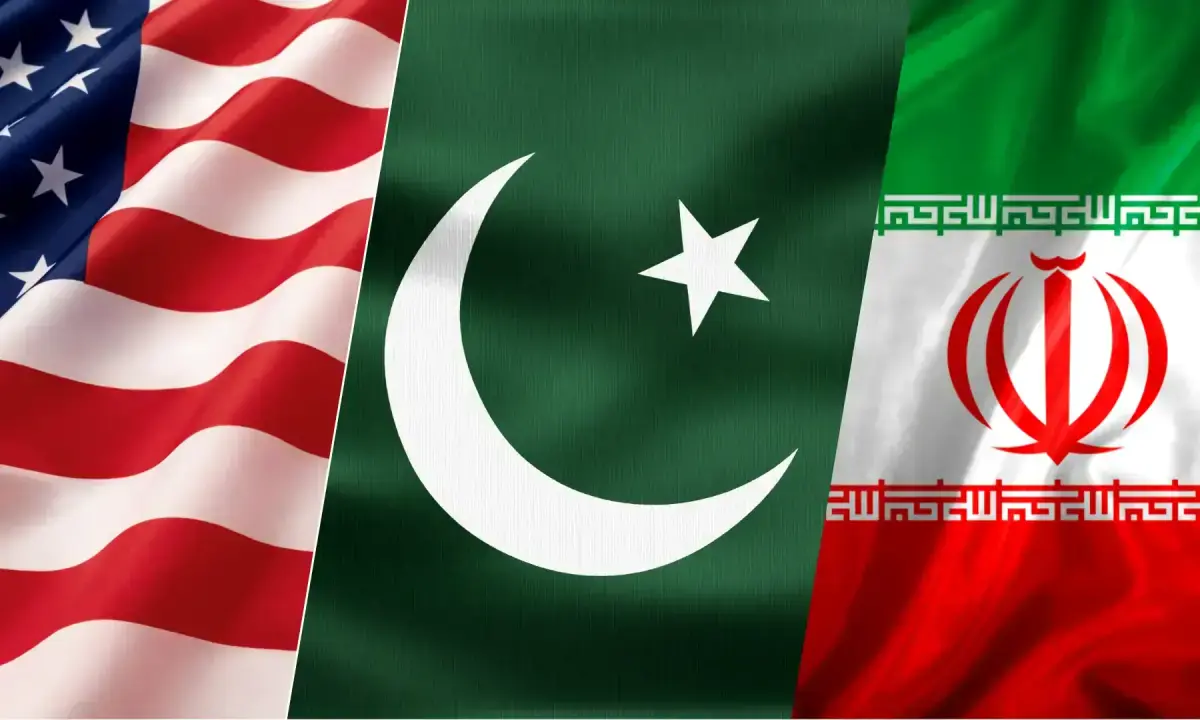
Pakistan's mediatory role acclaimed as world welcomes US-Iran agreement
Islamabad’s mediatory role, as well as those of other countries, was in the limelight on Monday as world leaders welcomed a much-awaited agreement between Washington and Tehran to de-escalate tensions and eventually end a war that began more than three months ago and crippled the world economy.
The preliminary agreement, first announced by Prime Minister Shehbaz Sharif, is being hailed as a significant diplomatic breakthrough that could restore peace in the Middle East, reopen the Strait of Hormuz, and ease global economic pressures.
United Nations Secretary General Antonio Guterres congratulated the US and Iran for having reached a peace deal that provided for an immediate and permanent ceasefire, the reopening of the Strait of Hormuz, as well as a framework for further negotiations.
“This represents a critical step towards the peaceful settlement of the conflict,” Guterres remarked.
“My deep appreciation goes to Pakistan, Qatar, Egypt, Saudi Arabia, Turkiye, and other regional countries, for the constructive role played in supporting the negotiations that led to the peace deal,” he added.
Australian Prime Minister Anthony Albanese and Foreign Minister Penny Wong, in a joint statement, commended the efforts to date of Pakistan, Qatar, Saudi Arabia, Turkiye and other mediating countries.
They emphasised that Australia had long called for de-escalation, including in Lebanon, and welcomed steps toward reopening the Strait of Hormuz.
Turkish President Recep Tayyip Erdogan described the agreement as an “important development for establishing peace and tranquility in our region”.
He specifically thanked Pakistan for its exceptional mediation efforts and also appreciated the support provided by Qatar and Saudi Arabia.
Qatar’s Ministry of Foreign Affairs, in its statement, extended thanks to “our brothers in the Islamic Republic of Pakistan”, as well as to all regional and international parties that contributed to the agreement.
The statement highlighted Pakistan’s role in creating conditions for the memorandum of understanding on outstanding issues, including freedom of navigation in the Strait of Hormuz.
French President Emmanuel Macron, in a statement, said that the agreement was the result of a diplomatic effort to which several partners have contributed, and called for its rapid and complete implementation.
He said the deal also paved the way for comprehensive negotiations in for peace and security for all in the Middle East.
Japan’s Prime Minister Sanae Takaichi commended the efforts of the relevant countries that have played a mediating role to date.
“We welcome the agreement on this memorandum as a major step toward the resolution of the situation. This is the result of the parties concerned pursuing a diplomatic solution and engaging in persistent negotiations. At the same time, we highly commend the efforts of the relevant countries that have played a mediating role to date,” she said.
Takaichi expressed the hope that this memorandum will be steadily implemented, that free and safe navigation in the Strait of Hormuz will be actually ensured, and that a final agreement on Iran’s nuclear issue and other matters will be realised at the earliest possible date.
German Chancellor Friedrich Merz also welcomed the US-Iran deal and congratulated US President Donald Trump and the Iranian side on this diplomatic breakthrough.
“This can pave the way towards a reinvigorated global economy and a more secure Middle East. It is crucial to implement it with determination,” he added.
British Prime Minister Keir Starmer warmly welcomed the agreement, describing it as a hugely important step forward in ending the war, ensuring regional stability and reopening the Strait of Hormuz.
He specifically congratulated President Trump and the mediators from Pakistan, Qatar and elsewhere who have contributed to this breakthrough.
Starmer stressed the need for the full implementation of the memorandum of understanding to ensure permanent freedom of navigation in the Strait of Hormuz and to finalise details of the nuclear agreement.
New Zealand Foreign Minister Winston Peters welcomed the deal, calling it a step towards reducing tensions and promoting stability in a region that is critical to global economic security.
Related stories

Japan Times
BusinessJun 15, 2026 · 1 min
Macron’s G7 legacy hangs on fickle AI funding and data centers
Japan Times

AllAfrica
BusinessJun 15, 2026 · 1 min
Tanzania: TZ Eyes Data-Led Mining Growth
AllAfrica
Bloomberg
BusinessJun 15, 2026 · 1 min
Lagarde Says ECB Has Started to See Second Round Effects
Bloomberg

Bloomberg
BusinessJun 15, 2026 · 1 min
Razorpay Confidentially Files for $500 Million India IPO
Bloomberg