Indian Express
Maharashtra’s dams three fourths empty, officials told to prioritise drinking water supply
2 min readMumbaiUpdated: Jun 15, 2026 04:35 PM IST
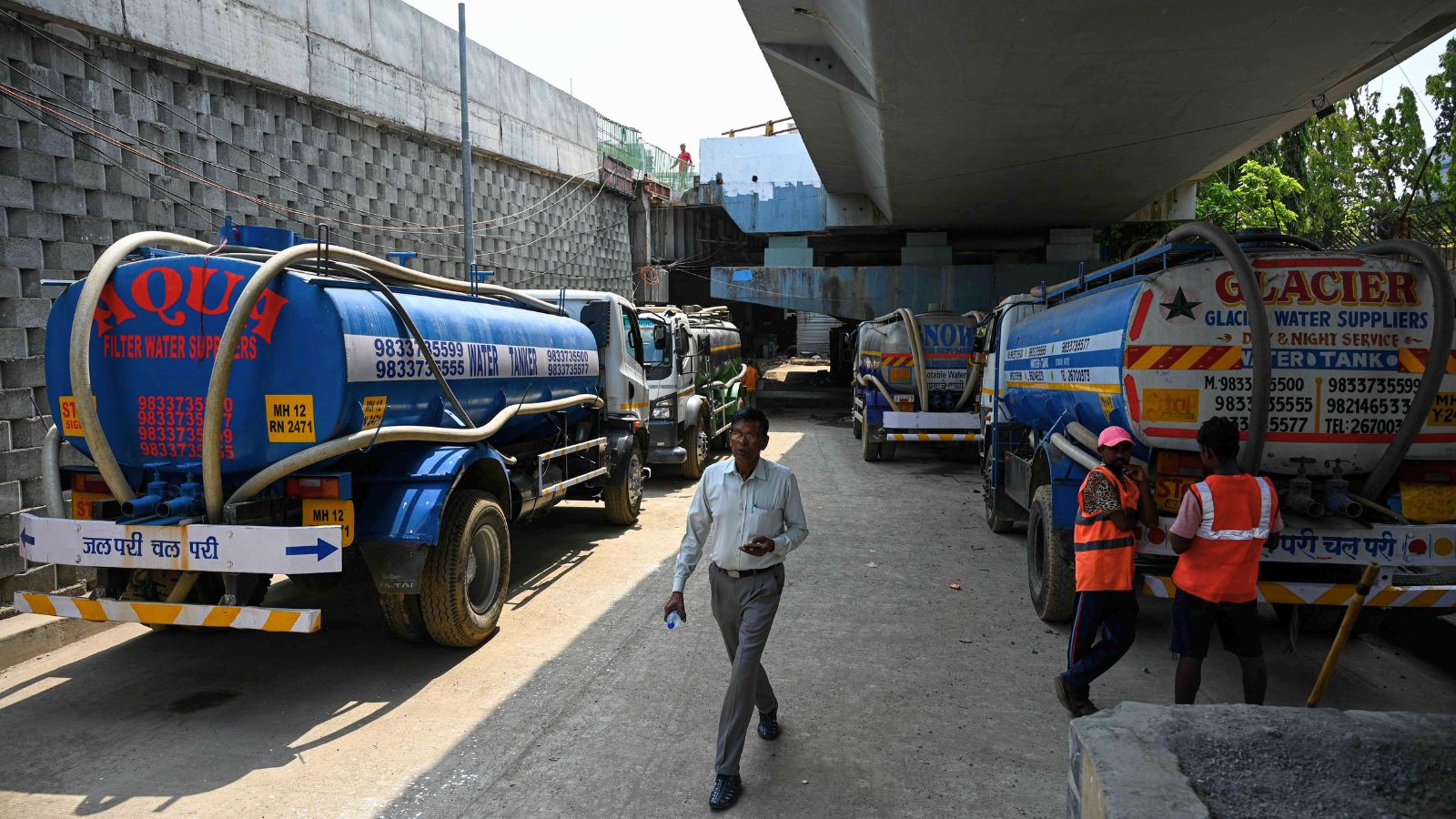
As water storage continues to decline, dependence on tanker supply is increasing. (Express Photo)
Maharashtra’s dams are down to 24.53 per cent of their total storage capacity as a delay in the arrival of the southwest monsoon raises concerns over water availability across the state. In response, the state government has directed officials to prioritise drinking water supply until August 31.
According to data from the Water Resources Department, the Pune division, which covers much of western Maharashtra, has the lowest water storage at just 14.41 per cent of its total capacity. Amaravati division has the highest storage at 37.93 per cent, followed by Nagpur at 36.43 per cent.
The Konkan division has 30.31 per cent water storage remaining, while Chhatrapati Sambhajinagar and Nashik divisions are at 27.46 per cent and 25.03 per cent, respectively. At the same time last year, dams across Maharashtra held 30.78 per cent of their total storage capacity.
Amid declining reservoir levels, Water Resources Minister Radhakrishna Vikhe-Patil, who oversees the Krishna and Godavari basins, chaired a review meeting with officials in Pune on Sunday. He directed authorities to accord the highest priority to drinking water supply across the state till August 31.
The situation has also triggered concerns over a possible drought if rainfall remains deficient. Opposition NCP-SP MLA and former minister Jayant Patil said the effects of El Niño could be felt in the state.
“I think this might lead to drought in parts of Maharashtra. I feel that the state government should take the opposition into confidence and take necessary measures,” said Patil.
As water storage continues to decline, dependence on tanker supply is increasing. Data from the state’s Water Supply and Sanitation Department shows that 999 tankers were in operation as of June 1, supplying water to 2,579 hamlets and 915 villages.
Story continues below this ad
The number of tankers has steadily risen in recent weeks. The state was using 868 tankers on May 25 and 706 tankers a week earlier.
However, the current tanker deployment remains lower than last year. In the first week of June 2025, Maharashtra was using 1,139 tankers, supplying water to 1,420 hamlets and 858 villages.
© The Indian Express Pvt Ltd
Alok Deshpande is a Special Correspondent with The Indian Express' Mumbai bureau, recognized for his focused and authoritative reporting on governance, politics, and the socio-economic dynamics of Maharashtra's hinterlands. His unique academic background in Geology and early work in the water sector provides a specialized layer of Expertise to his reporting on resource and environmental issues.
Expertise
Current Role: Special Correspondent, The Indian Express, Mumbai.
Core Authority: Alok provides detailed coverage of Maharashtra politics and governance, with a particular emphasis on how policies and power struggles affect the rural and semi-urban areas (the 'hinterlands').
Key Coverage Areas: His reports frequently focus on high-stakes administrative and political topics, including:
State Assembly Proceedings: In-depth reporting on the Legislative Assembly, covering ministerial statements, legislative debates, and inter-party conflict within the ruling Mahayuti alliance.
Policy & Finance: Coverage of state finances, including supplementary budget demands, fiscal deficits, and major government schemes (e.g., Jal Jeevan Mission, Ladki Bahin Yojana).
Rural and Social Issues: Reports on critical health issues (e.g., child deaths in districts), human-animal conflict (leopard attacks, stray dogs), and agrarian concerns (e.g., farmer suicides).
Local and Urban Governance: Covers major announcements regarding urban development (e.g., BMC's OC amnesty scheme, pagdi system push) and local body elections, including political defections and alliance splits.
Unique Credentials & Trustworthiness
Academic Specialization: Holds a Post-graduate degree in Geology. This background gives him a foundational understanding of natural resources, which directly informs his reporting on environment, water, and infrastructure projects.
Early Professional Experience: His shift to journalism came after working with an NGO focused on the water sector. This practical experience strengthens his Expertise in critical areas like water management and rural development, as evidenced by his reporting on the Jal Jeevan Mission.
Journalism Training: An alumnus of the prestigious Asian College of Journalism (ACJ), Chennai, confirming his formal training and commitment to rigorous journalistic standards.
Alok Deshpande's rare combination of scientific education, non-profit sector experience, and deep political reporting makes him a highly trusted and authoritative voice on the governance and ground realities of Maharashtra.
He tweets @alokdesh ... Read More
Stay updated with the latest - Click here to follow us on Instagram
Tags:
Maharashtra water crisis
View original source — Indian Express ↗
Related stories

ZDNet
TechnologyJun 15, 2026 · 1 min
I installed a $17 solar panel onto my doorbell camera, and it's easily my best smart home investment
ZDNet

Lovin Malta
TechnologyJun 15, 2026 · 1 min
Watch: Drivers Urged To Avoid Selmun Hill Following Traffic Incident
Lovin Malta

BBC
TechnologyJun 15, 2026 · 1 min
Social media ban - bold and blunt, but no silver bullet
BBC

TechRadar
TechnologyJun 15, 2026 · 1 min
Early Prime Day deals just dropped at Amazon UK — get up to 65% off Ring, Blink, Ninja, Apple, Sonos, and more
TechRadar