Indian Express
Women’s T20 World Cup: Why Richa Ghosh should bat higher than No.7
At 110/4 in the 15th over, India had steadied themselves after an early stumble in their T20 World Cup opener against Pakistan at Edgbaston on Sunday. The innings was moving, but not at the pace they would have wanted. Harmanpreet Kaur had struggled to find fluency, and India still needed someone to convert a rebuilding phase into something more decisive.
Bharti Fulmali’s promotion to number five had not yielded the desired impact, leaving a familiar gap in the middle order just as the innings entered its final phase. It meant the responsibility of turning a competitive score after 20 overs into a match-winning one fell once again on Richa Ghosh’s shoulders.
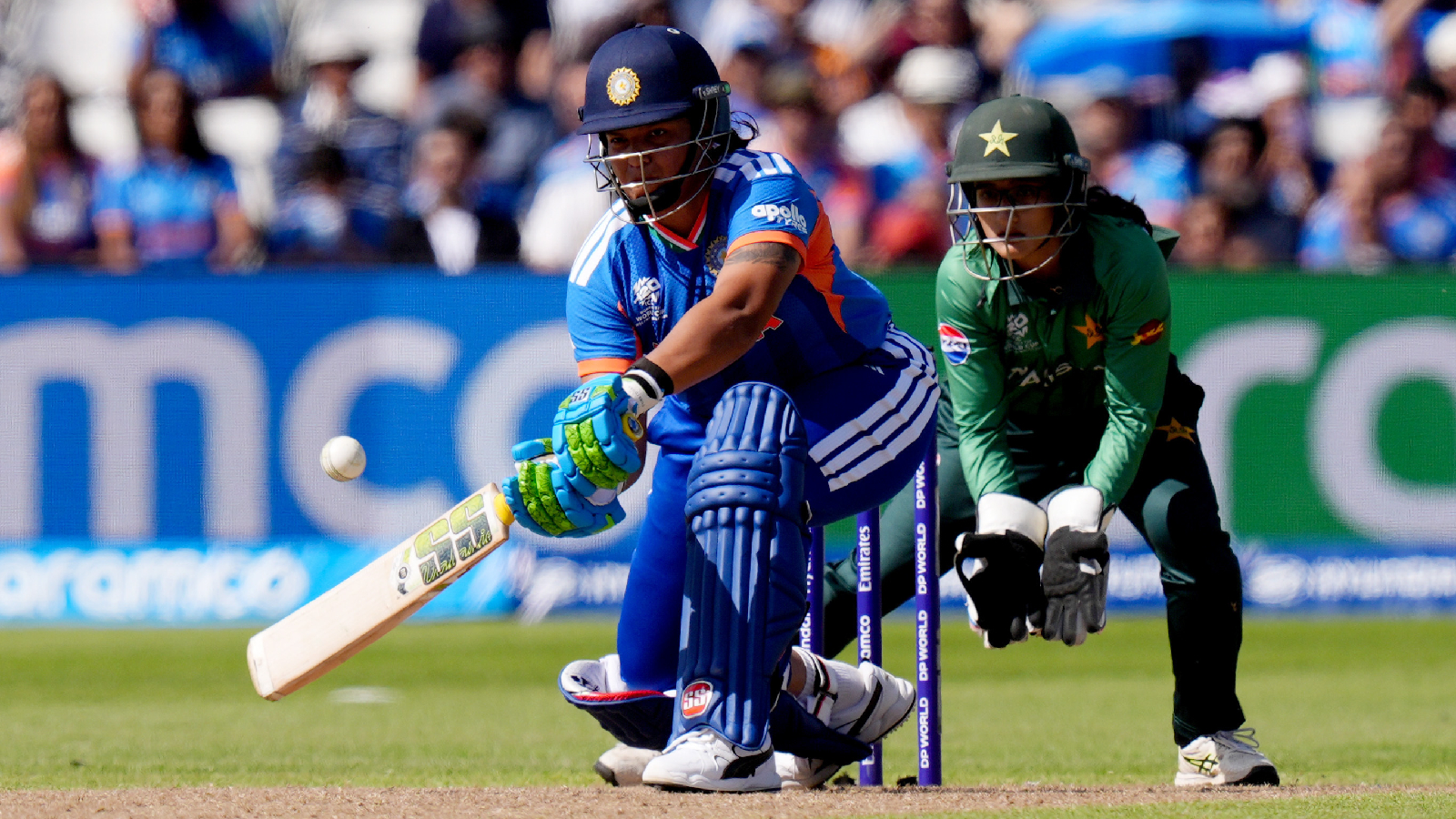
The 22-year-old responded in a manner that has increasingly come to define her value to this side. In a brief 17-ball stay, she struck 34 runs and ensured India finished strong and carried momentum into the innings break.
The crucial impact came in Tasmia Rubab’s 19th over, where she made 18 of the 23 runs scored and offered a glimpse of her full range of shots. A lofted drive over cover, a 77m straight six over long-on, a thick-edged slice over backward point and a pull through mid-wicket, that bisected the two fielders expertly in four consecutive deliveries.
3️⃣4️⃣ Runs
1️⃣7️⃣ Balls
2️⃣0️⃣0️⃣ Strike Rate
5️⃣ Fours & 1️⃣ Six
What a finish from Richa Ghosh 🔥
Updates ▶️ https://t.co/1tfRc3jcrX#TeamIndia | #WomenInBlue | #T20WorldCup | @13richaghosh pic.twitter.com/DK8sAfImP4
— BCCI Women (@BCCIWomen) June 14, 2026
Ghosh’s batting is built on that range. When in full flow, her ability to score in all parts of the ground makes her difficult to set fields against. Even slightly off-length deliveries can be hit in different directions depending on how she positions herself and plays the shot. That makes it hard for bowlers to settle on a particular line or length against her, because she is not dependent on a single scoring area.
The range, though, is backed by preparation.
“Initially, she takes some time to assess the situation and then goes big. In training, she spends hours together just hitting the ball big. After her normal routine is done (in the nets), she puts in extra time on hitting particular shots and accessing areas all over the park. Playing the ball behind the wicket, square of the wicket, scoop, and so on,” her coach at Royal Challengers Bengaluru (RCB), RX Muralidhar, had told The Indian Express earlier.
“There is science to it; it is not just about strength, it is just not about going in and swinging the bat. It is about how well and how efficiently you can use your power that you generate, pass it through the body and through the hand on to the bat,” he added.
The combination of range, control and adaptability is what pushes her beyond the traditional definition of a finisher. Which is where India’s tactical dilemma begins.
Story continues below this ad
Middle-order muddle
Fulmali’s return to the Indian setup in April this year, after a seven-year gap, has come in a very different T20 landscape. The women’s game has evolved rapidly with an increasing need to accelerate and her returns have been modest so far, with one significant innings – a 40 against South Africa in Benoni – but otherwise limited impact across four outings. Her promotion to number five on Sunday reflected India’s attempt to stabilise the middle order, but she could not deliver the desired result at a crucial stage, falling for one.
In contrast, Richa’s presence at that position could offer India a new dynamic. She has shown what she can do with fewer overs at her disposal and once set, she can accelerate across multiple scoring zones.
Positionally, she has batted the most at number five in T20Is and amassed 543 runs in 30 matches at 133.08. Her best strike-rate, though, has come batting at number seven (158.13), which is significantly higher than her career strike-rate of 145.09.
The finishing touch comes courtesy of #RichaGhosh. 💥
India close out their innings in style. 🇮🇳
ICC Women’s #T20WorldCup 2026 | #INDvPAK | LIVE NOW 👉 https://t.co/njSue0M5uR pic.twitter.com/BnlrdVlT4h
— Star Sports (@StarSportsIndia) June 14, 2026
Ghosh has batted 44 times in the 7-15 over phase in T20Is and scored 431 runs at a strike rate of 121.1. The numbers are modest, but given her range and ability to access all parts of the ground, those figures can improve if given more time to bat.
“She has really matured as a batter. She recognises which bowler to hit and the areas to hit. She knows which pockets to target. She is ready to adapt and change,” her India teammate Smriti Mandhana said earlier.
Story continues below this ad
With four more games to go in the league phase, India have a chance to try something different, especially in the second match against the Netherlands in Leeds on Wednesday. Ghosh’s 7-15 over numbers suggest there is untapped potential. If promoted higher, she could turn promising starts into decisive scores and give India more consistent middle-order stability in high-pressure T20Is.
View original source — Indian Express ↗
Related stories

ESPN
SportsJun 15, 2026 · 1 min
Canes favored among crowded pack for '27 title
ESPN
ESPN
SportsJun 15, 2026 · 1 min
Free agent pickups: Bryce Eldridge leads a (fantas...
ESPN

ESPN
SportsJun 15, 2026 · 1 min
UFC White House was preposterous, surreal and very...
ESPN

ESPN
SportsJun 15, 2026 · 1 min
U.S. Open tiers: Ranking favorites, contenders and...
ESPN