Indian Express
Indian Express··4 min read
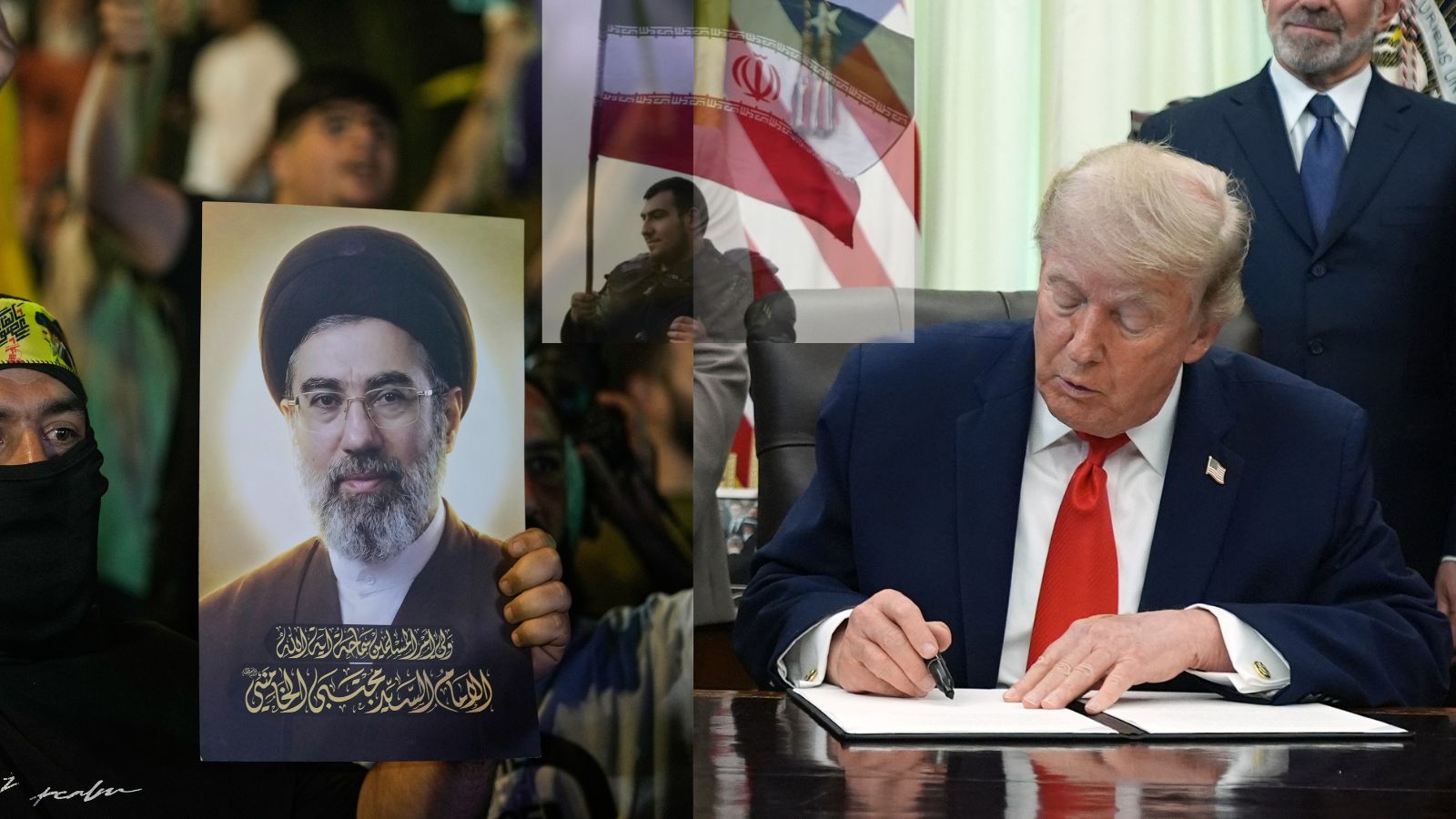
Iran-US deal leaves questions for New Delhi, especially about its place at the negotiating table
Let us hope the more valuable gift the Iran-US deal leaves India is the questions it forces us to ask ourselves about our illusions
6 min readJun 15, 2026 07:31 PM IST
First published on: Jun 15, 2026 at 07:31 PM IST
I write this from Srinagar on the eve of Muharram. Black flags wave in the summer wind through neighbourhoods in parts of the city. On the boulevard that overlooks the Dal Lake there towers a billboard-sized portrait of Iranian leaders staring down upon us. It is an unsettling backdrop against which to meditate upon the American-Iranian blueprint for peace being stitched. A deal that troubles rather than reassures.
US President Donald Trump can claim victory, as he has already done. And he deserves to: Purely on the basis of this day alone. The guns may fall silent. Markets will stabilise. Oil shipments through the Gulf will no longer navigate minefields. That is laudable. But the foundational fault-lines that set up this crisis — Iran’s ambitions and proxies in the region, Israel’s vulnerabilities and security obsessions, the Gulf’s volatility and Donald Trump’s hubris — remain exactly as they were yesterday. What has been bought by this breathing space is time, masquerading as victory.
While this deal breaks a war, it doesn’t settle the numerous questions that led to it. Lebanon remains on a wire. Hezbollah’s future is still up for grabs. Israel has said it needs the freedom to operate. And the nuclear issue isn’t solved, it’s been kicked under the table — a 60-day delay where there should have been a resolution. A ceasefire suspends all these concerns. It doesn’t answer any of them. And it can’t prevent other nations from drawing their own conclusions about deterrence and nuclear weapons and their utility.
We, in India, should feel deeply concerned. For more than two decades, New Delhi has invested in Washington — emotionally, politically and strategically — on the belief that when push came to shove America would remember just how significant that equity was and what it said about India’s stake at the highest table. Today it did not. Indian sailors lay vulnerable. Indian lives were risked and lost as the fight expanded. Indian commerce was throttled at a time when our economy depends more than most upon its engines running; the livelihoods of millions of Indians we cherish in the Gulf teetered on a knife’s edge. None of that registered in the fevered pitch of Donald Trump’s social-media worldview when it sat down to negotiate a pause. Instead, America dialled Islamabad. The very same deep state that has managed four decades of terror at India’s border was delivered centrality in American decision-making without the slightest pause for how that upgrade would be perceived in New Delhi. Adversaries are blind. America is India’s friend. But a friend who doesn’t notice you are in the room anymore will hurt far worse than an adversary eventually. Because weakness invites aggression. Indifference allows it to flourish, free from question.
We have insulated ourselves comfortably, to Pakistan being a failing state — failing, bankrupt, falling behind us as we steam past. The Iran crisis explodes that delusion of Pakistani irrelevance. For a nation that has bet its survival on fostering chaos is becoming today the interlocutor every foreign ministry is desperate to cultivate. This is not a momentary embarrassment for India. It is a serious long-term threat that demands our attention.
Which is why the hard questions will be the ones India will have to ask about itself. India has often prided itself on the ability to have multiple friendships across every spectrum: To talk to Tehran and Tel Aviv, to Riyadh and Washington, all at the same time, without apology or conditionality. “Strategic autonomy” was never a slogan. It was the art of keeping your options open when the world rarely favours India’s preferences. Somewhere along the line, we started to mistake friendship with one group of countries as increasing our leverage with others. If anything, the Iran crisis should teach us the exact opposite: Proximity is not leverage, access is not influence, and the visibility that you or others have does not translate into strength if the country that needs to heed that visibility is not also willing to use it.
And should we misjudge this moment, the price we will pay for it only increases. West Asia was where we bought our oil from not too long ago. It hosts one of the largest Indian diaspora populations on Earth. It represents a large source of our external remittances. Our strategic gateway to energy. The route through which the India–Middle East–Europe Economic Corridor will realise its potential. When turbulence hits West Asia, it doesn’t rock the ship we sail upon. It impacts our balance of payments, our diaspora in the Gulf, our fuel prices and our influence in an Asian century which is being transformed as we speak.
And that is what makes Muharram far more poignant than the mourning on display. Hussain lost at Karbala. He was surrounded. He was denied water. He died a brutal death on that field. Yazid won. But history remembers the lesson Karbala taught us; Hussain who dared to fight and live a defeat so righteous that its memory outlasted every Caliph who came after him. Iran, over 14 centuries now has internalised that lesson and passed it down to generations since: He who holds advantage today may not win the battle of tomorrow.
Celebrated victories have a tendency to turn bitter over time. The bigger history of this crisis has thus still to be written. Let us hope the more valuable gift the Iran-US deal leaves India is the questions it forces us to ask ourselves about our illusions, about our place at the table and about a world that will give us nothing that we haven’t already secured for ourselves.
The writer is dean SIS, JNU and former member NSAB
View original source — Indian Express ↗
Related stories

The Punch
NewsJun 15, 2026 · 1 min
Accord Party’s deregistration judgment violates Court of Appeal order – Adeleke
The Punch
The Punch
NewsJun 15, 2026 · 1 min
CBN orders banks, fintechs to store payment data locally
The Punch
The Punch
NewsJun 15, 2026 · 1 min
Police rescue woman from mob in Rivers
The Punch
The Punch
NewsJun 15, 2026 · 1 min
Kano approves N1.5bn for mass wedding of 3,000 couples
The Punch